
Reviewed · COOKING CLASSES
Balinese Ubud cooking school (9 Dish Cooking and Market Tour)
The best part of this Ubud experience is its generous menu: you prepare nine Balinese dishes, not just one curry and a bowl of rice. A morning booking adds a local market, rice paddies, and a look at everyday food shopping before you cook.
I like the friendly family-style teaching and the chance to make food you can repeat at home, especially sambal matah and base gede. I also like that vegetarian guests get a full menu rather than a few patched-together substitutions.
The main thing to weigh is transport. Pickup is included only within Ubud, and the cooking school may involve a long drive from central Ubud. Some people also find that ingredients are partly prepared before class, so this is a guided cooking lesson rather than a full farm-to-pan workshop.
Key points to know before booking
- Nine dishes in about five hours: You prepare a substantial Balinese meal, then eat it for lunch or dinner.
- Morning means more than cooking: The morning option includes a traditional market visit and rice-paddy stop.
- Choose your menu carefully: Book the regular menu for chicken dishes, or the vegetarian menu for tofu and tempeh versions.
- Local instruction matters: Hosts and teachers including Yogi, Wayan, Putu, Tata, and Gus are praised for clear teaching, humor, and cultural explanations.
- Ubud pickup is limited: Transport from outside Ubud costs extra and must be arranged in advance.
- Small group format: The class is capped at 14 people, with individual cooking stations reported by some participants.
Why nine dishes make this class worth your time
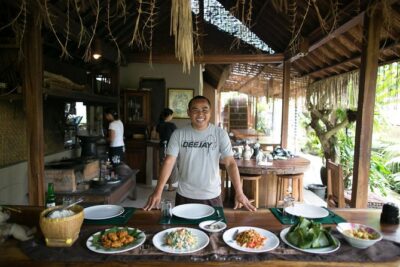
Many cooking classes give you one main dish, a side, and dessert. This one aims higher. The regular menu includes Balinese vegetable soup, chicken in coconut milk with Balinese spices, sweet fried tempeh, chicken sate lilit, chicken pepes cooked in banana leaf, lawar, sambal matah, base gede, and klepon cake. White rice accompanies the main dishes.
That list gives you a useful picture of Balinese cooking. You work with coconut, fresh herbs, spice pastes, banana leaves, tempeh, vegetables, palm sugar, and rice. You are not simply learning one recipe. You are seeing how a few basic elements, especially spice paste and sambal, shape several different dishes.
The vegetarian menu is not an afterthought. It replaces the chicken with tofu bumbu Bali, tempeh satay with peanut sauce, and pepes tofu. The soup, sweet tempeh, lawar, sambal matah, base gede, klepon, and rice remain part of the meal.
I like this approach because you leave with several adaptable ideas. You can make the dishes exactly as taught, or use the same methods with ingredients available at home. The recipe copies are included, which is important after a class filled with new names and unfamiliar steps.
More cooking in Ubud:
- Ubud Cooking Class Bali with Balinese Chef
★ 5.0 · 1,609 reviews - PRIVATE Authentic Balinese Cooking Class in Ubud at Putu’s Home
★ 5.0 · 644 reviews - Balinese Farm Cooking Class by Pemulan Bali
★ 5.0 · 410 reviews
The morning market and rice-paddy route
Choose the morning session if you want the cultural side of the day. The market visit is not just a quick stop to buy ingredients. Your local guide explains fruits, vegetables, spices, sweets, and the way people buy and sell food. You may also taste local fruits and pastries that are unfamiliar to you.
This is where the class gains context. Before you chop or grind anything, you see the ingredients in their everyday setting. You also get a better sense of how food fits into Balinese life. One guide, Wayan, is praised for explaining food, cooking, religion, heritage, and local customs during the route.
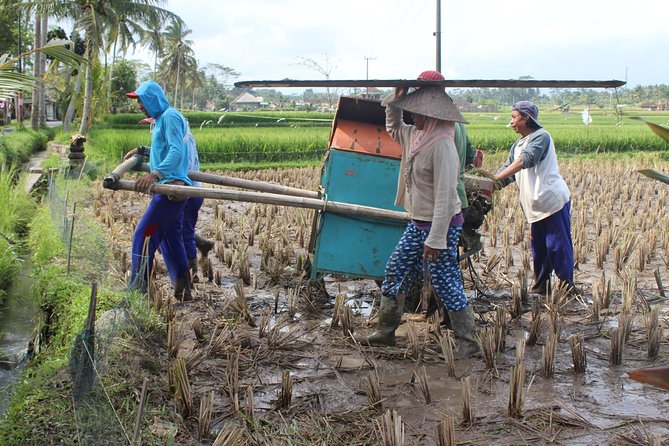
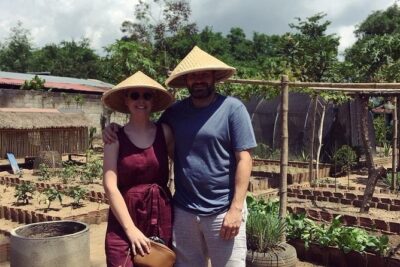
The morning program also includes a visit to rice paddies. The guide explains how rice is grown in Bali, the kinds of rice used, and how long the harvest cycle takes. Several accounts describe time for photos, with one mentioning a volcano view in the distance.
There may also be a stop at a local Balinese house. The cooking school is described as being set up in a Balinese home, giving the class a more domestic feel than a polished restaurant kitchen. That setting can be a plus if you want to see how cooking connects with ordinary home life.
The market and rice-field stops do add travel time. Some people report a drive of around 50 minutes from the central meeting point to the cooking area, though the exact time depends on traffic and the route. If you dislike sitting in a vehicle before a cooking class, book the afternoon option instead. You will miss the market, but the day may feel more direct.
What happens when you arrive at the cooking school
The tour begins at Ubud Palace, unless you arrange a different Ubud pickup. From there, a driver or guide takes you to the market and rice paddies on the morning program, or directly toward the cooking school for the afternoon class.
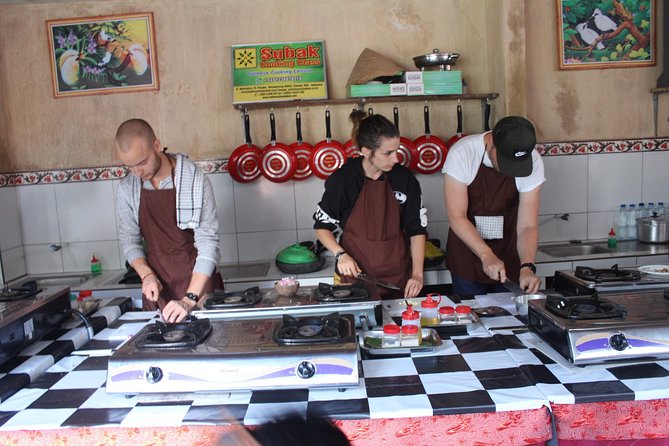
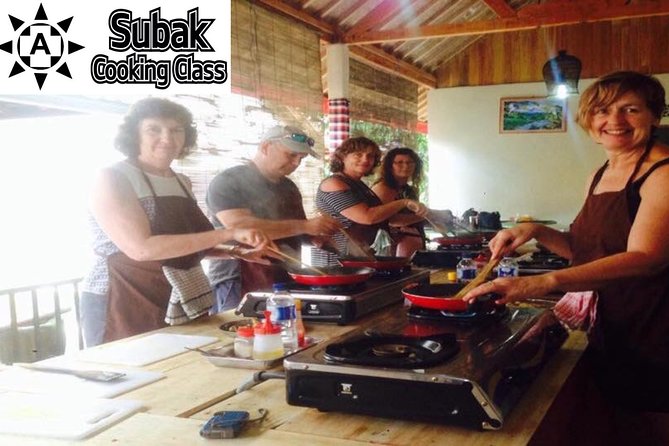
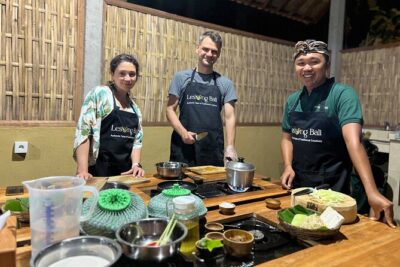
The class is designed for beginners. You work in pairs or at your own station, depending on the group setup, while the Balinese chef demonstrates each stage. Participants describe a friendly atmosphere, clear explanations, and staff who help as you prepare the food.
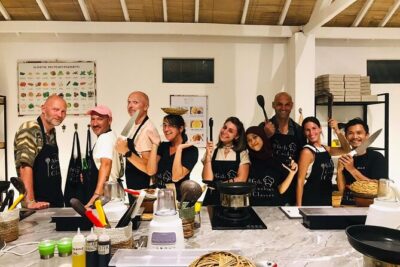
The maximum group size is 14 people. That is not a private lesson, but it is small enough to keep the class manageable. Individual cooking stations are available according to several accounts, so you are not expected to watch from the back while one person does all the work.
The teaching style is relaxed and social. Yogi is frequently praised for humor and step-by-step instruction, while Putu is described as an engaging afternoon instructor. Other named hosts include Tata, Gus, and Wayan. The exact teacher can vary, but the class is built around local staff rather than a distant demonstration chef.
One practical point deserves attention: much of the chopping and preparation may be done in advance. That helps the group finish nine dishes in five hours, but it also means you will not perform every kitchen task from start to finish. If your ideal class involves grinding every spice, trimming every vegetable, and cleaning every pan, you may find this format lighter on hands-on work.
The dishes you will prepare
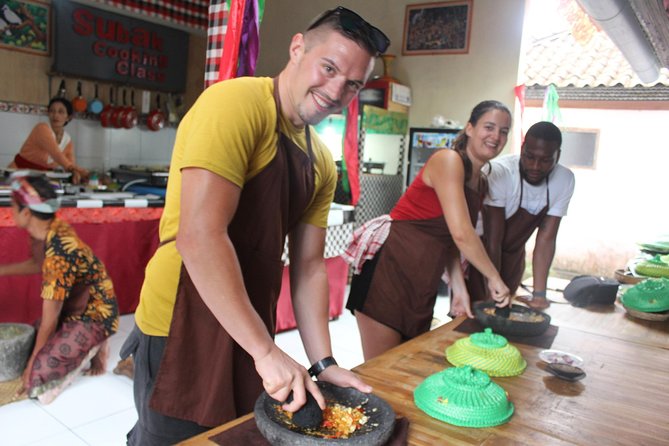
The base gede, or basic Balinese spice paste, is one of the most useful lessons. It is a foundation for many Balinese dishes, and learning how it is assembled helps you understand the flavor of the meal instead of treating each recipe as an isolated trick.
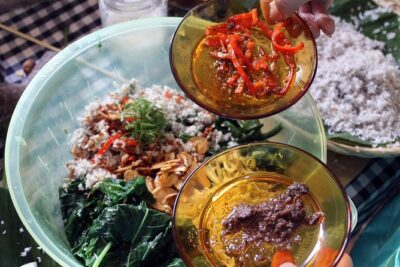
Sambal matah is another practical favorite. This raw mixture is served with coconut oil and fresh seasonings. It is bright, fresh, and easy to adapt at home, though you should tell the instructor how much heat you prefer. The class can adjust spice levels, and one participant specifically appreciated being able to make a milder version.
Sate lilit shows a different side of Balinese cooking. Rather than using a simple chunk of meat on a skewer, the mixture is shaped around the stick. The vegetarian version uses tempeh and peanut sauce.
Pepes uses banana leaf as a cooking wrapper. The regular version features chicken, while the vegetarian menu uses tofu. This is one of the dishes where unfamiliar equipment and ingredients add value, since banana leaves and Balinese spice combinations may not be part of your normal kitchen routine.
Lawar combines vegetables with Balinese spices. It gives you a useful side dish and demonstrates how vegetables can carry strong flavor rather than simply sit beside the main course.
The meal also includes sweet fried tempeh and klepon cake. Klepon is a boiled, round sticky-flour cake filled with palm sugar. It gives the class a proper ending and lets you try a Balinese sweet made with ingredients you may not often use at home.
Some accounts say the food is served buffet-style after cooking. You can eat what you have prepared with the rest of the group, and leftover food may be available to pack for your hotel. Bring a good appetite. Nine dishes create a large meal, especially when rice is served alongside the main courses.
Same base, a different sort of day:
- All-Inclusive Ubud Private Tour
★ 5.0 · 14,344 reviews - Best of Ubud Full-Day Tour with Jungle Swing
★ 5.0 · 8,571 reviews - Ubud: Monkey Forest, Jungle Swing, Rice Terrace, and Water Temple
★ 5.0 · 7,160 reviews - Best of Ubud 1-Day Private Tour
★ 5.0 · 4,451 reviews
The vegetarian choice is a real menu
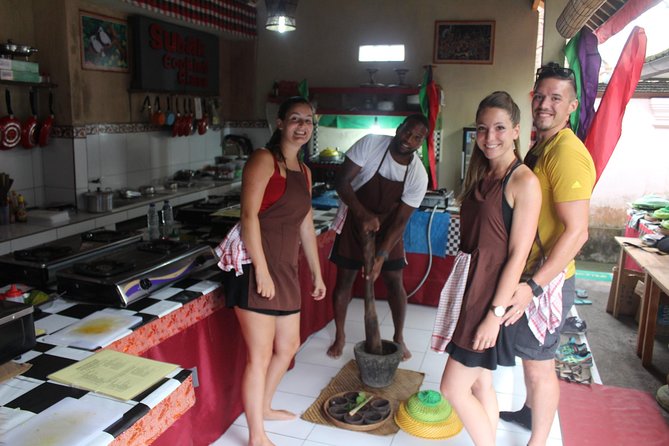
If you do not eat meat, make sure you select the vegetarian option when booking. The class provides a complete alternative rather than removing the chicken from the regular menu and leaving you with little to do.
You will prepare tofu in Balinese sauce, sweet tempeh, tempeh satay with peanut sauce, and tofu pepes in banana leaf. The remaining dishes provide soup, vegetables, sambal, spice paste, dessert, and rice.
This is also a good choice if you want to learn more about tempeh and tofu in Indonesian cooking. Both ingredients take on flavor from the sauces and spice mixtures, so you get useful techniques rather than plain substitutions.
The class can accommodate different spice preferences. Still, Balinese cooking often uses strong flavors, so tell the instructor early if you want less heat. You can add more spice at the table more easily than you can remove it from a pan.
How much instruction will you really get?
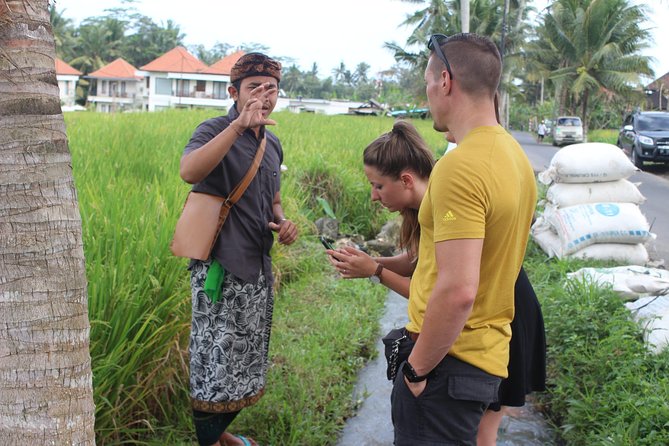
The strongest part of the class is its guided structure. The teacher demonstrates the preparation, explains the ingredients, and then helps you cook. The staff also assist around the kitchen, which keeps a large menu from becoming confusing.
The experience is not a silent technical seminar. Expect jokes, conversation, and explanations about Balinese culture along with the recipes. That social tone suits couples, families, and groups of friends. It also makes the class accessible if you have little or no cooking experience.
The trade-off is that a five-hour class covering nine dishes has to move at a good pace. Some preparation is completed before you begin, and the instructor may demonstrate certain steps rather than having each person repeat them in full. I would book this class for a broad taste of Balinese cooking, not for advanced chef training.
Clear English instruction is available according to the supplied experience details and participant accounts. Even so, the kitchen can become noisy when several people are talking. If hearing every word matters to you, stand close to the chef during demonstrations and ask questions as you go.
Recipe copies are included. A delay in receiving recipes has been reported in one case, so save the contact details provided at the class and ask before leaving if you need the recipes sent digitally as well.
Price, time, and transport value
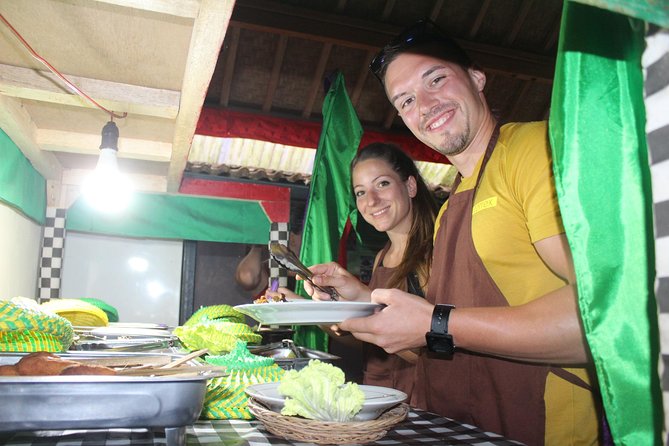
At $58, this is not the cheapest cooking lesson in Bali. The price includes about five hours, a market visit for the morning class, the rice-paddy stop, local guiding, kitchen equipment, bottled water, food tasting, and the lunch or dinner you cook.
That package can be good value if you use the full day. You are paying for transport within Ubud, several cultural stops, instruction, ingredients, and a large meal. The nine-dish menu is the main reason the price makes sense.
Pickup and drop-off are included in the Ubud area only. If you are staying outside Ubud, additional transport charges apply, and you need to request this in advance. The listed meeting point is Ubud Palace, with the activity ending back at the meeting point.
Check the timing before booking. The experience lasts roughly five hours, and the morning option includes more stops than the afternoon option. Wear normal, comfortable clothing, bring your booking confirmation, and carry cash if you need to pay an extra transport fee.
The activity offers free cancellation up to 24 hours before the start time. Changes or cancellations inside that period are not accepted for a refund.
Who will enjoy this most
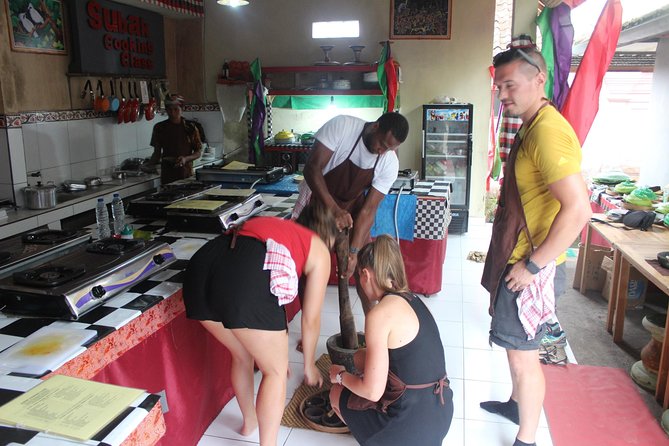
I would recommend this to food-focused visitors who want more than a short demonstration. The broad menu gives you plenty to taste and several recipes to take home.
It also suits families. The cooking is social, the staff work with beginners, and the finished meal gives everyone a shared task and reward. Children may enjoy shaping satay or making klepon, though the experience details do not specify a minimum age, so check before booking with young children.
Couples and friends should like the mix of market browsing, countryside stops, cooking, and a long meal. Solo participants can also join, but the class often works in pairs or groups, so expect a communal setting rather than a private lesson.
I would be more cautious if you want a quiet, highly polished cooking studio, a private class, or complete control over every preparation step. The home-style setting is part of the appeal, but it can also mean background conversation and a less formal setup.
Should you book the Subak cooking class?
Book it if you want a full Balinese food day, not just a recipe lesson. The morning option gives you the best overall value because it links the cooking to markets, rice growing, local houses, and the ingredients on your table.
Choose the regular menu for chicken, or the vegetarian menu for tofu and tempeh. Arrange outside-Ubud transport before you arrive, and allow extra time for the drive from central Ubud. If you are happy with some advance preparation and a lively group kitchen, the nine-dish menu, local hosts, and generous meal make this a strong choice at $58.
FAQ
Where does the Balinese cooking experience begin?
The meeting point is Ubud Palace, at F7V7+72R, Jl. Raya Ubud No. 8, Ubud, Bali. The activity ends back at the meeting point.
How long does the cooking class last?
The experience lasts approximately five hours.
Does the morning tour include a market visit?
Yes. The traditional market visit is available with the morning class only. The morning program also includes a rice-paddy visit.
What is included in the price?
The price includes bottled water, food tasting, lunch or dinner made during the class, kitchen equipment, recipes to take away, local guiding, tour hosting, and transport within the Ubud area.
Is pickup available outside Ubud?
Pickup outside Ubud is not included in the standard arrangement. You must request it in advance, and an additional transport charge applies.
Can I choose a vegetarian menu?
Yes. You can choose between a regular menu and a vegetarian menu. The vegetarian menu includes tofu and tempeh versions of several dishes.
How many dishes will I prepare?
The class teaches nine Balinese dishes. White rice is served with the main courses.
Is the cooking class suitable for beginners?
Yes. The Balinese chef guides you step by step, and cooking experience is not required.
What happens if I need to cancel?
You can cancel at least 24 hours before the experience start time for a full refund. Cancellations or changes made less than 24 hours before the start time are not accepted for a refund.
Just added in Ubud
- Mount Batur jeep sunrise with breakfast★ 5.0 · 9 reviews
- Bali Food Tour: Savor Street Food and Night Market Adventures★ 5.0 · 46 reviews
- Mount Batur Sunrise Trekking (Private, Breakfast and Visiting coffee plantation)★ 5.0 · 27 reviews
- Private Mount Batur Sunset Trekking – All inclusive tour★ 5.0 · 63 reviews
- Ubud Cooking Class with Optional Market Visit Pickup Included★ 5.0 · 70 reviews
- Private Full-Day Handara, Ulun Danu, Jatiluwih and Tanah Lot Tour★ 5.0 · 63 reviews
- East Bali Tour: Lempuyang Temple – Gate of Heaven, Tirta Gangga, Virgin Beach★ 5.0 · 67 reviews
- Private Full-Day Lempuyang Gate of Heaven Tour★ 5.0 · 67 reviews
Cooking Classes, compared.

PRIVATE Authentic Balinese Cooking Class in Ubud at Putu’s Home
Read our review →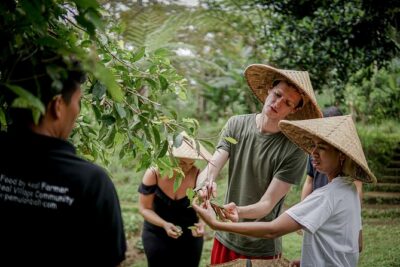
Learn to cook Indonesian food at Gili Cooking Classes Trawangan
Read our review →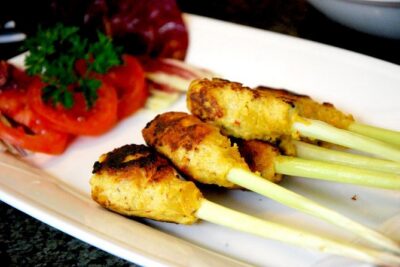
PRIVATE Balinese Cooking Class in Ubud with Dewa with Transfers
Read our review →Browse the lists this tour appears in