
Reviewed · COOKING CLASSES
PRIVATE Balinese Cooking Class in Ubud with Dewa with Transfers
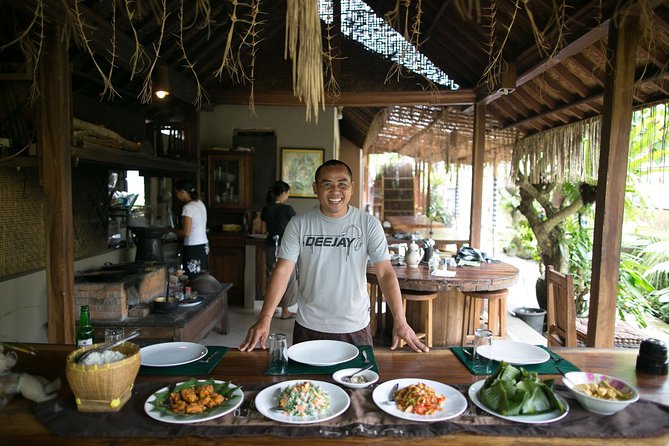
The special part of this experience is that you cook in Dewa’s family compound, not in a polished culinary school. You’ll walk through village gardens, learn how galangal, cacao, nutmeg, and other plants fit into Balinese life, then prepare several dishes with Dewa’s wife and family.
I like the small private setting and the practical use of a pestle, mortar, and wood-fired stove. I also like that you take home the recipes, so the meal does not end when you leave Bali. The main consideration is that this is a cultural home visit with cooking, not a formal chef-led class with professional equipment or precise restaurant-style instruction.
Key points
- A real family compound: Cook and eat in an open kitchen surrounded by traditional Balinese pavilions.
- Dewa is your cultural guide: Expect stories about village life, Balinese religion, farming, and family customs alongside the food.
- Fresh garden ingredients: See and collect herbs, spices, fruit, and vegetables used in your meal.
- Hands-on cooking: Prepare several dishes with traditional tools and a wood-fired stove.
- Private Ubud transfers: Pickup and return are offered from hotels and rentals within the Ubud area.
- Good value for food lovers: At $69 per person, the price covers transport, the garden visit, the private class, the meal, beer, water, and recipes.
A Family Kitchen North of Ubud

This half-day experience takes you from Ubud into Keliki, a village in the terraced foothills north of town. The setting matters. Instead of meeting in a cooking studio designed for tourists, you enter a traditional Balinese family compound with open pavilions arranged around a central courtyard.
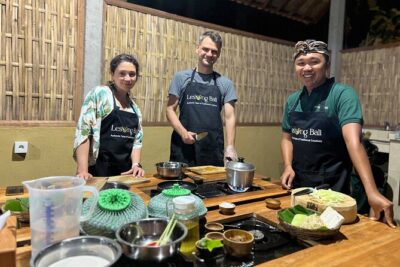
Dewa hosts the experience, sometimes with another family member if he is unavailable. His wife, Jero, helps lead the cooking in the open kitchen. You are not simply watching a demonstration. You take part in grinding spices, preparing vegetables, and cooking the dishes before sitting down to eat.
That family setting gives the meal a human scale. You see how cooking fits into daily life, how the compound is arranged, and how several generations may share the same home area. The experience is still planned for visitors, but it keeps the focus on people, food, and place rather than on polished showmanship.
The activity is private, so only your party takes part. That makes it a good choice if you want to ask questions freely or set your own pace. It also makes the $69 price easier to assess, especially if you are traveling with a partner or family group and value privacy.
More cooking in Ubud:
- Ubud Cooking Class Bali with Balinese Chef
★ 5.0 · 1,609 reviews - PRIVATE Authentic Balinese Cooking Class in Ubud at Putu’s Home
★ 5.0 · 644 reviews - Balinese Ubud cooking school (9 Dish Cooking and Market Tour)
★ 5.0 · 540 reviews
The Village Walk and Garden Visit

Your visit begins with a garden tour and a walk through the village area. Dewa introduces plants used in Balinese cooking and explains their medicinal and cultural roles. You may encounter galangal, cacao, nutmeg, herbs, fruit, and other ingredients that later appear in the meal.
This section is one of the best reasons to book the experience. In a market, you can see unfamiliar spices. Here, you learn what they look like before they are dried, ground, or mixed into a paste. That connection makes the cooking easier to understand, since Balinese food often depends on fresh aromatics rather than heavy seasoning.
The walk also provides context about farming and local life. Several people who have taken this experience found the village tour as memorable as the food itself because Dewa explains Balinese customs, spiritual ideas, and the way families live in relation to nature.
Wear comfortable walking shoes. The route can include village streets, garden paths, forested areas, and rice-field surroundings. The supplied details do not promise a flat or fully paved route, so anyone who has difficulty walking should ask about the route before booking.
The walk is not a separate sightseeing tour with a long list of stops. It is a way to understand where your ingredients come from and how the local community works. If you want a quick cooking lesson with no cultural conversation, this may feel slower than expected. If you want to see more than the inside of a kitchen, it adds real value.
Cooking With a Pestle and Wood-Fired Stove
Back at the family home, you join Jero and the rest of the cooking team in the open kitchen. Traditional tools are part of the lesson, including a pestle and mortar. These are not props for photographs. You use them to grind and blend the fresh ingredients that give Balinese food its strong fragrance and layered flavor.
You also learn to cook over a traditional wood-fired stove. This is a very different experience from following a recipe on an electric range. Heat control, timing, and preparation all feel more direct. The class offers a useful look at how home cooks prepare food with simple equipment.
The exact menu can vary, but the examples provided include:
- Pepes ikan, tuna grilled in banana leaves
- Bumbu kuning, chicken cooked in a fresh turmeric and coconut milk sauce
- Bregedel, hand-ground corn fritters
The wider meal may include five, six, or even seven preparations, according to the type of session and the work selected for the day. Past menus described in the experience include a range from salads and main dishes to dessert.
You should expect to do much of the preparation yourself, though the family guides you step by step. This is not a professional certification class, and you will not be trained in restaurant technique. Instead, you learn family recipes in the way a home cook might teach a friend.
That distinction is important. Some people want exact measurements, formal instruction, and a spotless teaching kitchen. This experience offers conversation, touch, smell, and shared work. You may write the recipes into a handmade book during the class, then use them at home later.
Eating the Meal You Prepared
After the cooking, you sit down to eat the food you helped prepare. Beer and water are included, and the meal takes place in the peaceful setting of the family compound.
The food is based on fresh local ingredients and traditional methods. The emphasis is not on adding a lot of salt or presenting restaurant-style dishes. The flavor comes from herbs, spices, coconut, turmeric, grilling, and freshly made pastes.
I like this part because the meal gives purpose to the class. You do not simply make a small sample and leave. You prepare several dishes, then have time to enjoy them together and talk with the family.
The experience can also suit people who are not keen cooks. The cultural walk, garden tour, and shared meal are substantial parts of the visit, so you do not need to be passionate about food to get something from it. Still, if you strongly dislike hands-on preparation, you may prefer a market visit or a restaurant meal.
Vegetarian food is available if you request it when booking. Make that request in advance rather than waiting until you arrive. The supplied information does not list other dietary arrangements, so anyone with allergies or strict food requirements should confirm what can be accommodated.
Same base, a different sort of day:
- All-Inclusive Ubud Private Tour
★ 5.0 · 14,344 reviews - Best of Ubud Full-Day Tour with Jungle Swing
★ 5.0 · 8,571 reviews - Ubud: Monkey Forest, Jungle Swing, Rice Terrace, and Water Temple
★ 5.0 · 7,160 reviews - Best of Ubud 1-Day Private Tour
★ 5.0 · 4,451 reviews
What Makes Dewa’s Hosting Different

Dewa’s role goes beyond showing you how to prepare lunch. He explains Balinese history, religion, village customs, farming, and family life as you move through the area. His approach is part food lesson and part personal introduction to Bali.
The experience includes ideas connected with Hinduism, Buddhism, and animism, as well as the Balinese emphasis on balance and living in harmony with nature. You should expect a fair amount of conversation. Dewa’s stories may be as central to the visit as the recipes.
That makes this a strong choice for someone who wants cultural context without booking a separate village tour. You receive an introduction to everyday life through food, plants, housing, and family relationships.
It is also worth keeping expectations grounded. Dewa is a local host and home cook, not a formally described culinary instructor. His strength is explaining his culture and sharing family cooking methods. If you want advanced knife skills or a lesson built around restaurant standards, choose a different type of class.
Transfers, Timing, and the Meeting Point

The experience lasts about four hours. Round-trip transfers are offered from hotels and vacation rentals in the Ubud area, which removes the need to arrange a separate driver for the visit.
The listed meeting point is Rumah Makan Jero Nini at Jl. Arjuna in Keliki, Tegallalang. The activity ends back at the meeting point, though the transfer arrangement means you may be returned to your Ubud accommodation if pickup was confirmed.
There is one practical detail to check carefully: transportation is limited to the Ubud region. If you stay outside Ubud, you must make your own way to Dewa’s home in Keliki, and the provider says transportation will not be supplied from those areas.
Pickup details should be confirmed after booking. The experience states that confirmation arrives within 48 hours, subject to availability. Since the tour is often booked well ahead, around 36 days in advance on average, it is sensible to reserve before your schedule fills up, especially if you want a particular day.
The route from Ubud to Keliki is part of the change in atmosphere. You leave the town center and move toward village roads, gardens, and terraced foothills. Traffic can affect transfer times, so avoid placing a tight appointment immediately after the class.
Is $69 a Fair Price?

At $69 per person, this is not the cheapest cooking lesson around Ubud. But the price includes more than the cooking itself: private two-way transport from Ubud, the village and garden visit, the family-hosted class, the meal, beer, water, and recipes.
The private format is a major part of the value. You are not placed in a large class where an instructor must divide attention among many workstations. Your group can ask about ingredients, family customs, religion, and cooking methods as questions come up.
You also receive an experience that would be difficult to recreate independently. Hiring a driver to a village, finding a local family willing to host you, arranging ingredients, and learning the setting would likely take more effort than the tour price suggests.
The value is strongest for couples, families, and small groups who want an experience that combines food with local life. If your only goal is to learn a few dishes as cheaply as possible, a larger cooking school may cost less. If you care about the setting and the personal contact, this price is reasonable.
Group discounts are available, though the amount is not specified. Ask about the discount if you are booking for several people.
Who Should Book This Experience?

You should consider this experience if you want:
- A private activity rather than a large class
- A real family home instead of a purpose-built cooking school
- A village walk connected to the ingredients you will use
- Conversation about Balinese culture, customs, religion, and family life
- Several dishes and recipes to recreate at home
- Ubud pickup and return included in the price
It suits food lovers, curious families, couples, and people who want a quieter day away from central Ubud. It can also work well for first-time visitors who want one activity that combines food, countryside, and culture.
You may want to skip it if you dislike walking, need a highly structured professional cooking course, or are staying far outside Ubud and do not want to arrange your own transport. The class is hands-on, so it is not ideal if you prefer to sit back and watch.
Service animals are allowed, and the meeting area is near public transportation. The supplied information does not provide fuller mobility details, so contact the provider if you need specific assistance.
Booking and Cancellation Details

You can cancel for a full refund up to 24 hours before the local start time. Cancellations or changes made less than 24 hours before the experience are not accepted for a refund.
Tell the provider about vegetarian requirements when you book. Also confirm your hotel location, pickup eligibility, and the exact meeting instructions before the day of the activity.
The experience is operated by Traveling Spoon. It is recommended by 99 percent of participants and carries a five out of five rating based on 213 reviews, a strong record for a small, host-led activity.
Should You Book Dewa’s Cooking Experience?
Book it if you want your cooking class to be a window into Balinese life, not just a list of recipes. The best parts are the village walk, the garden ingredients, the traditional kitchen, and the chance to eat with Dewa’s family in their own compound.
At $69, the experience asks you to pay for personal hosting, private transport, and cultural context as much as for the meal. That is a fair trade if those details matter to you.
I would choose this for a first or second visit to Ubud, especially if you have already seen the main temples and want a slower, more personal day. Just wear comfortable shoes, allow time for the transfer, request vegetarian food early if needed, and remember that this is a home visit with cooking rather than a formal chef school.
FAQ
How long does the Balinese cooking experience last?
The activity lasts approximately four hours.
Where does the experience take place?
It takes place at Dewa’s traditional family compound in Keliki, in the terraced foothills north of Ubud.
Is hotel pickup included?
Round-trip transfers are offered from hotels and vacation rentals within the Ubud region. Transportation is not included from outside Ubud.
What is the listed meeting point?
The meeting point is Rumah Makan Jero Nini, G7X7+Q9M, Jl. Arjuna, Keliki, Tegallalang, Gianyar, Bali 80561, Indonesia.
Is this a private activity?
Yes. Only your group takes part in the activity.
What food will I learn to cook?
The menu can include dishes such as pepes ikan, bumbu kuning, and bregedel. The session may include several other preparations, including salads, main dishes, or dessert.
Is a vegetarian meal available?
Yes. A vegetarian option is available if you advise the provider at the time of booking.
Are drinks included?
Local beer and water are included.
Can I cancel for a full refund?
Yes. You can cancel at least 24 hours before the local start time for a full refund. Changes or cancellations made less than 24 hours before the start time are not accepted for a refund.
Just added in Ubud
- Mount Batur jeep sunrise with breakfast★ 5.0 · 9 reviews
- Mount Batur Sunrise Trekking (Private, Breakfast and Visiting coffee plantation)★ 5.0 · 27 reviews
- Bali Food Tour: Savor Street Food and Night Market Adventures★ 5.0 · 46 reviews
- Ubud ATV Quad Bike and Snorkeling at Blue Lagoon Beach★ 5.0 · 64 reviews
- Bali Iconic Tour with Buffet Lunch and Attraction Tickets★ 5.0 · 66 reviews
- Bali Amazing Cooking Class★ 5.0 · 63 reviews
- 3 Days for the best of Ubud Private Tour★ 5.0 · 63 reviews
- Ubud Countryside Tour: Campuhan Ridge Walk and Rice Terrace★ 5.0 · 72 reviews
Cooking Classes, compared.
PRIVATE Authentic Balinese Cooking Class in Ubud at Putu’s Home
Read our review →
Balinese Ubud cooking school (9 Dish Cooking and Market Tour)
Read our review →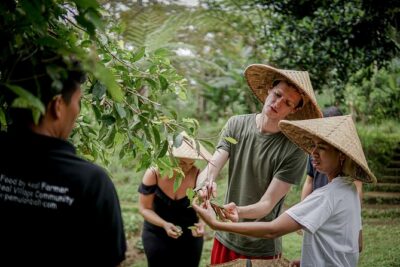
Learn to cook Indonesian food at Gili Cooking Classes Trawangan
Read our review →
Browse the lists this tour appears in