
Reviewed · COOKING CLASSES
Balinese Cooking Class in Seminyak
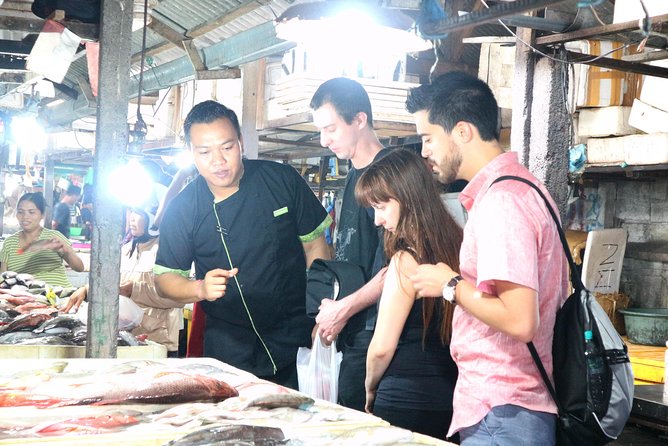
The most appealing part of this Balinese cooking class in Seminyak is the connection between market ingredients and the meal on your plate. With the morning add-on, Chef Putu takes you to Jimbaran fish market and a nearby produce market, showing you how to choose fresh fish, herbs, and spices before class begins.
I like the choice of three menus, especially the vegetarian option, and I like that you eat the meal you prepare rather than watching a chef do all the work. The small group, usually no more than 10 people, keeps the class personal. One caution: some of the hands-on work centers on chopping and preparation, and one participant found the finished food had cooled before serving.
Key points to know before booking
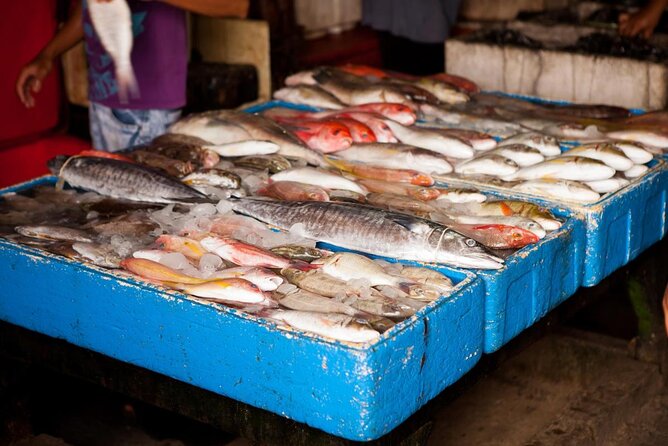
- Jimbaran market visit: Add the morning market trip to see fish and produce selected with the chef.
- Three full menus: Choose between chicken and fish dishes, seafood and chicken satay, or a vegetarian meal.
- Hands-on cooking: Prepare a three-course meal with guidance from a local chef, then eat it for lunch or dinner.
- Useful keepsakes: You receive a certificate and keep the cooking apron.
- Seminyak transfers: Round-trip private transport within the Seminyak area is included.
- Small-group setting: The class accepts a maximum of 10 people and requires at least two participants.
Cooking Balinese food at The Amala in Seminyak
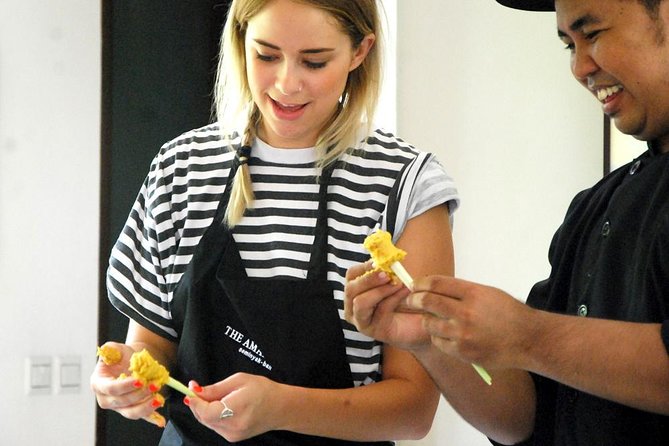
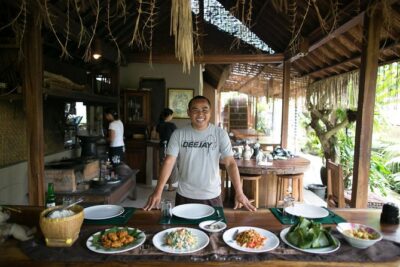
This is a three-hour class held at The Amala, a calm villa setting on Jalan Kunti I in Seminyak. You meet the chef there, learn about the ingredients and tools, prepare the dishes, and sit down to eat what you made.
The setting matters. A cooking class can feel rushed or crowded when it takes place in a busy commercial kitchen. Here, the class takes place in a more peaceful setting, with staff helping prepare the dining area at the end. That gives the meal a pleasant finish instead of sending you straight back into the street.
You can choose a morning or afternoon session. The morning class begins with the optional market visit at 9:30 a.m., followed by the cooking class at 11 a.m. The afternoon version starts with the class at 4 p.m. and ends with dinner around 6 p.m. The market visit is available only with the morning session.
The experience is designed for people aged 12 and older. You need at least two people to book, and the maximum group size is 10. That is small enough for the chef to give individual help, though the amount of personal cooking time can vary depending on the size of the group.
More cooking in Seminyak:
- Nia Bali Seminyak Cooking Class
★ 5.0 · 127 reviews - Cooking class in the comfort of your own personal villa. Yes, I’ll come to you!
★ 5.0 · 80 reviews - Balinese Cooking Class & Tanah Lot Temple Visit – Private & All-Inclusive
★ 5.0 · 24 reviews
The Jimbaran market add-on at 9:30 a.m.
If you want the most local part of the experience, add the morning market visit. Chef Putu accompanies you to Jimbaran fish market and a nearby produce market, where you see the ingredients before they become lunch.
This is more useful than a simple sightseeing stop. The chef can explain which fish to choose and how to judge freshness. One practical tip shared during the market visit is to look for redder eyes when selecting a red snapper. You also get a closer look at the herbs, vegetables, and spices used in Balinese cooking.
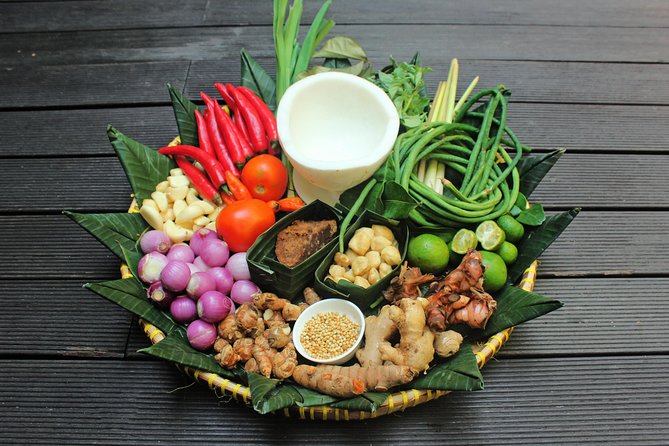
The market visit helps explain why Balinese food can taste so layered. The cooking depends on combinations of aromatics, coconut, chilies, herbs, and spices rather than one dominant sauce. Seeing those ingredients in their everyday market setting gives you a clearer sense of how the food fits into local life.
There are two points to keep in mind. The market is an optional extra, not part of every booking, and it requires at least two people. A solo participant can arrange it by paying an additional Rp100,000 net. If you are interested in the market, confirm that option when booking rather than assuming it is included.
The market also makes the morning schedule longer than the basic three-hour class. That is usually a good trade for food lovers, but less appealing if you want a quick activity before a packed day of sightseeing.
Choosing between the three menus
All participants in the same booking choose one menu. That means you should agree with your companions before class, since the kitchen prepares one shared menu rather than separate dishes for each person.
Menu 1: salad, steamed fish, and coconut pancake
Menu 1 includes lawar salad, tum ikan, and dadar gulung.
Lawar salad combines green beans, fresh coconut, and chicken. Tum ikan is fish steamed in a banana leaf, a preparation that keeps the fish moist while adding fragrance from the surrounding seasonings. Dadar gulung is a coconut pancake filled with palm sugar and coconut.
This menu gives you a broad introduction to Balinese cooking. You work with vegetables, coconut, fish, banana leaf, and palm sugar in one meal. It is a good pick if you want the classic sweet and savory contrast of Balinese food.
Same base, a different sort of day:
- Bali Full-Day Traditional Village Sightseeing Trip All Inclusive
★ 5.0 · 3,069 reviews - Experts Bali Driver : Best Bali Private Driver for Tour in Bali
★ 5.0 · 1,339 reviews - Bali Hai Sunset Dinner Cruise
★ 5.0 · 1,173 reviews - Private Arrival Transfer: Bali Airport to Hotel
★ 4.5 · 739 reviews
Menu 2: papaya soup, chicken satay, and fried banana
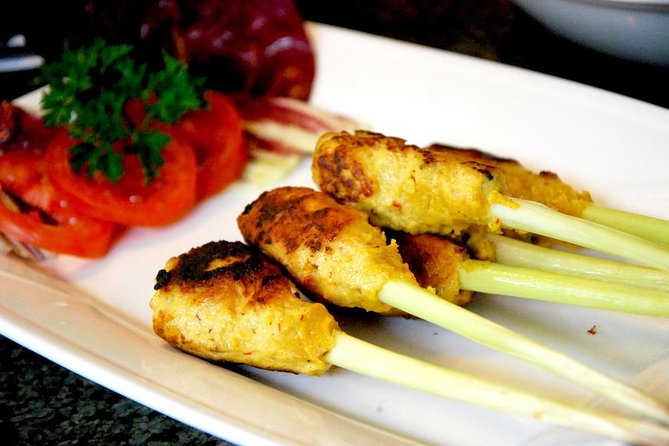
Menu 2 includes jukut gedang mekuah, a young papaya soup with seafood, sate lilit ayam, chicken satay shaped around a lemongrass stick, and steamed rice. Dessert is godoh biu, a Balinese fried banana.
This menu has the most obvious street-food and home-cooking appeal. The satay is not simply chicken on a skewer. The chicken is formed around lemongrass, which gives the dish its distinctive shape and aroma. The papaya soup adds a lighter, brothy course before the satay and rice.
Choose this menu if you want a meal with several contrasting textures and a familiar dessert. The portions have been described as generous, so you are unlikely to leave hungry.
Vegetarian menu: gado-gado, steamed tofu, and black rice pudding
The vegetarian option includes gado-gado with peanut dressing, pepes tahu, and bubur injin.
Gado-gado is a vegetable salad with a rich peanut dressing. Pepes tahu is tofu steamed in a banana leaf. The meal ends with bubur injin, Balinese black rice pudding.
This is not a token vegetarian replacement. It is a complete three-course menu built around vegetables, tofu, peanuts, coconut, and black rice. If someone in your group does not eat meat or seafood, this menu lets everyone take part without needing a separate arrangement.
What you actually do during the class
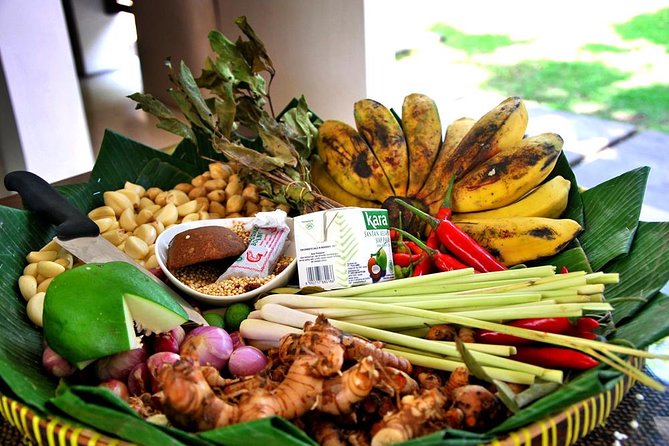
The class begins with an introduction to the ingredients and equipment. The chef explains what you are using, then guides you through the preparation step by step.
You should expect to chop, mix, shape, wrap, and cook. The class is practical, but it is not a professional kitchen apprenticeship. One participant felt that much of the class involved chopping ingredients, so set your expectations accordingly. That preparation work is part of Balinese cooking, but you will not spend the entire session mastering advanced techniques.
Chef Putu and the other instructors, including Manik and Evi on some sessions, explain the dishes in simple terms and answer questions as you work. The instruction includes advice on substitutes for ingredients that may be difficult to find at home. That is especially useful if you hope to repeat the dishes after returning from Bali.
You get several chances to take part in the cooking rather than standing behind a counter. In a larger group, however, everyone may not have the same amount of time at the stove. If you want extra practice with a particular dish, ask the chef while that dish is being prepared.
The class also gives you a recipe to follow during the preparation. That makes it easier to remember the steps later, when you are trying to recreate the meal without a chef beside you.
Eating your own three-course lunch or dinner
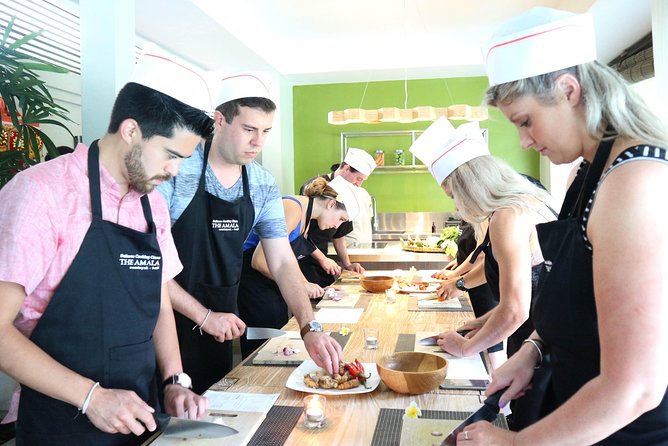
The reward comes at the end, when you sit down to eat the food prepared during the class. The staff arrange an attractive dining area, and the meal is served as lunch after the morning session or dinner after the afternoon session.
I like this format because it turns the class into a complete meal, not just a demonstration followed by a small tasting. The food is described as plentiful, and several participants found the finished dishes delicious.
There is one small service issue to note. One person found that the food had cooled by the time they sat down to eat. This may depend on timing and the number of dishes being prepared, but it is fair to say that the meal is not guaranteed to arrive piping hot. If temperature matters to you, mention it politely to the staff when the cooking is finished.
The dining portion also gives you time to ask follow-up questions. You can talk about the spice paste, the role of coconut, or ways to replace local ingredients at home. The meal becomes more useful when you treat it as a chance to discuss technique, not just as the final course.
The apron and certificate are useful finishing touches
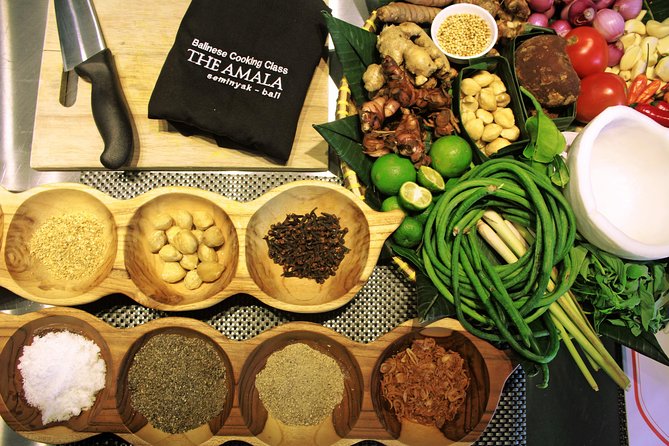
At the end, you receive a certificate from the chef and keep the class apron. These are simple souvenirs, but they are more useful than a generic trinket. The apron can go straight into your luggage, and the certificate gives the activity a pleasant sense of completion.
The personal touches continue with the staff. The cooking team helps people feel comfortable, and the class has been run successfully for couples, friends, families with older children, and even a solo participant. The minimum age is 12, so it is not aimed at very young children.
Is $66.67 a fair price?
At $66.67 per person, this is not the cheapest cooking lesson in Bali. The price makes more sense when you count what is included: a roughly three-hour class, a three-course meal, instruction from a local chef, a certificate, an apron, and private round-trip transport within Seminyak.
The market visit is the main factor that can improve the value. It adds context and gives you a chance to see how the ingredients are selected. If you are mainly looking for a meal and a quick cooking activity, the standard class may be enough. If you care about food culture and want to understand the ingredients before cooking, the morning add-on is the stronger choice.
The included transfer is convenient if you are staying in Seminyak. It removes the need to arrange a taxi to The Amala and back. The included area is limited, however. If you are staying outside Seminyak, ask about transport before booking. An additional charge was required for one booking from Nusa Dua, so the transfer should not be assumed to cover all of south Bali.
The activity has free cancellation up to 24 hours before the start time. Cancellations or changes inside that window are not refunded or accepted. Poor weather can also lead to a date change or full refund.
Who will enjoy this Seminyak cooking class?
You should book this if you want to learn enough about Balinese food to cook some of it at home. It suits curious eaters, couples, friends, and families with children aged 12 or older. The vegetarian menu makes it easy for non-meat eaters to join.
It is also a good rainy-day or low-key Seminyak activity, though the market visit depends on suitable weather. The relaxed setting works well if you prefer a small class over a large demonstration.
You may want to skip it if you are looking for advanced chef training, a very long market tour, or a class where every participant cooks a completely different menu. Everyone in the same booking follows one menu, and some of the work is basic preparation.
The strongest version of the experience is the morning class with the market visit. You see the fish and produce, learn how to choose ingredients, cook lunch, and finish with the apron and certificate. The afternoon class is still worthwhile if you prefer a later start or dinner.
Should you book it?
I would book this class if you have three hours to spare in Seminyak and want more than a standard restaurant meal. The market visit and the practical cooking time give you a useful look at how Balinese dishes come together, while the small group and included transport keep the day simple.
Choose Menu 1 for a balanced fish and coconut meal, Menu 2 for satay and seafood soup, or the vegetarian menu for gado-gado, tofu, and black rice pudding. Add the market visit if you want the most memorable and informative version. Just confirm the pickup area, the shared menu choice, and any market surcharge before paying.
FAQ
Where does the cooking class take place?
The class takes place at The Amala Boutique Retreat, Jl. Kunti I No. 108, Seminyak, Bali.
Is hotel pickup included?
Round-trip private transfer is included for hotels within the Seminyak area.
How long does the experience last?
The cooking class lasts approximately three hours. The optional morning market visit makes the overall morning schedule longer.
What time does the morning class begin?
The optional market visit starts at 9:30 a.m. The cooking class begins at 11 a.m. and the meal is scheduled for around 1 p.m.
What time does the afternoon class begin?
The afternoon class starts at 4 p.m. and finishes with dinner at approximately 6 p.m.
Is the market visit included?
The Jimbaran fish market visit is optional and is available with the morning session only.
Can one person book the market visit?
The market visit requires a minimum of two people per booking. A solo participant can arrange it by paying an additional Rp100,000 net.
What menus are available?
You can choose Menu 1 with lawar salad, steamed fish, and coconut pancake; Menu 2 with young papaya seafood soup, chicken satay, rice, and fried banana; or the vegetarian menu with gado-gado, steamed tofu, and black rice pudding.
Can I choose different menus for different people?
Everyone in the same booking follows the same menu.
What do I receive after the class?
You eat the three-course meal you prepared, receive a certificate from the chef, and keep the class apron.
Just added in Seminyak
- Ubud Village Sightseeing, Famous Paddy Field And Ubud Waterfall★ 5.0 · 4 reviews
- Bali Sekumpul with Fiji Waterfall & Bedugul Temple (Private Tour)★ 5.0 · 29 reviews
- Private Nusa Penida Snorkeling Tour★ 5.0 · 30 reviews
- Private Half-Day Tour: Tanah Lot Sunset Trip Packages★ 4.5 · 11 reviews
- Bali Ngurah Rai International Airport Pickup to Ubud Area★ 5.0 · 12 reviews
- Bali Private Car Charter with English Speaking Driver★ 5.0 · 54 reviews
- Bali Tour: The Best Way to Explore The Highlight of Bali★ 5.0 · 16 reviews
- Mount Batur Sunrise Trekking & Hot Spring Tour★ 5.0 · 54 reviews
Cooking Classes, compared.

PRIVATE Authentic Balinese Cooking Class in Ubud at Putu’s Home
Read our review →
Balinese Ubud cooking school (9 Dish Cooking and Market Tour)
Read our review →
Learn to cook Indonesian food at Gili Cooking Classes Trawangan
Read our review →
PRIVATE Balinese Cooking Class in Ubud with Dewa with Transfers
Read our review →Browse the lists this tour appears in