
Reviewed · WALKING TOURS
The Secret Society of Batavia – Walking Tour
The most unusual part of this Jakarta walk is its subject: Freemasonry in Batavia, a story largely absent from standard Indonesian history lessons. You’ll connect old lodges, Dutch colonial buildings, churches, a palace site, and Masonic symbols carved into the monuments at Taman Prasasti Museum.
I like the small private-group format, limited to 15 people, and the route’s useful mix of outdoor sights and museum time. Guide Rico brings strong enthusiasm and detail to Jakarta’s past. The main drawback is the 6-kilometer walk in hot, humid weather, with little shelter if rain arrives.
Key points to know before you book
- A rare subject: Explore the Dutch East Indies connection to Freemasonry and its alleged world-order ambitions.
- A 6-kilometer route: Walk between Pos Bloc, colonial landmarks, Gambir, Monas, the Presidential Palace area, and Taman Prasasti Museum.
- A strong guide matters: Rico is praised for his grasp of Jakarta’s history and his enthusiasm for telling a more detailed story.
- A private experience: Your own group takes part, with a minimum of one person and a maximum of 15.
- Weather is part of the deal: Wear light, comfortable clothes and sturdy shoes, and bring an umbrella from October through April.
- The finish is the highlight: Taman Prasasti Museum provides the clearest look at Freemasonry through symbols on old memorials and gravestones.
Why Freemasonry gives this Jakarta walk its edge
Jakarta has no shortage of colonial buildings, but this tour asks a more pointed question: who gathered behind those walls, and what ideas did they bring with them?
Dutch Freemasonry reached the East Indies during the colonial period. The society’s presence in Batavia linked the city to a wider European network of lodges, rituals, and symbols. The tour also connects Freemasonry with important figures in the Indonesian independence movement, showing that colonial society was not divided into simple groups of Dutch rulers and Indonesian subjects.
You should treat the idea of a secret organization seeking world control as a historical claim and tour theme, not as settled fact. That is part of the appeal. The walk looks at how secrecy, symbols, colonial power, and political ideas can overlap.
I like this approach because it gives familiar Jakarta sights a new purpose. A church is not only a church. A former lodge is not only an old building. A grave monument is not only a marker. The guide helps you ask what each place meant to the people who used it.
Other guided walks in Jakarta:
- Jakarta Walking Tour with Public Transportation Visiting Sites
★ 5.0 · 14 reviews - Queen of the East (Old Batavia) Walking Tour
★ 4.5 · 7 reviews - Jakarta Private Custom Walking Tour with A Guide
★ 5.0 · 3 reviews
Starting inside Pos Bloc Jakarta
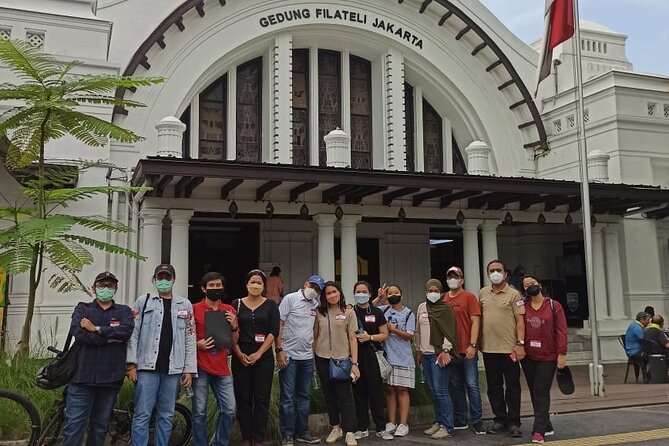
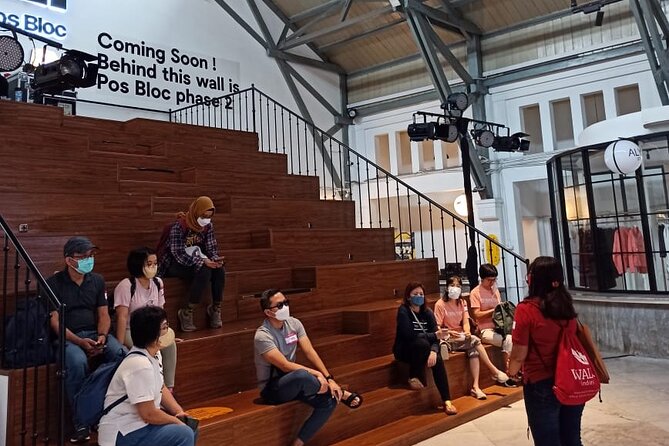
The meeting point is Pos Bloc Jakarta, at Jalan Pos No. 2 in Pasar Baru. The tour begins inside the old philatelic building, and the opening stop takes about 10 minutes.
This is a practical starting point. Pos Bloc is easy to reach by public transport, and beginning indoors gives you a little protection from Jakarta’s heat before the walking begins. It also sets the tone: this is not a bus tour where you stare out a window. You start with a building, a neighborhood, and a story.
Your guide introduces the route and the connection between Batavia, the Dutch colonial administration, and Freemasonry. The supplied pocket map should help you follow the movement across central Jakarta, while the batik cloth fan is a useful item in the warm weather.
The stop itself is short, so do not expect a long museum visit here. Its value comes from orientation and context.
The former De Ster in Het Oosten lodge
The next stop takes you to the former De Ster in Het Oosten lodge, now associated with the Kantor Pusat PT. Kimia Farma Apotek. You spend about 15 minutes here.
This is one of the most important stops for the tour’s central idea. The name points to a Masonic lodge in the Dutch East Indies, and the site gives you a physical link to an organization that is often missing from basic accounts of Batavia.
I would pay close attention to the guide’s explanation here rather than expecting a fully preserved attraction. The tour information identifies the location and its connection, but it does not promise an interior tour. This is mainly a stop for historical interpretation and exterior observation.
That distinction matters. If you want elaborate interiors at every stop, this may feel light. If you enjoy understanding how a modern city overlays its colonial past, the stop earns its place.
Passing Daendels Palace
The route continues past Daendels Palace, with about 15 minutes at the location. The palace name connects the walk to the colonial administration and the powerful figures who shaped Batavia’s streets and institutions.
This stop helps broaden the story beyond Freemasonry alone. The tour is not simply a hunt for hidden symbols. It places the lodges within the political and architectural world of Dutch Batavia.
Because you are passing the site rather than receiving a long formal visit, keep your expectations realistic. You’ll likely get the most from this section if you listen closely to the guide’s explanation of the site’s role and its connection with the city’s colonial order.
I appreciate this kind of stop because it keeps the tour from becoming too narrow. Secret societies make more sense when you see the government buildings, churches, and public spaces around them.
Same base, a different sort of day:
- Jakarta: Volcano, Tea/Rice Fields, Hot Spring, Local Food
★ 4.9 · 515 reviews - Active Volcano, Rice Field, Hot Spring, Fruit market, Tea Plantation with Lunch
★ 5.0 · 513 reviews - Private Full-Day Guided Tour: Explore Jakarta’s Top Highlights
★ 5.0 · 338 reviews - Jakarta Half-Day Guided Tour with a Private Fun Local Host
★ 5.0 · 292 reviews
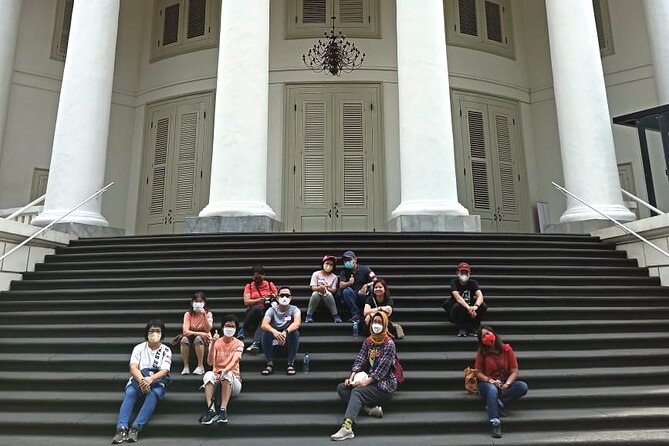
GPIB Immanuel and Dutch church architecture
At GPIB Immanuel Jakarta, the tour pauses for around 20 minutes to look at the Dutch church architecture.
This is one of the longer outdoor stops before the museum. The church gives you a chance to consider the religious and social institutions that formed part of colonial Batavia. It also adds variety to the walk, which otherwise could become a sequence of lodge-related addresses.
The guide’s role is especially important here. You may find that the building’s connection to the wider story is less obvious than the Masonic lodge itself. A good explanation turns the architecture into evidence of the communities and power structures that shaped the city.
The stop is still primarily an exterior architecture visit, based on the supplied route. Do not book this expecting a full church service or an extended indoor tour.
A useful break at Gambir Train Station
Gambir Train Station is the practical midpoint. You spend about 15 minutes here, with time to rest and receive mineral water.
That small pause matters. Six kilometers in Jakarta’s heat can feel very different from six kilometers on a cool European walking route. A short rest lets you cool down, drink, and reset before the route continues toward Monas and Taman Prasasti.
Bottled water is included, but I would still bring extra water if you usually drink a lot in hot weather. The tour also advises comfortable clothes and shoes, and that advice is not decorative. Choose breathable clothing and footwear that can handle several hours on city streets.
Gambir is also a useful transport reference point. The tour is near public transportation, but hotel pickup and drop-off are not included. You need to make your own way to Pos Bloc and arrange your return from the museum.
Monas and the Presidential Palace area
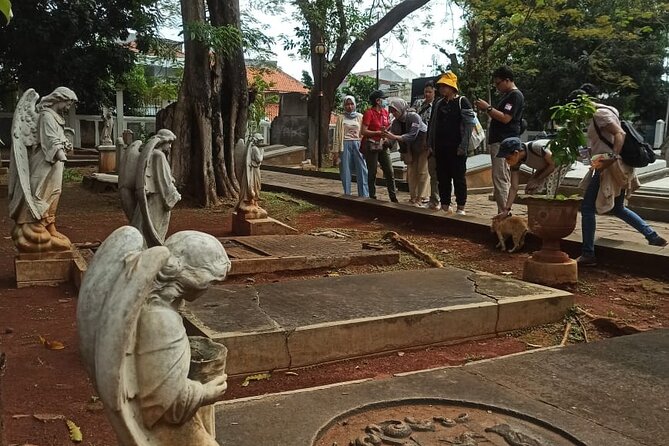
The next section takes you through Taman Pandang Istana, with views toward Monas and a route passing the Presidential Palace. This stop takes about 15 minutes.
Here, the tour shifts from specific buildings to the broader civic center of modern Jakarta. Monas is one of the city’s most familiar landmarks, while the Presidential Palace area brings the story into the present political heart of Indonesia.
I like this contrast. The walk begins with a colonial postal building and a former lodge, then moves through churches, government sites, and national symbols. That progression helps you see Jakarta as a city layered with different political eras rather than a collection of isolated monuments.
This is also a short stop, so you should not expect a full Monas visit or palace tour. The route passes these sights as part of the larger historical argument. Bring your camera if you want photographs, but listen for the explanation of how the places fit together.
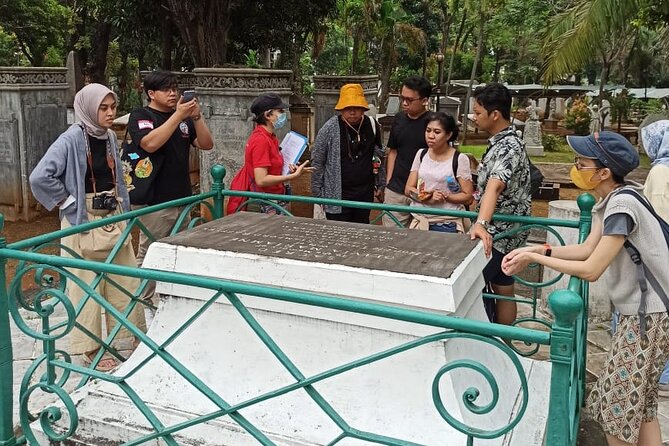
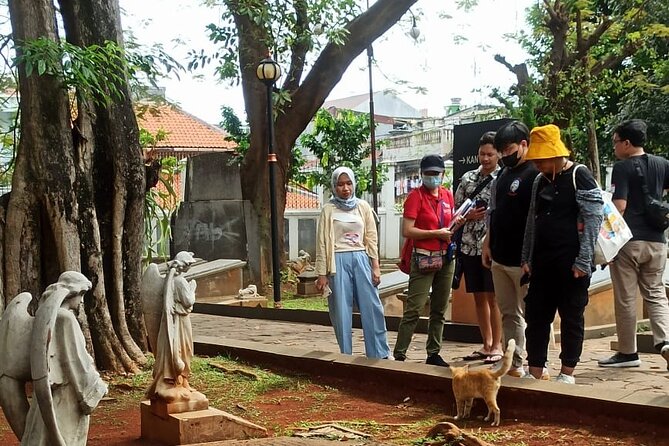
Reading symbols at Taman Prasasti Museum
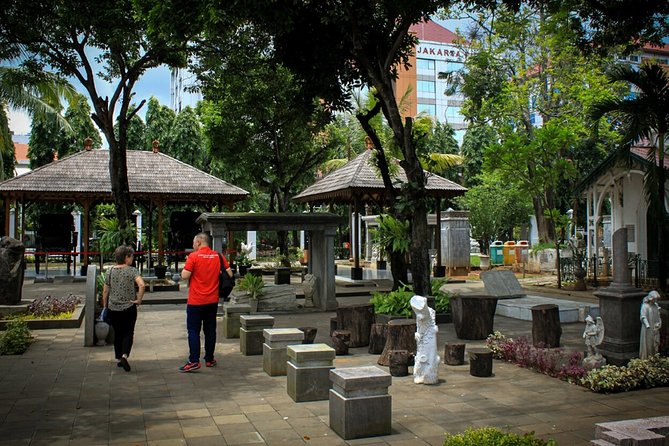
The final stop is Taman Prasasti Museum, where you spend about 36 minutes. Admission is included.
This is the payoff for the tour’s theme. The museum is one of the oldest modern burial complexes in the world, and its memorials provide the clearest setting for examining Freemasonry’s symbols in Jakarta.
A cemetery can be a better place to study a secret society than a grand public building. Symbols appear on monuments, where they can be read as personal, religious, social, or organizational signs. Your guide helps you identify the Masonic references and consider what they reveal about the people commemorated there.
Do not expect a giant exhibition devoted only to Freemasonry. The attraction is the site itself and the details found among the inscriptions and monuments. The museum visit is not especially long, so the guide’s interpretation makes a major difference.
The tour ends at the museum on Jalan Tanah Abang I. Since there is no hotel drop-off, plan your next movement before the walk begins.
What the private format means for you
This is a private activity, so only your group takes part. The tour accepts from one to 15 people, and group discounts may be available.
That format suits you if you want to ask questions about Indonesian history, colonial society, or the meaning of particular symbols. A private group also makes it easier to keep a steady pace and hear the guide in busy city areas.
The strongest praise is directed at Rico, who is described as enthusiastic and especially good at giving Jakarta’s past more detail and nuance. That matters here because several stops are brief exterior visits. The guide has to supply the connections that the buildings themselves cannot.
The private format may be less useful if you prefer a large group with a lower individual price. At $62.77 per person, the tour is not a cheap sightseeing walk. You are paying for a certified professional guide, a private experience, museum entry, bottled water, a pocket map, and the focused subject matter.
Is $62.77 a fair price?
The price makes the most sense for a small group that values interpretation over simple sightseeing.
You are not paying only for entrance tickets. Most stops are free, and the walking route itself costs nothing. The value comes from having a guide connect scattered sites into one story, manage the route, provide water, supply the map and fan, and lead your group into Taman Prasasti Museum.
For one person, the price may feel high compared with a standard city walk. For a private group sharing the experience, the calculation improves. If you already know Jakarta’s main sights and want a more focused subject, this tour offers something different from a general city highlights route.
The tour’s value depends heavily on your interest. If Freemasonry, colonial institutions, and symbols on memorials sound appealing, the price is easier to justify. If you mainly want famous landmarks, you may find the route too specialized.
Heat, rain, and the 6-kilometer reality
The walk takes about three and a half hours and covers roughly 6 kilometers. Jakarta is warm and humid all year, so this is a physical activity even though the route is not described as difficult.
Bring an umbrella, especially from October through April, which is identified as the rainy season. The tour runs in sunny or rainy conditions, so you need to be ready for both. Rain can change the comfort of the walk quickly, and several stops are outdoors.
Wear comfortable shoes and light clothing. You may also want sunscreen and extra water, though only bottled water is specifically included. The planned rest at Gambir helps, but it does not remove the need to pace yourself.
Children from ages 3 to 12 pay the same fare as adults and must be accompanied by an adult. Most people can participate, but the distance and weather are worth considering before bringing a young child.
There is no tour on Monday because the museums are closed. The booking confirmation is normally provided at booking, though reservations made within five days of the date may receive confirmation within 48 hours, subject to availability.
Who should book this walk?
I would choose this tour if you have already seen some of Jakarta’s main sights and want a narrower, more thoughtful subject. The walk suits history fans, architecture fans, visitors curious about colonial institutions, and anyone who enjoys reading symbols in old cemeteries.
It also works well for a private group that wants a guide to adjust explanations to its interests. Since the route is in central Jakarta and near public transportation, it can fit into a wider day of sightseeing, though you should allow time and energy for the full 3.5 hours.
I would skip it if you dislike walking in heat, need frequent indoor stops, or want a tour built around entering major attractions. The route is about connections, interpretation, and observation. Several places are seen from outside, and the final museum visit is relatively short.
The experience is non-refundable and cannot be changed after booking, so check the day, weather, group size, and physical demands before paying. That policy makes careful planning especially important.
Should you book The Secret Society of Batavia?
Book it if you want Jakarta beyond the standard postcard sights. The unusual theme, private format, and final visit to Taman Prasasti Museum give the walk a clear identity. Guide Rico’s enthusiasm is a major advantage, especially when the route reaches sites whose importance is not obvious at first glance.
I would call it a specialist tour with broad appeal, not a general introduction to Jakarta. You’ll get the most from it after seeing the city’s headline sights, when you are ready for a story about power, colonial society, Freemasonry, and memory carved into stone.
FAQ
Where does The Secret Society of Batavia walking tour begin?
The tour begins at Pos Bloc Jakarta, inside the philatelic building at Jalan Pos No. 2, Pasar Baru, Central Jakarta.
Where does the tour end?
The walk ends at Taman Prasasti Museum on Jalan Tanah Abang I in Central Jakarta.
How long is the tour?
The experience lasts approximately three hours and 30 minutes.
How far do you walk?
The route covers about 6 kilometers.
What is the maximum group size?
The private tour accepts from one to 15 participants. Only your group takes part.
Is museum admission included?
Yes. Entrance to Taman Prasasti Museum is included in the tour price.
Does the tour run on rainy days?
Yes. The tour runs in sunny or rainy conditions. You are advised to bring an umbrella, especially during the rainy season from October through April.
Does the tour operate on Mondays?
No. There is no tour on Monday because the museums are closed.
Just added in Jakarta
- Jakarta Indonesian Culture in half Day★ 5.0 · 50 reviews
- Situ Gunung Waterfall & Suspension Bridge Sukabumi start Jakarta★ 4.5 · 13 reviews
- Volcano and Domas Crater of Hot Stony Bubble from Jakarta Lunch★ 5.0 · 23 reviews
- Jakarta Scooter Lessons and Motorcycle Lessons★ 5.0 · 9 reviews
- Private Tour: Half Day Jakarta Old City Tour★ 4.0 · 4 reviews
- Soekarno Hatta International Airport by Plaza Premium Lounge★ 4.0 · 46 reviews
- Bandung Private Tour Mountain Volcano and Hotspring ( Overland )★ 5.0 · 7 reviews
- Private Full Day Tour of Jakarta with Hotel Pickup★ 4.0 · 13 reviews
Walking Tours, compared.
Tetebatu Walking Tour – Rice Terraces, Waterfall & Monkey Forest
Read our review →
Small-Group Walking and Food Tour by Night in Yogyakarta
Read our review →
Bali Private Food Walking Tour With Locals: The 10 Tastings
Read our review →
Night Walking Tour-Malioboro street food with guide at Yogyakarta
Read our review →
Best Lombok Rice Terrace Walking Tour With Waterfall & Monkey
Read our review →
Jakarta Walking Tour with Public Transportation Visiting Sites
Read our review →Browse the lists this tour appears in