
Reviewed · WALKING TOURS
Queen of the East (Old Batavia) Walking Tour
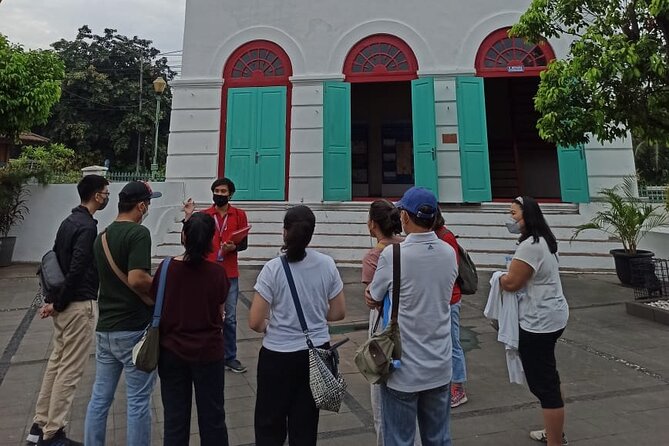
The best part of this tour is that it takes you through Jakarta’s past on foot, from the old VOC spice warehouses beside Sunda Kelapa Harbour to the grand buildings around Fatahillah Square. You’ll see the bones of Batavia, the Dutch colonial city once known as the Queen of the East, rather than only hearing about it from behind a car window.
I like the private format, since your guide can shape the pace and explain the sites to your group. I also like the route’s mix of working port views, city walls, a nearly 400-year-old drawbridge, colonial buildings, and museum collections. The main drawback is the walking distance in Jakarta’s heat, plus a long stretch after the port that may feel light on sights. One past booking found the Maritime Museum less worthwhile and suggested using a trishaw for part of that return walk.
Key points to know before booking
- A 4 to 4.5 km walking route: This is a real walking tour, not a short stroll between nearby monuments.
- A private English-speaking guide: Your group is limited to your own party, with a maximum of 15 people.
- A strong harbor opening: The Maritime Museum and Sunda Kelapa Harbour provide the clearest link to Batavia’s trading past.
- A nearly 400-year-old bridge: Kota Intan Drawbridge is one of the route’s most memorable physical reminders of old Jakarta.
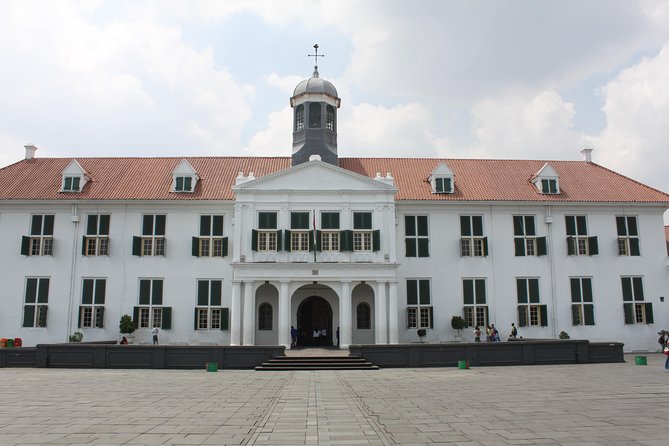
- A grand finish at Fatahillah Museum: The tour ends with antiques from the 17th through 19th centuries and an underground dungeon.
- Weather matters: Jakarta stays warm and humid, and the tour runs in rain or sun, so carry an umbrella during the October through April rainy season.
Why Old Batavia makes a good walking tour
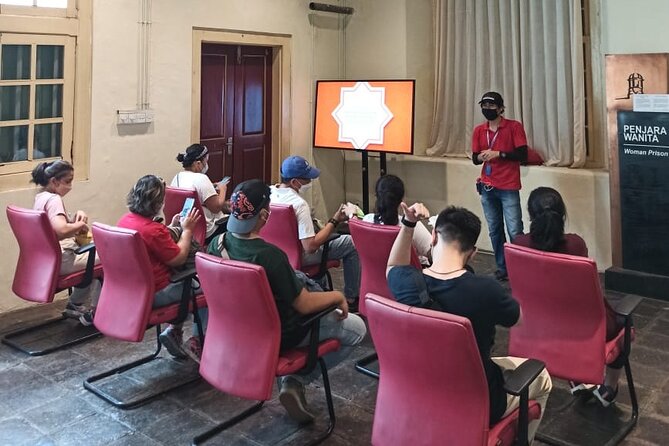
Jakarta can feel enormous. Its modern roads, traffic, and spread-out districts make it hard to understand the older city unless you focus on one compact historical area. This tour gives you that focus.
Old Batavia was built around trade, government, storage, canals, walls, and port access. The route helps connect those pieces. You begin near the harbor and warehouses, then move through remnants of the defensive city before ending at the civic center around Fatahillah Square.
That order makes sense. You first see how goods entered the city, then how the city was protected and organized, and finally how its rulers and institutions presented themselves. A guide is useful here because much of Batavia’s story is architectural and geographic. A wall fragment or warehouse becomes more meaningful when you understand what it did.
The tour takes about three hours, but allow extra time around the start and finish. The walk covers roughly 4 to 4.5 km, and Jakarta’s heat can slow you down. Wear light, comfortable clothing and shoes with good support. This is not the place for stiff sandals or footwear chosen only for photographs.
Other guided walks in Jakarta:
- Jakarta Walking Tour with Public Transportation Visiting Sites
★ 5.0 · 14 reviews - The Secret Society of Batavia – Walking Tour
★ 5.0 · 4 reviews - Jakarta Private Custom Walking Tour with A Guide
★ 5.0 · 3 reviews
Starting at the Maritime Museum and Sunda Kelapa Harbour
The meeting point is the Maritime Museum, also called Museum Bahari, on Jalan Pakin. Your guide meets you here and begins with one of the old VOC spice warehouses.
This is a fitting starting point. The Dutch East India Company, known as the VOC, used Batavia as its main base in Asia. The warehouses connected the port to the company’s trade in spices and other supplies. You are not simply visiting an old museum building. You are standing in a place built for the business that helped shape the city.
The stop lasts about 50 minutes, with admission included. You’ll also get a view of Sunda Kelapa Harbour from above the old control post. That view helps explain why this location mattered. The harbor was not a decorative waterfront. It was a working gateway for ships, cargo, and the movement of people.
I would give this first stop your full attention, even if museums are not usually your priority. The harbor view and the warehouse setting provide important context for everything that follows. Without them, the later walls and colonial buildings can seem like isolated old structures.
At the same time, this is the stop where expectations matter most. One account of the tour found the Maritime Museum less compelling than the Jakarta History Museum, the port, and the later Old Batavia sights. If your interest is mainly in grand architecture and central Fatahillah Square, you may find the museum portion a little slow.
Following the old city wall near the Eastern Warehouse
From the maritime area, the route continues to a surviving section of Batavia’s old city wall near the Eastern Warehouse. This stop takes about 15 minutes and has no additional admission fee.
Fifteen minutes is not long, but the wall is valuable because it shows how Batavia functioned as a fortified colonial headquarters. The city was not only a collection of offices and houses. Its walls marked a controlled urban zone tied to trade, military power, and administration.
This is also where the tour’s walking format pays off. From a vehicle, you would pass the remains quickly. On foot, you can pause, look at the relationship between the old wall and nearby buildings, and ask your guide how this part of the city fitted into the wider plan.
Do not expect a complete fortress. You are seeing what remains, not a fully restored enclosure. That can be part of the appeal, but it also means the experience depends on your guide’s explanation. The physical evidence is partial, so a good story helps fill in the gaps.
Crossing Kota Intan’s nearly 400-year-old drawbridge
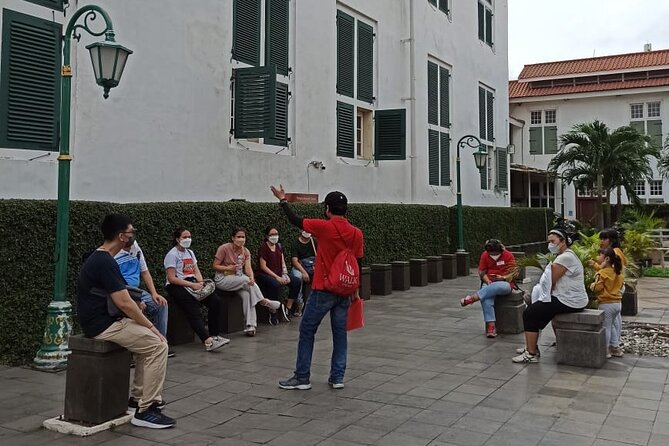
Next comes Kota Intan Bridge, a nearly 400-year-old wooden drawbridge. The stop lasts about 15 minutes, and entrance is included.
This is one of the route’s most distinctive sights. Large museums can tell you about Batavia, but a bridge lets you feel the age of the city in a direct way. Its purpose was practical, linking parts of the old settlement while allowing movement through the waterways and controlled areas.
The bridge is also a good photograph stop. Take a moment to look beyond the structure itself. The value is not only in getting a picture of old wood. It is in seeing how canals, roads, warehouses, and bridges once worked together as part of Batavia’s urban plan.
Your guide should help you notice the relationship between the bridge and the surrounding colonial district. Ask questions here if you want more detail about transport, trade, or the way the old city was laid out. Because this is a private tour, your group has more freedom to pause than it would on a large scheduled walk.
Same base, a different sort of day:
- Jakarta: Volcano, Tea/Rice Fields, Hot Spring, Local Food
★ 4.9 · 515 reviews - Active Volcano, Rice Field, Hot Spring, Fruit market, Tea Plantation with Lunch
★ 5.0 · 513 reviews - Private Full-Day Guided Tour: Explore Jakarta’s Top Highlights
★ 5.0 · 338 reviews - Jakarta Half-Day Guided Tour with a Private Fun Local Host
★ 5.0 · 292 reviews
Walking through Dutch colonial streets and Toko Merah
The route then moves through the old Dutch colonial street plan and architecture of the 17th and 18th centuries. You’ll pass Toko Merah, the former Governor General’s mansion.
This portion is less about one timed admission and more about reading the district as a whole. Look for the way buildings face streets and public spaces, and notice how the warehouses and official structures relate to the port. Your guide can connect the buildings to the government and trade system that made Batavia important to the VOC.
Toko Merah gives the walk a more formal character. The old mansion represents the authority behind the trading system, while the earlier warehouses show the practical machinery that supported it. Together, they provide a clearer picture than either sight would offer alone.
This is also the point where the route may feel uneven. One section after the port has been described as a long walk with little of note to see or discuss. I would not book this experience expecting every minute to bring a major monument. Some of the value comes from moving through the old street pattern and allowing your guide to explain what is no longer visible.
If your legs or the heat become a problem, ask about the possibility of using a trishaw for part of the route. The supplied tour information does not include that ride, so treat it as an optional arrangement rather than a promised feature. It could save energy for the stronger sights later.
Finishing at Jakarta History Museum and Fatahillah Square
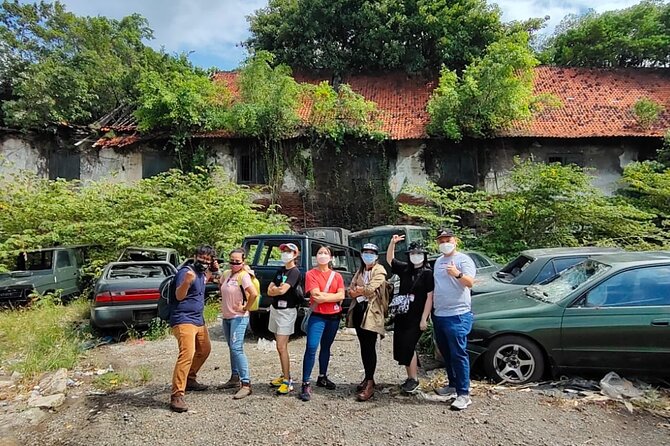
The final major stop is Jakarta History Museum, also called Fatahillah Museum, at Taman Fatahillah. The visit lasts about 40 minutes, and admission is included.
This is likely to be the most satisfying stop for anyone interested in Jakarta’s past. The museum holds antiques from the 17th through 19th centuries, the period most closely tied to the colonial development of Batavia. You’ll also visit the underground dungeon, a stark reminder that the city’s history involved power and punishment as well as commerce and architecture.
The museum’s setting matters. Fatahillah Square gives you the grand public face of Old Batavia. After seeing the port, warehouses, walls, bridge, and mansion, you arrive at the place that brings the district together as a civic center.
A previous assessment of the route particularly valued the Jakarta Museum, the port, and a bank stop. The bank is not listed as a formal timed stop in the supplied route, so do not book this tour specifically expecting a guaranteed bank visit. Still, the comment points to a useful strength of the district: its collection of old commercial and government buildings gives the walk more variety than a museum visit alone.
The tour ends at Jakarta History Museum rather than returning you to the Maritime Museum. That is practical because the route keeps moving forward, but you need to plan your next step from Fatahillah Square. Hotel pickup and drop-off are not included.
What the $67.66 price includes
At $67.66 per person, this is not the cheapest way to see Old Jakarta. The value depends on how much you want interpretation and privacy.
The price includes an English-speaking guide, entrance fees, mineral water, a pocket map, and a batik cloth fan. The private format is the biggest factor. You are not sharing the guide with an unknown large group, and the tour accepts one to 15 people. For one person or a small group, that private attention may justify the cost. For a full group of 15, the per-person price becomes easier to accept.
You are paying for a guided route through several separate places, not just entry to one museum. The guide helps connect the VOC warehouses, harbor, wall, bridge, mansion, and museum into one story. That is useful in a district where many important details are historical rather than visually obvious.
The price does not include meals, insurance, tips, optional activities, or transport to and from your hotel. The meeting point is near public transportation, which helps keep your overall cost down if you arrange your own way there.
Group discounts are available, but the exact reduction is not provided. Check the final price for your group before booking.
Heat, rain, and practical walking advice
Jakarta is warm and humid throughout the year, and the tour runs in both sunny and rainy conditions. During the rainy season, especially from October through April, bring an umbrella. Do not rely on the weather staying dry simply because the morning begins clear.
Carry only what you need. Mineral water is included, but you may want extra water for a 4 to 4.5 km walk. The included batik fan is a useful little item in the heat, though it will not replace sensible clothing and hydration.
Comfortable clothes and shoes are specifically recommended. You will be outside for much of the tour, with stops in museums and historic buildings. Children must be accompanied by an adult, and children aged three to 12 share the same fare as adults.
Most people can take part, but the distance and weather deserve honest consideration. If you dislike heat, have trouble walking several kilometers, or prefer frequent vehicle transfers, this may not be the right Jakarta outing for you.
The tour does not run on Mondays because the museums are closed. It is also non-refundable and cannot be changed after booking, so check your date and weather expectations carefully before paying.
Who should book this Old Batavia walk?
I would choose this tour if you want a focused introduction to Jakarta’s colonial core and prefer a guide to explain what you are seeing. It suits history-minded visitors, photographers, small private groups, and anyone who wants to combine a harbor visit with the city’s main Old Batavia sights.
It is especially useful early in a Jakarta stay. The route gives you a working sense of how the old city was built around trade, storage, defense, and government. Later visits to the area will make more sense because you’ll know what the walls, warehouses, bridges, and square were doing.
I would hesitate if your main goal is a relaxed museum day. The walk is long, the weather can be demanding, and one middle section may feel less rewarding than the port and final museum. If you choose it, plan for the walking rather than treating it as a short sightseeing loop.
Should you book the Queen of the East tour?
Book it if you value a private guide, want the port and Old Batavia in one route, and can handle 4 to 4.5 km in Jakarta’s heat. The strongest parts are the Sunda Kelapa Harbour setting, the old VOC warehouse, Kota Intan Bridge, the colonial street plan, and the finish at Jakarta History Museum.
Skip it if you want door-to-door transport, a compact route, or a tour built around only the most impressive buildings. Ask about the quieter walking section and any possible trishaw option before you go.
For the right visitor, $67.66 buys more than museum admission. It buys a connected explanation of how Jakarta’s old port city worked. Just bring good shoes, an umbrella, and realistic expectations about the pace.
FAQ
How long does the Queen of the East Old Batavia Walking Tour last?
The tour lasts approximately three hours.
How far do you walk?
The walking distance is about 4 to 4.5 km.
Where does the tour begin?
The tour begins at the Maritime Museum, also known as Museum Bahari, on Jalan Pakin in North Jakarta.
Where does the tour end?
The tour ends at Jakarta History Museum, also known as Fatahillah Museum, at Taman Fatahillah.
Is the tour private?
Yes. Only your group participates, with a minimum and maximum group size of one to 15 people.
Is museum admission included?
Yes. Entrance fees are included, including the listed visits to the Maritime Museum, Kota Intan Bridge, and Jakarta History Museum.
Does the tour run in rain?
Yes. The tour runs in sunny or rainy conditions. An umbrella is recommended, especially during the October through April rainy season.
Just added in Jakarta
- Jakarta Indonesian Culture in half Day★ 5.0 · 50 reviews
- Situ Gunung Waterfall & Suspension Bridge Sukabumi start Jakarta★ 4.5 · 13 reviews
- Volcano and Domas Crater of Hot Stony Bubble from Jakarta Lunch★ 5.0 · 23 reviews
- The Secret Society of Batavia – Walking Tour★ 5.0 · 4 reviews
- Jakarta Scooter Lessons and Motorcycle Lessons★ 5.0 · 9 reviews
- Private Tour: Half Day Jakarta Old City Tour★ 4.0 · 4 reviews
- Soekarno Hatta International Airport by Plaza Premium Lounge★ 4.0 · 46 reviews
- Bandung Private Tour Mountain Volcano and Hotspring ( Overland )★ 5.0 · 7 reviews
Walking Tours, compared.
Tetebatu Walking Tour – Rice Terraces, Waterfall & Monkey Forest
Read our review →
Small-Group Walking and Food Tour by Night in Yogyakarta
Read our review →
Bali Private Food Walking Tour With Locals: The 10 Tastings
Read our review →
Night Walking Tour-Malioboro street food with guide at Yogyakarta
Read our review →
Best Lombok Rice Terrace Walking Tour With Waterfall & Monkey
Read our review →
Jakarta Walking Tour with Public Transportation Visiting Sites
Read our review →Browse the lists this tour appears in