
Reviewed · VILLAGE & CULTURAL TOURS
Jakarta Private Cultural Day Tour with Transport
Jakarta’s best story is its mix of cultures, and this private day tour puts that story in front of you. You’ll begin with Betawi traditions at Setu Babakan, then move through Muslim, Catholic, Sikh, Chinese, and Buddhist places in central Jakarta. I like the wide cultural sweep and the fact that your guide can explain the links between each stop rather than leaving you to read signs alone. I also like the private vehicle, which gives you a cooler, easier way to cross a large and busy city.
The main catch is the pace. Six stops in about eight hours means some visits are introductions, not long explorations. Traffic can also affect the day, and lunch is not included, so you’ll want to plan for a meal along the way. Still, guide Ibek and driver Yoga received especially warm praise for making the day comfortable, friendly, and full of useful local context.
Key points at a glance
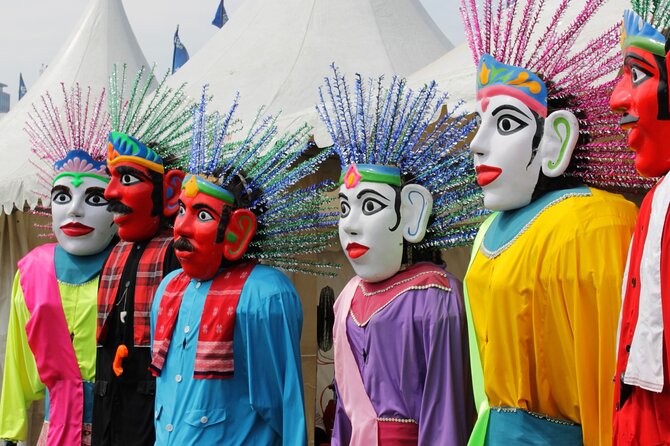
- Betawi culture at Setu Babakan: Start with Jakarta’s own local traditions, including traditional houses, music, dance, and local food.
- Two major religious landmarks: Compare the scale of Istiqlal Mosque with the neo-Gothic design of Jakarta Cathedral.
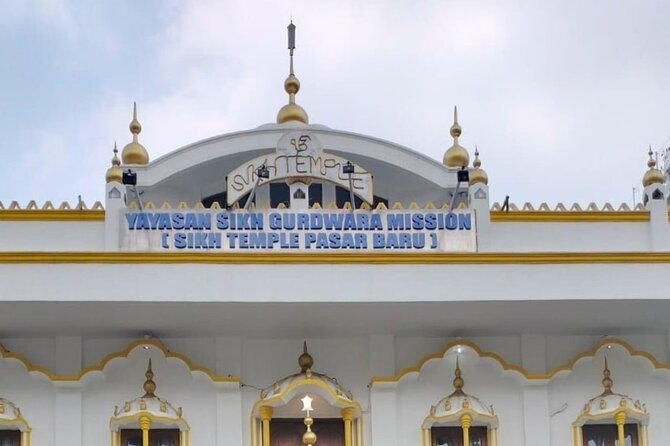
- A Sikh stop in Pasar Baru: The route reaches a less commonly visited part of Jakarta’s religious life.
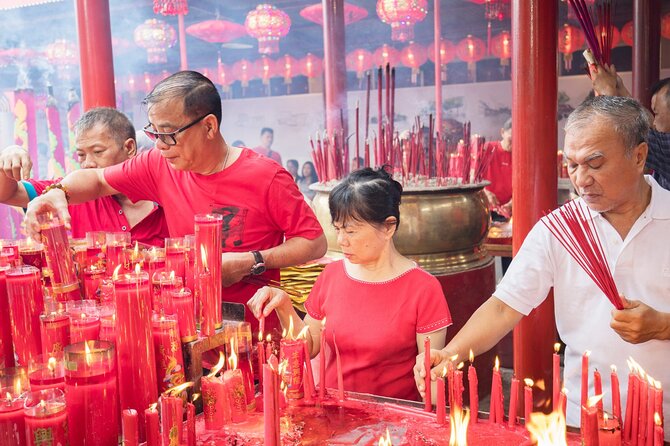
- Glodok and Dharma Bhakti Temple: See Chinese Indonesian culture through markets, street food, temples, and Buddhist art.
- Private transport for up to two: An air-conditioned vehicle, parking fees, and bottled water are included.
- A guide-led cultural overview: Ibek is specifically praised for being friendly, engaging, and well informed about Indonesian history.
Why this route tells Jakarta’s story well
Jakarta can feel hard to grasp at first. It is Indonesia’s capital, a vast urban center, and a meeting place for Javanese, Sundanese, Bugis, Minang, Chinese, Arab, and other communities. A normal sightseeing day can show you famous buildings without explaining how these groups shaped the city.
This route takes a better approach. It moves from Betawi culture, the heritage of Jakarta’s own local people, to major Muslim and Christian landmarks, then into Sikh, Chinese, and Buddhist settings. You are not looking at one narrow version of the capital. You are seeing several communities in one day.
The order also gives the day a useful rhythm. Setu Babakan offers a more local cultural setting early on. The central landmarks then provide grand architecture and national symbolism. Pasar Baru and Glodok bring you back to street-level Jakarta, where religion, trade, food, and neighborhood life overlap.
You should think of this as a guided introduction rather than a slow museum-style tour. The stops are short enough to cover a lot, but not long enough for every building, market, or performance to receive a full examination.
Other village days out of Jakarta:
- Baduy Tribal Tracker and Village in Private Tour Full Day & Lunch
★ 5.0 · 25 reviews - Jakarta: Taman Mini Indonesia Cultural Park Entry Ticket
★ 4.5 · 20 reviews - Private Tour Baduy Village
★ 5.0 · 17 reviews
Setu Babakan: a first look at Betawi life
The opening visit lasts about 90 minutes at Setu Babakan, and it gives the route a strong beginning. Here you can learn about Betawi culture through traditional houses, local customs, music, dance, and food.
This is important because Jakarta is often presented mainly as a modern capital. Setu Babakan shifts the focus to the culture that belongs specifically to the city. You might see traditional architecture, catch a live cultural performance, or taste Betawi delicacies, depending on what is taking place during your visit.
I like having this stop first because it gives you a local reference point before the day turns toward national and religious landmarks. Ask your guide to explain which traditions are distinctly Betawi and how they fit into Jakarta today. A guide such as Ibek can add the background that turns a house or performance into something meaningful.
The 90-minute visit is generous compared with several later stops, but conditions can vary. Performances and food experiences are not described as guaranteed, so you should treat them as possible highlights rather than fixed parts of the schedule. Admission is free.
Istiqlal Mosque: scale and national meaning
The visit to Istiqlal Mosque lasts about 45 minutes. The mosque is known for its impressive architecture and its place as the largest mosque in Southeast Asia. Even with limited time, the scale of the building gives you a clear sense of its importance.
Your guide can explain the mosque’s historical and cultural role while you observe the peaceful atmosphere inside. This is not only an architectural stop. It also helps you understand the place of Islam in Indonesia, the world’s largest Muslim-majority country.
Forty-five minutes is enough for a focused introduction, especially if your guide keeps the explanation clear. It is not enough for a detailed architectural study or a long period of quiet reflection. If you enjoy religious buildings, you may wish the schedule allowed more time here.
Dress and behavior matter at any house of worship. The supplied information does not set out a detailed dress code, so ask the operator before departure if you need specific guidance. Admission is free.
Jakarta Cathedral: a striking contrast next door
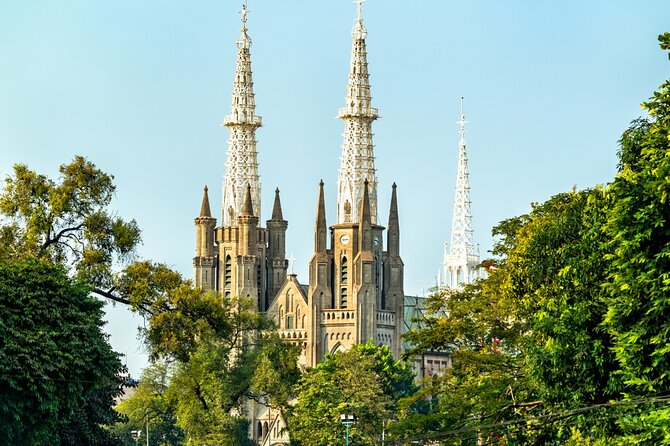
Jakarta Cathedral follows for another 45 minutes. Its neo-Gothic architecture creates a sharp visual contrast with Istiqlal Mosque, making the pairing one of the most effective parts of the day.
Inside, you can see the decorated interior, learn about the church’s past, and hear about its role in Jakarta’s Catholic community. The value here comes partly from the building itself and partly from the comparison. Two major places of worship, serving different faiths, sit within the same capital city and appear together on this route.
The stop works best when you pay attention to the differences in design. Istiqlal presents monumental Islamic architecture, while the cathedral offers a church setting shaped by neo-Gothic forms. Your guide can help connect those visual differences to Jakarta’s broader religious life.
Again, 45 minutes keeps the visit concise. You will get an overview rather than an exhaustive tour of the church. Admission is free, and most people can participate according to the activity information.
Same base, a different sort of day:
- Jakarta: Volcano, Tea/Rice Fields, Hot Spring, Local Food
★ 4.9 · 515 reviews - Active Volcano, Rice Field, Hot Spring, Fruit market, Tea Plantation with Lunch
★ 5.0 · 513 reviews - Private Full-Day Guided Tour: Explore Jakarta’s Top Highlights
★ 5.0 · 338 reviews - Jakarta Half-Day Guided Tour with a Private Fun Local Host
★ 5.0 · 292 reviews
Pasar Baru and the Sikh temple
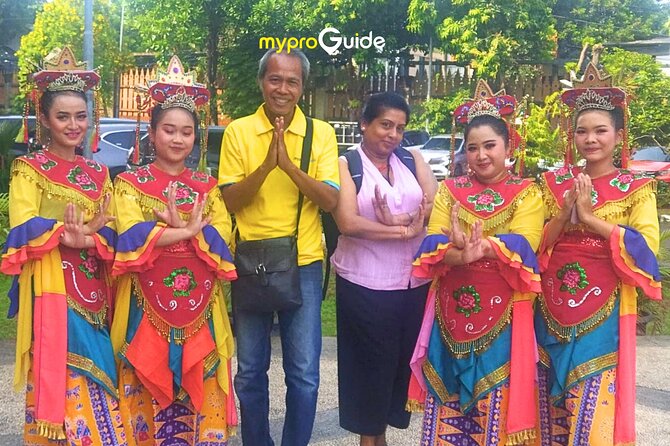
The one-hour stop at Pasar Baru adds a part of Jakarta that can easily be missed on a standard sightseeing day. The description focuses on a Sikh temple, where you can observe the calm setting, learn about Sikh beliefs and customs, and see prayer practices.
This is a useful inclusion because it broadens the religious picture beyond the two major landmarks earlier in the morning. It also places that experience in Pasar Baru, a historic commercial area rather than an isolated monument.
The information provided does not promise that you will take part in a prayer ceremony. You may observe or, where appropriate, participate, but your guide will need to explain what is suitable. Respectful clothing and quiet behavior are sensible at any temple.
One hour should give you time to understand the setting without turning the visit into a rushed photo stop. The stop is especially valuable if you want to see how smaller religious communities form part of Jakarta’s wider identity. Admission is free.
Glodok Chinatown: food, trade, and old Jakarta
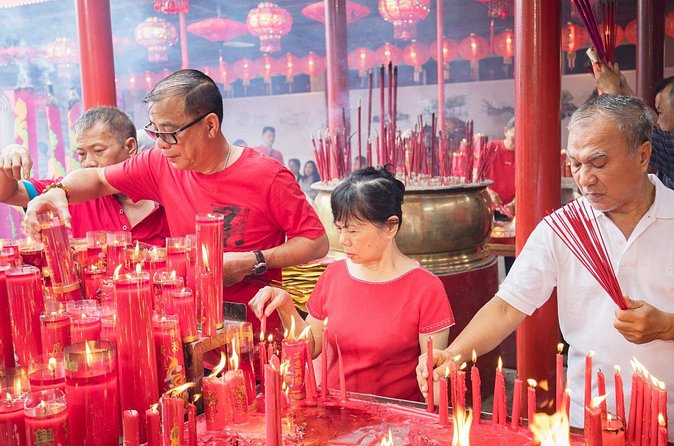
The route then reaches Glodok Chinatown for about an hour. This is one of the more street-focused parts of the day, with traditional Chinese goods, local food, historic temples, and cultural landmarks.
You might taste street food or local delicacies here, but lunch itself is not included in the tour price. That distinction matters. If you expect a full meal, set aside extra money and ask your guide when and where you will eat. The guide can also help you choose food that fits your tastes.
Glodok adds energy and texture after the quieter religious stops. You can look at the goods for sale, watch the movement of the neighborhood, and connect Chinese Indonesian culture with everyday commerce. The description does not promise a set menu or specific food tasting, so keep your expectations flexible.
An hour is enough to sample the area, but it will not cover every market lane or temple. If food is your main reason for booking, you may find this stop too brief. If you want a broad picture of Jakarta’s communities, it fits the route well.
Dharma Bhakti Temple: a final Buddhist perspective
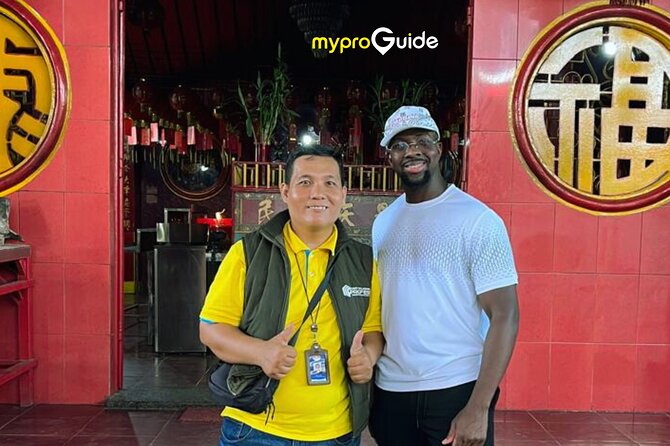
The last listed stop is Dharma Bhakti Temple, with about 45 minutes devoted to the visit. Here you can see Buddhist architecture and statues, learn about the temple’s spiritual role, and spend time in a peaceful setting.
This closing stop complements Glodok. The Chinatown visit shows the commercial and neighborhood side of Chinese Indonesian life, while the temple provides a religious and artistic setting. Together, the two stops give you more than a quick market visit.
The supplied information also uses the name Vihara Dharmapala in its description, while the itinerary identifies the stop as Dharma Bhakti Temple. If the exact temple name matters to you, confirm it with the operator before the day begins. That is a small practical point, but it can avoid confusion when you are checking maps or discussing the schedule.
The 45-minute visit should be enough for an introduction to the building and its spiritual setting. Admission is free.
What the private vehicle adds to the day
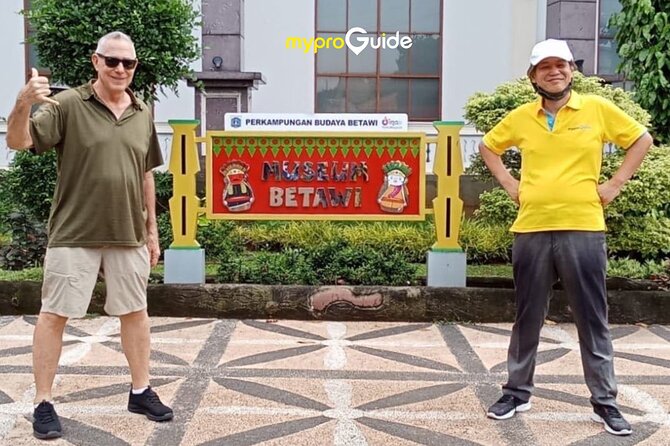
The tour lasts about eight hours and includes an air-conditioned vehicle, parking fees, bottled water, and entrance fees. For a city as spread out as Jakarta, this is more than a minor convenience.
You are not responsible for finding separate taxis between six different areas. You can also retreat into the vehicle between stops, which matters in a hot city and on a full schedule. Air conditioning will not remove traffic delays, but it makes those delays easier to handle.
The booking is private for your group, with a maximum of two people. That suits a couple, two friends, or a solo visitor who wants direct access to a guide. A private format also lets you ask more questions about religion, food, architecture, or Indonesian history without waiting for a large group.
There is a tradeoff. Private touring costs more than joining a shared bus. At $182 per group of up to two, the price works out to $91 per person if two people book together. For that cost, you are paying for a full day of transport, a private guide, parking, water, and a route that would be awkward to arrange independently.
For a solo person, the price is less attractive because the same group rate applies. For two people, the value is stronger, particularly if you place a high value on comfort and time.
How the guide can shape the experience
Guide Ibek is the name most closely associated with the positive feedback supplied for this experience. Ibek is described as friendly, easy to talk with, engaging, and able to share useful information about Jakarta and Indonesia. Those qualities matter on a route built around context.
The buildings themselves are accessible to many visitors. The harder part is understanding what you are seeing. Why does Betawi culture matter to Jakarta? How do the mosque and cathedral relate to the city’s religious life? What should you notice in Glodok beyond the food stalls? A good guide turns those questions into the substance of the day.
Driver Yoga is also praised for keeping the journey smooth and comfortable. That division of roles is useful. You want the guide focused on explanation and the driver focused on Jakarta’s roads.
The experience has only a small number of formal ratings in the information provided, so I would not treat the praise as proof that every departure will be identical. Still, the same themes are clear: friendly guiding, useful historical context, and comfortable transport.
Timing, lunch, and practical planning
The advertised start time is 8:00 in the morning. An early start makes sense for a six-stop route, since the day needs room for visits, driving, and city traffic.
The itinerary gives roughly five and a half hours of stop time. The remaining part of the eight-hour day is needed for transfers and the normal pauses that come with moving around Jakarta. Do not assume every minute will be spent inside a landmark.
Lunch is not included. This is the main extra expense to remember. Glodok may provide a natural place to eat, but the supplied details do not promise a restaurant, menu, or fixed lunch break. Bring some flexibility and ask early in the day when food will fit the schedule.
Bottled water is included, which is helpful in Jakarta’s heat. Comfortable clothing and shoes are sensible because the day includes religious buildings, market areas, and cultural sites. Since the tour requires good weather, a poor-weather cancellation may lead to a new date or a full refund.
You receive confirmation when booking, and most people can participate. The activity is private, not a shared group departure. Free cancellation is available if you cancel at least 24 hours before the start time. Changes or cancellations inside that window are not refundable, and a minimum number of participants may be required for the tour to operate.
Who should book this Jakarta day tour
I would recommend this experience to someone visiting Jakarta for the first time who wants a broad cultural orientation in one day. It is also a good fit if you want private transport, an English-speaking guide is important to you, or you prefer not to build a complicated route across the city yourself.
It suits a couple especially well because the $182 price covers up to two people. Solo visitors can still value the format, but the per-person cost is higher.
You should book it if you enjoy seeing several sides of a city, asking questions, and accepting short visits in exchange for variety. You may want a different experience if you prefer to spend half a day at one museum, temple, or neighborhood, or if food is your central goal.
Should you book it?
Book this tour if your main aim is to understand Jakarta’s cultural mix in a single, well-supported day. The strongest parts are the contrast between Setu Babakan, Istiqlal Mosque, Jakarta Cathedral, Pasar Baru, Glodok, and Dharma Bhakti Temple, plus the comfort of private transport.
Go in knowing that the schedule is full, lunch costs extra, and traffic may limit time at each stop. For two people, the price is reasonable for a private eight-hour outing with parking, water, transport, and a guide. With Ibek or a similarly effective guide, you can finish the day with a much clearer sense of how Jakarta’s many communities share one capital.
FAQ
How long is the Jakarta private cultural tour?
The tour lasts approximately eight hours and starts at 8:00 am.
How many people can join the private tour?
The price covers one private group of up to two people. Only your group participates.
What transport is included?
An air-conditioned vehicle is included, along with parking fees and bottled water.
Is lunch included?
No. Lunch is not included in the tour price.
Are entrance fees included?
Yes. Entrance fees are included, and each listed stop has free admission.
What happens if I cancel?
You can receive a full refund if you cancel at least 24 hours before the experience start time. Cancellations or changes made less than 24 hours before the start are not refunded.
Just added in Jakarta
- Jakarta Indonesian Culture in half Day★ 5.0 · 50 reviews
- Situ Gunung Waterfall & Suspension Bridge Sukabumi start Jakarta★ 4.5 · 13 reviews
- Volcano and Domas Crater of Hot Stony Bubble from Jakarta Lunch★ 5.0 · 23 reviews
- The Secret Society of Batavia – Walking Tour★ 5.0 · 4 reviews
- Jakarta Scooter Lessons and Motorcycle Lessons★ 5.0 · 9 reviews
- Private Tour: Half Day Jakarta Old City Tour★ 4.0 · 4 reviews
- Soekarno Hatta International Airport by Plaza Premium Lounge★ 4.0 · 46 reviews
- Bandung Private Tour Mountain Volcano and Hotspring ( Overland )★ 5.0 · 7 reviews
Village & Cultural Tours, compared.
Bali Full-Day Traditional Village Sightseeing Trip All Inclusive
Read our review →
Kintamani Cultural and Nature Cycling Tour ( Manual Bike )
Read our review →
Full Day Kintamani Volcano View and Ubud Village Tour
Read our review →
Ubud Top Tours to Discover Bali’s Cultural and Natural Wonders
Read our review →
Browse the lists this tour appears in