
Reviewed · TOURS IN JAKARTA
Jakarta Little Amsterdam Tour (RECOMMENDED)
Jakarta’s old harbor and colonial center tell the city’s story in a compact six-hour route. You’ll see Dutch-era buildings, the old port of Sunda Kelapa, traditional wooden phinisi ships, and Glodok’s Chinese temple district, all with a private guide and pickup included. Fatahillah Square gives you the clearest sense of old Batavia, while the port adds a working side of the city that photographs well.
I like the small group size, capped at four, and the way the route mixes famous sights with less polished places such as the manual loading area at Sunda Kelapa. I also like the guide’s personal approach: Dwi Sulistyo Montero, also called Dew in the feedback, is described as friendly and willing to take time with Jakarta’s past. The main consideration is that the National Museum is under renovation, so the planned museum visit has been replaced by the Grand Mosque and Cathedral.
Why this six-hour route works
- Old Batavia in one morning or afternoon: Fatahillah Square, Kota Intan Bridge, Sunda Kelapa, and Glodok fit into one focused circuit.
- A working old port: Traditional phinisi ships still carry goods between Indonesian islands, with loading done by hand.
- A very small group: The tour is advertised for up to two people at $150 per group, with a stated maximum of four.
- Two religious landmarks: The National Museum replacement includes the biggest mosque in Southeast Asia and the Cathedral Church.
- A local guide’s context: Dwi Sulistyo Montero explains how Dutch rule and the spice trade shaped Jakarta.
- Door-to-door convenience: Pickup is offered, saving you from sorting out Jakarta’s complicated bus routes.
A practical look at Jakarta’s colonial core
This is not a tour built around one grand monument. It works because each stop adds a different piece to Jakarta’s story. The Dutch used Batavia as a base for trade and government. Sunda Kelapa connected the city to the wider Indonesian archipelago. Chinese merchants and communities shaped commercial life in Glodok. The route lets you see those threads close together.
You should expect a mix of sightseeing, short walks, traffic, and explanation from the guide. The advertised duration is about six hours, with the longest stop at Fatahillah Square. Since pickup is offered, you avoid the work of finding each site on your own, a real benefit in a city where roads and public transport can be confusing for a first-time visitor.
The price is $150 per group of up to two people, not per person. For a couple, that works out to $75 each before lunch. If four people are accepted for your booking, the per-person value improves, but the pricing information specifically says up to two, while the tour details give a maximum of four. I would confirm the group limit and final price before paying.
Other trips people book in Jakarta:
- Jakarta: Volcano, Tea/Rice Fields, Hot Spring, Local Food
★ 4.9 · 515 reviews - Active Volcano, Rice Field, Hot Spring, Fruit market, Tea Plantation with Lunch
★ 5.0 · 513 reviews - Private Full-Day Guided Tour: Explore Jakarta’s Top Highlights
★ 5.0 · 338 reviews
The National Museum change: mosque and Cathedral instead
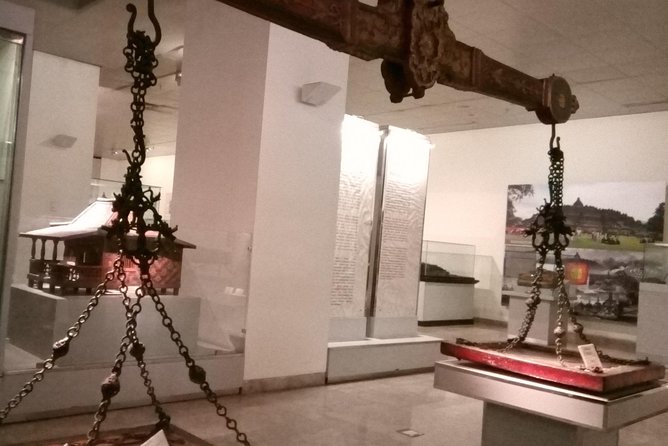
The first planned stop is the National Museum, also called the Elephant Museum. It is currently under renovation, so the route replaces it with the biggest mosque in Southeast Asia and the Cathedral Church. This change matters because the tour loses a museum’s collection of objects and gains a look at two major religious buildings instead.
You have about one hour at this part of the route, and admission is included. The replacement gives you a useful view of Jakarta’s public and religious life, but it is not the same experience as a museum visit. If displays of archaeology, art, and historic objects are your main reason for booking, ask for the latest update before your date.
The pairing of mosque and Cathedral also gives the guide room to discuss Jakarta beyond its Dutch period. You can expect the visit to be more about the city’s religious landmarks and setting than about a museum collection. That makes it a sound substitute, though anyone set on the National Museum should keep expectations in check.
Kota Intan Bridge and the remains of old Batavia
Kota Intan Bridge is a short stop of about 15 minutes. It is one of the remaining Dutch bridges in Jakarta, and its value comes from its age and setting rather than from a long visit.
You will not spend hours here, nor should you. This is a quick chance to photograph a piece of colonial engineering before moving on to the larger spaces of Old Town. Admission is not included, although the tour information does not list a separate entrance charge.
The bridge helps connect the city’s grand colonial story to ordinary infrastructure. A government square may show power, but a bridge shows how people and goods moved through the old settlement. Your guide can help make that connection clear.
Two hours around Fatahillah Square
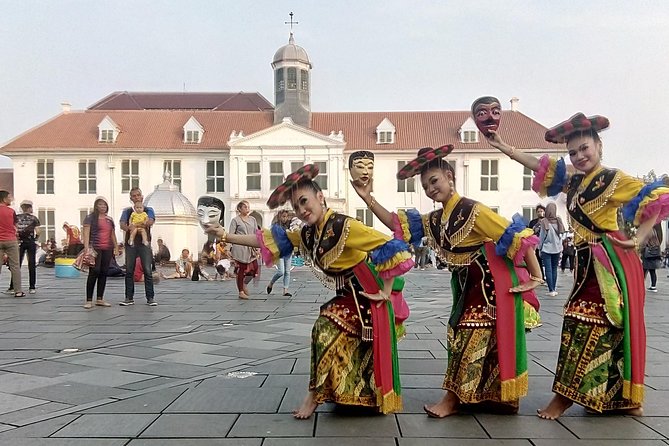
Fatahillah Square is the heart of the Old Town portion, and the tour gives it about two hours. This was the center of the first Dutch government in the city, so it is the place where the colonial chapter feels most concentrated.
Expect colonial architecture, an open public square, and time for photographs and explanation. The square gives you more breathing room than the bridge or harbor. You can look at the buildings, listen to the guide’s account of Dutch rule, and get a better sense of how Jakarta’s old administrative center was arranged.
Admission is included at this stop. The long visit also helps balance the pace of the day. You are not simply being driven from one photo stop to another. The guide has time to explain why the Dutch presence mattered and how trade helped shape the city.
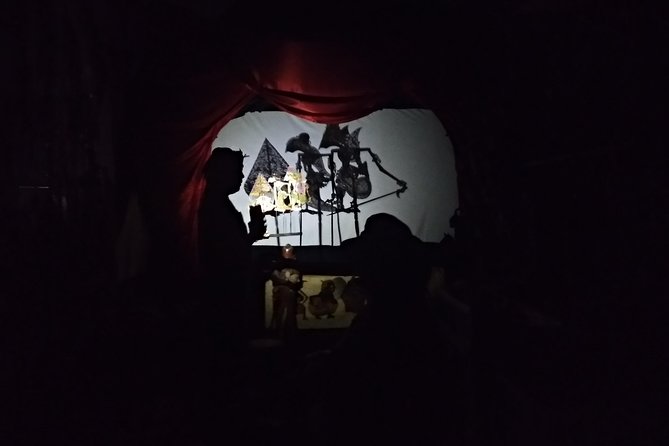
One useful detail from the experience is the mention of a puppet master. That suggests the Old Town visit may include a cultural side trip or an encounter connected to traditional puppetry, though the precise location and timing are not specified. If this interests you, ask Dwi about it when you meet. It may become one of the more personal moments of the day.
Fatahillah Square is likely the best stop for visitors who want an easy introduction to Jakarta’s past. It is also the place where you may notice the limits of a historic district in a modern capital. The route is about seeing what remains, not pretending the colonial center has been preserved as a perfect museum.
Same base, a different sort of day:
- Jakarta Half-Day Guided Tour with a Private Fun Local Host
★ 5.0 · 292 reviews - Jakarta Bogor Botanical Garden, Waterfall and Rice terrace, Lunch
★ 5.0 · 157 reviews - Jakarta Heritage of Old Batavia Private City Tour (Historical)
★ 5.0 · 143 reviews - Jakarta Half-Day Sightseeing Tour To Modern City and Old Town
★ 5.0 · 137 reviews
Sunda Kelapa, where the port still works
At Pelabuhan Sunda Kelapa, the tour shifts from government buildings to trade. This was the old harbor and an early point of contact for invaders and outside powers while the area was under the rule of the Sundanese Kingdom.
The visit lasts about 30 minutes, with admission included. That is enough for a look at the waterfront and photographs of the traditional wooden ships known as phinisi. These vessels still sail between Indonesian islands, and the port remains linked to practical cargo work.
The most distinctive detail here is that loading and unloading are done by manual labor. This is not just a scenic harbor with boats arranged for photographs. You may see a working port where physical effort remains part of the process. That gives the stop more weight than a simple waterfront view.
Sunda Kelapa can also be a reminder that Jakarta grew from trade. Spices, ships, labor, and control of the harbor shaped the city long before modern office towers appeared. A good guide can tie the wooden boats to the larger story of the Dutch occupation and the spice trade.
Bring a phone or camera if you care about photographs. The phinisi ships are the most visually distinctive part of the day. The stop is short, so do not expect a long harbor walk or a full port tour. It is a focused visit to see the boats and understand why this waterfront mattered.
Glodok Chinatown and Jakarta’s oldest Chinese temple
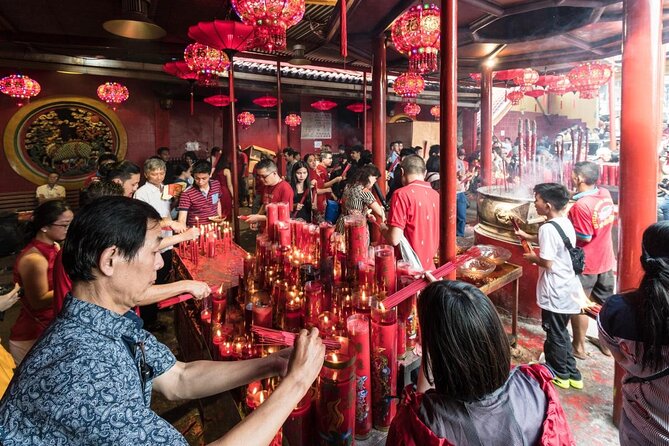
The final listed stop is Glodok Chinatown, with about 30 minutes to visit the oldest Chinese temple and see a local market. This is a useful change of tone after the Dutch square and harbor.
Glodok brings attention to the Chinese community’s role in Jakarta’s commercial life. You can expect to see local people going about daily business, along with the market atmosphere and temple setting. Admission is not included, and the supplied details do not name a separate fee.
Half an hour is enough for a brief introduction, but it limits how much you can see. You will not have time for a slow exploration of every lane, shop, or food stall. Think of Glodok as a compact cultural stop that widens the story of Jakarta rather than a standalone Chinatown tour.
The market may be less orderly than a planned sightseeing site, which is part of its appeal and part of the practical challenge. Stay alert to your footing and belongings, and follow the guide’s lead. The moderate fitness recommendation likely reflects the combination of walking, uneven public areas, and a full day of moving between sites.
How the guide affects the experience

The guide can make or break a history tour, and the information provided points to Dwi Sulistyo Montero as the person behind this experience. He is also referred to as Dew, so you may see either name in communication.
The strongest praise focuses on his friendly manner, clear explanations, and willingness to take his time. That matters here because Jakarta’s history is not easy to read from buildings alone. You need the links between the port, the Dutch government, the spice trade, Chinese commerce, and the city’s religious landmarks.
A small group helps. With no more than four people, you can ask questions without competing with a large bus group. The $150 price is easier to justify if you value that personal attention and are traveling with another person. It is less attractive for a solo visitor unless the private pickup and guide access are especially important to you.
The route is described as intimate and door-to-door, but the exact pickup point is not specified in the supplied details. Ask when booking so you know how the start of the day will work.
Timing, transport, and what to bring
The tour runs for about six hours and is available Monday through Saturday between 9:00 a.m. and 3:30 p.m. The time window suggests a daytime schedule, but you should confirm the exact start time rather than assume the tour always begins at 9:00.
Pickup is offered, and hotel transfers are included in the experience description. This is one of the strongest practical reasons to book. Jakarta’s public transport can be difficult to sort out when you are trying to connect several historic areas in one day, and a private route keeps the focus on the sites.
Lunch is not included. Plan to buy or arrange your own meal, or ask the provider how the timing usually works. Since the day lasts six hours, this is not a detail to ignore.
Wear comfortable shoes and bring water. The activity calls for moderate physical fitness, and you will be walking around squares, bridges, harbor areas, temples, and markets. The experience also requires good weather. If poor weather forces a cancellation, you are offered another date or a full refund.
You receive confirmation when booking, and a mobile ticket is available. Free cancellation applies if you cancel at least 24 hours before the start time. Changes or cancellations inside that window are not accepted for a refund.
Who should book this Old Town tour?
I would recommend it to a first-time Jakarta visitor who wants the city’s main historic areas explained in one manageable outing. It also suits couples who prefer a private or near-private route and do not want to work out buses, transfers, and site order alone.
History-minded visitors will appreciate the combination of colonial government, maritime trade, Chinese community life, and religious landmarks. Photographers will especially like Sunda Kelapa, where the wooden phinisi ships give the day a clear visual highlight.
This is less suitable if you want a museum-heavy experience, since the National Museum is under renovation. It is also not the right pick if you want a slow, independent exploration of Glodok or a long visit at the harbor. The route gives you an overview, not unlimited time in each district.
Families and older visitors should consider the moderate fitness requirement and the amount of time spent moving through public areas. The small group can make the day easier, but it does not remove Jakarta’s heat, traffic, or uneven walking surfaces.
Should you book the Jakarta Little Amsterdam Tour?
Book it if you want a guided introduction to Jakarta’s historic core, especially with hotel pickup and a very small group. The best parts are the two-hour visit to Fatahillah Square, the working wooden ships at Sunda Kelapa, and the chance to hear the city’s story from Dwi Sulistyo Montero.
Before booking, confirm the National Museum replacement, pickup details, exact group size, and final price. For two people, $150 per group can be fair for six hours of transport, guide time, and included fees. If your top priority is seeing the National Museum’s collections, wait until it reopens or choose another museum-focused outing.
FAQ
How long is the Jakarta Little Amsterdam Tour?
The tour lasts approximately six hours.
How much does the tour cost?
The listed price is $150 per group for up to two people.
What is the maximum group size?
The experience states that the maximum is four travelers. The price information specifies a group of up to two, so confirm the exact arrangement before booking.
Is pickup available?
Yes. Pickup is offered, and hotel transfers are included.
Is the National Museum open during the tour?
The National Museum is under renovation. The planned visit is replaced by the biggest mosque in Southeast Asia and the Cathedral Church.
What replaces the National Museum visit?
The replacement includes a visit to the biggest mosque in Southeast Asia and the Cathedral Church, with about one hour allocated to this part of the route.
Is lunch included?
No. Lunch is not included in the tour price.
Which historic sites are visited?
The route includes the mosque and Cathedral replacement stop, Kota Intan Bridge, Fatahillah Square, Pelabuhan Sunda Kelapa, and Glodok Chinatown.
Is the tour available every day?
No. The stated operating days are Monday through Saturday, from 9:00 a.m. to 3:30 p.m.
Can I cancel for a full refund?
Yes, if you cancel at least 24 hours before the experience start time. Cancellations or changes made less than 24 hours before the start time are not refunded. If bad weather causes the provider to cancel, you are offered another date or a full refund.
Just added in Jakarta
- Jakarta Indonesian Culture in half Day★ 5.0 · 50 reviews
- Situ Gunung Waterfall & Suspension Bridge Sukabumi start Jakarta★ 4.5 · 13 reviews
- Volcano and Domas Crater of Hot Stony Bubble from Jakarta Lunch★ 5.0 · 23 reviews
- The Secret Society of Batavia – Walking Tour★ 5.0 · 4 reviews
- Jakarta Scooter Lessons and Motorcycle Lessons★ 5.0 · 9 reviews
- Private Tour: Half Day Jakarta Old City Tour★ 4.0 · 4 reviews
- Soekarno Hatta International Airport by Plaza Premium Lounge★ 4.0 · 46 reviews
- Private Full Day Tour of Jakarta with Hotel Pickup★ 4.0 · 13 reviews
Tours in Jakarta, compared.
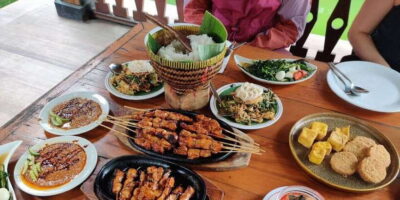
Volcano, Tea/Rice Fields, Hot Spring, Local Food
Read our review →
Active Volcano, Rice Field, Hot Spring, Fruit market, Tea Plantation with Lunch
Read our review →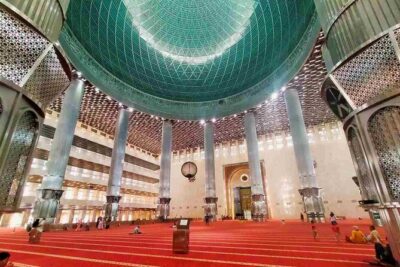
Private Full-Day Guided Tour: Explore Jakarta’s Top Highlights
Read our review →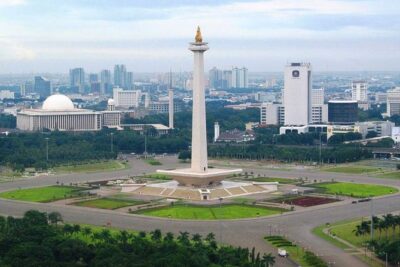
Jakarta Half-Day Guided Tour with a Private Fun Local Host
Read our review →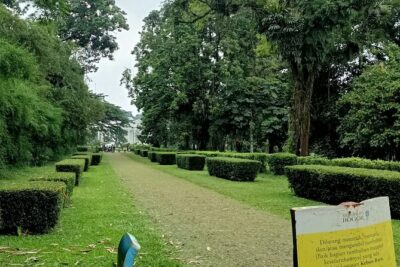
Jakarta Bogor Botanical Garden, Waterfall and Rice terrace, Lunch
Read our review →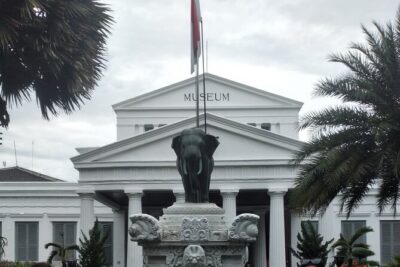
Jakarta Heritage of Old Batavia Private City Tour (Historical)
Read our review →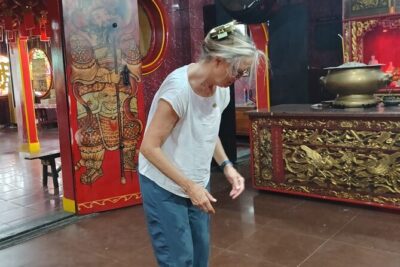
Jakarta Half-Day Sightseeing Tour To Modern City and Old Town
Read our review →
Jakarta Night Tour : Enjoyable Night time in Jakarta (Hotel Pick-up)
Read our review →Browse the lists this tour appears in