
Reviewed · CYCLING & DOWNHILL BIKE TOURS
Jogja Hidden Gems – Cycling Tour
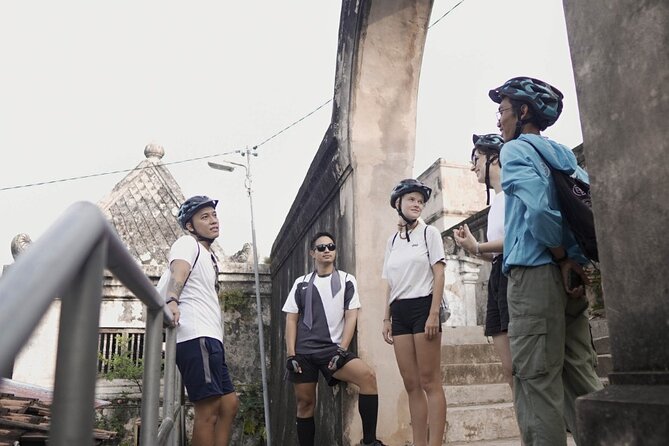
Yogyakarta reveals itself best from a bicycle seat, where the road slips from the Kalicode riverside into small kampung lanes, royal grounds, food markets, and places most visitors would miss from a car. The three-hour ride covers about 11 kilometers and gives you a close look at daily life around the Sultanate.
I like the mix of local snacks and drinks with cultural stops, especially the chance to see urban kampung life rather than only famous sights. I also like the small group cap of 10 and the guide-led route, though you should be comfortable cycling for several hours in a warm city.
Key points at a glance
- About 11 kilometers by bicycle: The route is long enough to cover several parts of central Yogyakarta without becoming an all-day ordeal.
- Two useful departure times: Start at 7am for cooler riding, or at 2:30pm for a later look at the city.
- Local life comes first: Expect riverside neighborhoods, narrow streets, kampung life, and conversation with local people.
- Royal Yogyakarta in context: The route includes a short visit near the Kraton, Sultanate grounds, Tamansari, and the Masangin banyan-tree tradition.
- Food is part of the tour: Refreshments and local snacks help connect the ride to everyday Javanese culture.
- Good small-group setup: A maximum of 10 people makes it easier to hear the guide and ask questions.
Why a bicycle is the right way to see Yogyakarta
A car can get you to Yogyakarta’s major monuments, but it tends to flatten the city into a string of stops. On this ride, the transitions matter. You move from the river to residential lanes, from ordinary city life to royal spaces, then back to food stalls and neighborhood streets.
I like this kind of route because it gives you a sense of how the city works. Yogyakarta is not simply a historic center with attractions placed at tidy intervals. It is a living city shaped by the Sultanate, local communities, religious sites, markets, small streets, and homes packed into urban neighborhoods.
The pace also helps. You have enough time to notice the surroundings, but the tour lasts only about three hours. That makes it a useful first or second-day activity, especially if you want to get your bearings before tackling larger sights on your own.
The main trade-off is physical. You cover 11 kilometers, and the tour asks you to keep riding through city streets for much of the session. A moderate fitness level is recommended. If you rarely cycle, the distance may feel more demanding than the short duration suggests.
Other cycling tours in Yogyakarta people book:
- Menoreh Village Cycling
★ 5.0 · 611 reviews - Authentic Yogya Bicycle Tour
★ 5.0 · 232 reviews - Kotagede Royal Route – Cycling Tour
★ 5.0 · 207 reviews
Starting at MOANA Hub Prawirotaman
The tour begins at MOANA Hub Prawirotaman, at Jl. Gerilya No. 646, Brontokusuman, Mergangsan, Yogyakarta. It ends at the same place, so you do not need to arrange a separate return transfer.
You receive a bicycle and helmet, with mountain bikes and city bikes available. The exact bike choice can matter. A city bike may suit a relaxed urban ride, while a mountain bike may feel more reassuring if the route includes uneven or less polished streets. The supplied information does not promise a particular model for each rider, so tell the operator what feels comfortable when you arrive.
The meeting point is near public transportation, but pickup and drop-off are not included. Plan to reach the starting point yourself. A mobile ticket is provided, and booking confirmation arrives at the time of booking, which makes the meeting process fairly simple.
The tour runs in two blocks:
- Morning: 7am to 10am
- Afternoon: 2:30pm to 5:30pm
I would choose the morning departure if you dislike heat or want the rest of the day free. The afternoon option works well if you have a slow start, though cycling later in the day may feel warmer. The timing also shapes the mood of the route, so choose based on your energy and tolerance for heat rather than convenience alone.
Along the Kalicode riverside
The first major character of the route comes from the riverside Kalicode areas in the city center. This is a useful opening because it puts you close to everyday Yogyakarta rather than dropping you straight at a formal monument.
Riverside areas often show how local communities adapt to limited urban space. Here, you can expect the guide to explain the setting and the way people live around it. The goal is not simply to pedal beside water, but to see how a city neighborhood functions at street level.
This is also where a local guide adds real value. Guide Alfat, who has led this experience, is noted for explaining Yogyakarta’s past and present in a way that connects the stops. You can ask about the city, the Sultanate, local customs, and the details you notice along the road.
The route is shared, with no more than 10 people. That is small enough for a guide to keep the group together without making the ride feel like a private tour. It also means you may need to follow the group’s pace and accept short waits at turns or stops.
Kampung lanes and daily urban life
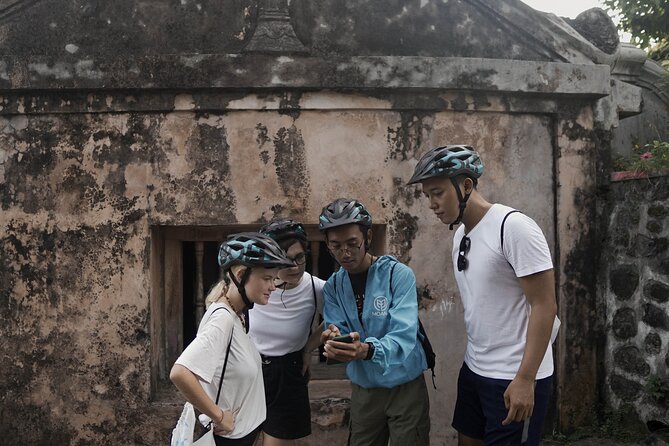
From the riverside, the ride moves into neighborhoods behind small streets. This is one of the strongest reasons to book the experience. You are not just seeing a famous facade. You are getting a glimpse of ordinary urban life in Yogyakarta.
The tour includes a look at kampung living and contact with local people. That can be more revealing than another major landmark because it gives you a sense of how residents use shared streets, homes, and neighborhood spaces.
I especially like this part for visitors who have already seen the main central sights or who want more than a standard sightseeing loop. The guide can explain what you are seeing, which keeps the ride from becoming a silent pass through unfamiliar streets.
You should also keep your expectations sensible. This is a short guided look at neighborhood life, not a long social or community program. You will pass through and learn along the way. The value comes from context, access, and observation rather than a large number of formal activities.
Other rides on two wheels around Yogyakarta:
- Electric Cycling Tour of Ubud with Free Hotel Transfer and Lunch
★ 5.0 · 1,397 reviews - Ubud: Downhill Cycling with Volcano, Rice Terraces and Meal
★ 5.0 · 536 reviews - Half-Day Ubud Electric Cycling Tour to Tirta Empul Water Temple
★ 5.0 · 315 reviews - Kintamani Cultural and Nature Cycling Tour ( Manual Bike )
★ 5.0 · 257 reviews
A Chinese temple and the city’s mix of traditions
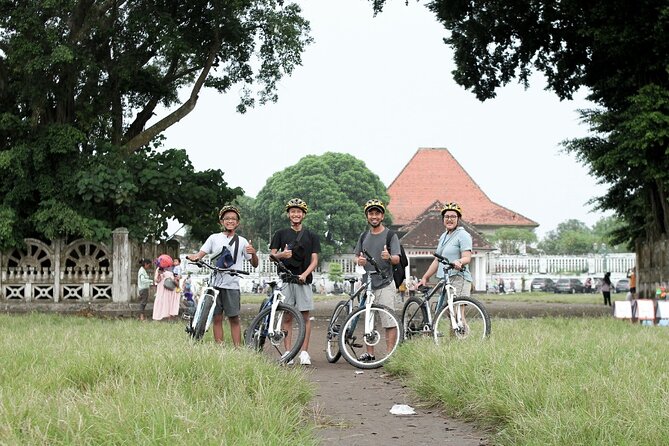
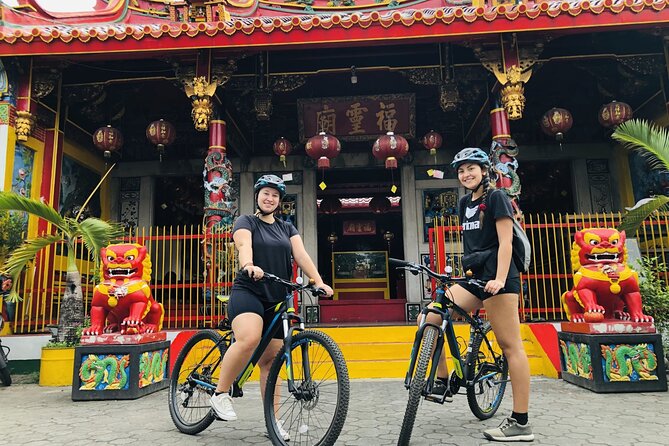
A Chinese temple is included among the stops. Its place on this route helps show that Yogyakarta’s identity is not limited to one cultural or religious tradition.
The stop is brief, so you should not expect an extended temple visit or a detailed religious ceremony. Instead, it works as one piece of the city’s wider story. The guide can help explain why the site matters and how it fits into Yogyakarta’s urban mix.
This is a good example of the tour’s approach. It links places that may seem unrelated at first: a riverside district, a Chinese temple, royal grounds, a market, and a traditional game or ritual. Together, they give you a broader picture than a route focused only on major monuments.
Royal grounds, the Kraton area, and Tamansari
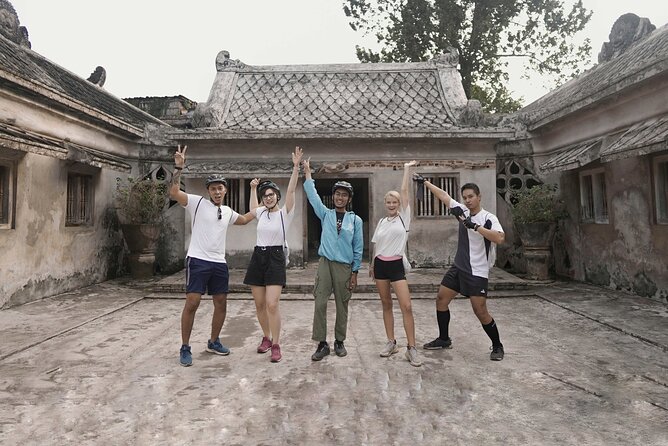
Yogyakarta is unusual in Indonesia because the Sultan serves as both king and governor. The cycling route uses that fact as a way into the city’s political and cultural identity.
You visit parts of the historic Sultanate grounds connected with the royal family, along with a short visit near the Kraton area. The focus is not a long palace tour. Instead, you get a street-level introduction to the royal presence that still shapes the city.
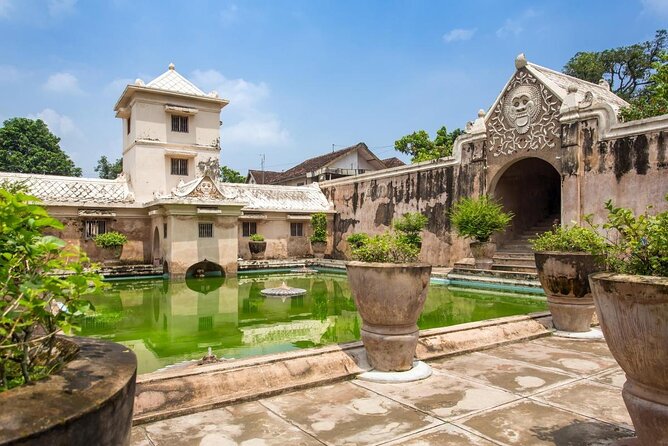
Tamansari is also included as a short visit. It is one of the better-known royal sites in Yogyakarta, but its place within a cycling route gives you a different frame. You are not spending the whole session inside one complex. You are seeing Tamansari alongside neighborhoods, roads, food stops, and the rest of the city.
That balance is important. If your main goal is a slow, detailed palace visit, this tour will not replace a dedicated Kraton or Tamansari outing. If you want to understand how royal Yogyakarta sits within modern city life, the combination works well.
The guide also shares information about Javanese culture and script. This gives the historical stops more substance, particularly if you are new to local customs. Ask questions as you go. The group size should make it possible to get explanations without losing the ride’s pace.
The Masangin banyan-tree tradition
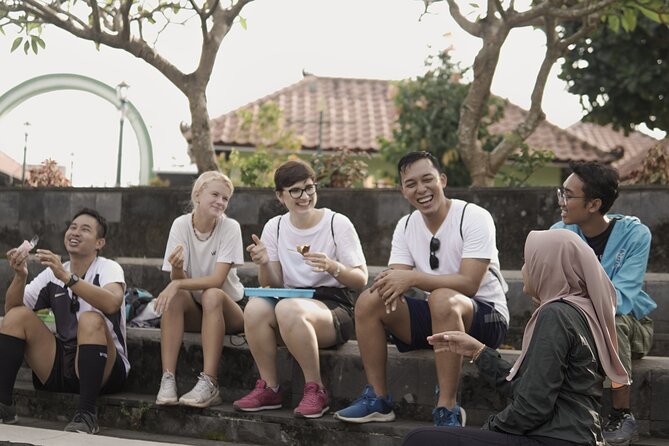
One of the route’s more unusual moments is the Masangin experience between the banyan trees. This is a local tradition associated with passing between the trees, and it adds a touch of play to the cultural route.
The activity is brief, but it helps keep the tour from feeling like a lecture on wheels. You get a cultural detail that is easy to remember, and the setting connects the tradition to the Sultanate area.
Do not book this tour expecting a long list of major attractions. Its strength is the mix of small encounters. The banyan-tree stop, the neighborhood lanes, and the snack break may be just as memorable as the more famous royal sites because they give the ride personality.
Local snacks, drinks, and a traditional market
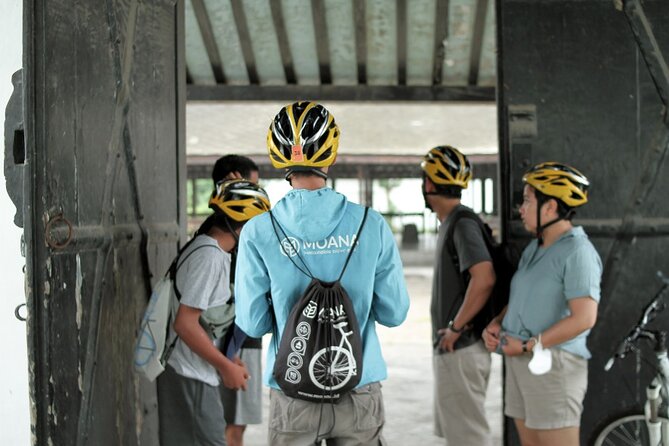
Food is included in a practical way. You receive refreshing drinks and local snacks, and the route includes a traditional culinary market.
I like this because food turns cultural information into something immediate. A guide can explain Javanese customs and local life, but tasting a snack at the right point in the route makes the lesson more concrete.
The market stop is also useful for understanding how residents shop and eat. It is not presented as a major food tour, so you should not expect a long tasting menu or a full meal. Think of it as a small refreshment break within a city ride.
If you have dietary restrictions, confirm what snacks are available before booking. The supplied details do not specify ingredients or alternatives. The same applies to drinks, since the exact refreshments are not listed.
What the $45 price gets you
At $45, the cost covers more than bicycle rental. The package includes the bicycle, helmet, local guide service, refreshments, snacks, an eco-string bag, and a road captain who helps lead the ride. It also includes a sustainability action fund.
That is a reasonable value if you want a guided introduction rather than simply hiring a bicycle. The guide is the key part of the calculation. You are paying for access to a planned route, local explanations, and the ease of moving through streets you might not find on your own.
The included food is a pleasant extra, but it should not be the reason you book. The tour’s real value lies in the combination of neighborhood access, royal context, and a manageable three-hour format.
You will need to pay separately for getting to the meeting point and for any tip you choose to give the guide. Tips are not required, but they can be appropriate if the guide makes the ride especially useful.
Who will enjoy this ride most
I would recommend this tour to you if you want:
- A short way to see several sides of Yogyakarta
- A close look at kampung neighborhoods and ordinary city life
- Cultural context from a local guide
- A balance of royal sites and less formal stops
- A small-group cycling experience
- Snacks and drinks included without committing to a full-day activity
It suits active couples, solo visitors, friends, and families with older children who can manage a moderate ride. The shared format is also helpful if you like meeting other people but do not want a large coach group.
I would think twice if you want a private experience, a slow palace-focused tour, or a fully flat and effortless ride. The route includes city streets and neighborhood lanes, and the operator specifically asks for moderate physical fitness.
You also need to be comfortable with a tour that keeps moving. Stops are short in several places, including the Kraton area and Tamansari. The experience is about seeing how the pieces connect, not spending long periods at each attraction.
Practical details before you book
Wear clothes suited to cycling and choose footwear that stays secure on your feet. The tour supplies a helmet, but you should still prepare for warm conditions, especially for the afternoon departure.
The free eco-string bag is useful for small personal items, though you should avoid bringing bulky luggage. Since the route returns to the starting point, you can leave larger bags at your accommodation rather than carrying them through the ride.
The tour is capped at 10 people, which keeps the group fairly manageable. It is not private, so the guide will set the pace for everyone. Guide Alfat has been praised for explaining Yogyakarta and showing places that are easy to miss without local help, but guide assignment may vary.
Free cancellation is available when you cancel at least 24 hours before the start time. Cancellations made within 24 hours are not refunded, and late changes are not accepted. The cutoff uses local Yogyakarta time.
Should you book the Jogja Hidden Gems Cycling Tour?
Book it if you want a practical first look at Yogyakarta that combines local streets, the Kalicode riverside, royal history, a Chinese temple, Tamansari, food, and neighborhood life in three hours. The route gives you more context than a basic bicycle rental and more local texture than a quick monument stop.
The strongest reasons to choose it are the small group, the useful morning departure, the local guide-led explanations, and the mix of formal and ordinary places. I also like that the experience supports a sustainability fund rather than treating cycling as only a way to move between attractions.
Skip it if cycling 11 kilometers sounds tiring, if you need hotel pickup, or if your priority is an in-depth visit inside the Kraton or Tamansari. For most reasonably active visitors who want to see how Yogyakarta feels beyond its main streets, $45 is a fair price for a compact, well-rounded introduction.
FAQ
How long does the cycling tour last?
The tour lasts approximately three hours.
How far do you cycle?
The route covers about 11 kilometers.
What time does the morning tour start?
The morning tour runs from 7am to 10am.
What time does the afternoon tour start?
The afternoon tour runs from 2:30pm to 5:30pm.
Where does the tour begin?
It begins at MOANA Hub Prawirotaman, Jl. Gerilya No. 646, Brontokusuman, Mergangsan, Yogyakarta.
Where does the tour finish?
The activity ends back at the meeting point.
What is included in the price?
The price includes a bicycle, helmet, eco-string bag, local experience, refreshing drinks and snacks, a road captain, and a sustainability action fund.
Is hotel pickup included?
No. Pickup and drop-off services are not included.
What happens if I need to cancel?
You can receive a full refund if you cancel at least 24 hours before the experience start time. Cancellations made less than 24 hours before the start time are not refunded.
Just added in Yogyakarta
- Chicken Church Local Attraction Near Of Borobudur Temple★ 3.5 · 18 reviews
- Chicken Church at Karangrejo Village Admission Ticket★ 4.5 · 3 reviews
- Private Borobudur Village Trip By Volkswagen Safari★ 5.0 · 3 reviews
- Borobudur Temple Combined Ticket Admissions★ 5.0 · 7 reviews
- Borobudur Private Tour From Semarang Port★ 4.5 · 12 reviews
- Yogyakarta: Borobudur Temple Climb Up and Prambanan Temple Tour★ 5.0 · 53 reviews
- Borobudur: Pottery Making Workshop★ 5.0 · 5 reviews
- Yogyakarta Private Car Hire Driver with Costumized Tours★ 5.0 · 16 reviews
Cycling & Downhill Bike Tours, compared.
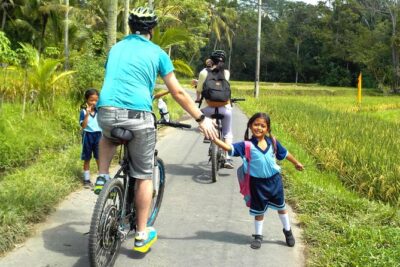
Electric Cycling Tour of Ubud with Free Hotel Transfer and Lunch
Read our review →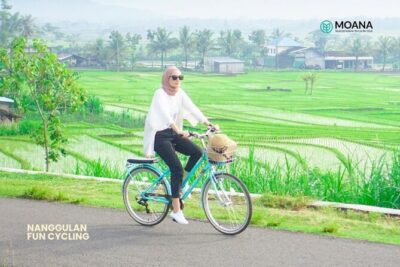
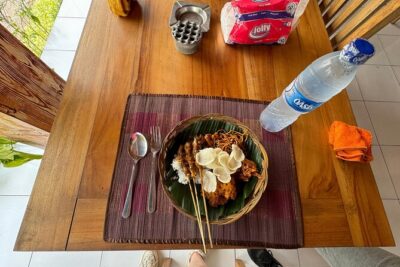
Downhill Cycling with Volcano, Rice Terraces and Meal
Read our review →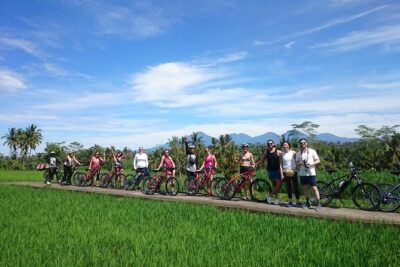
Half-Day Ubud Electric Cycling Tour to Tirta Empul Water Temple
Read our review →
Kintamani Cultural and Nature Cycling Tour ( Manual Bike )
Read our review →
Browse the lists this tour appears in