
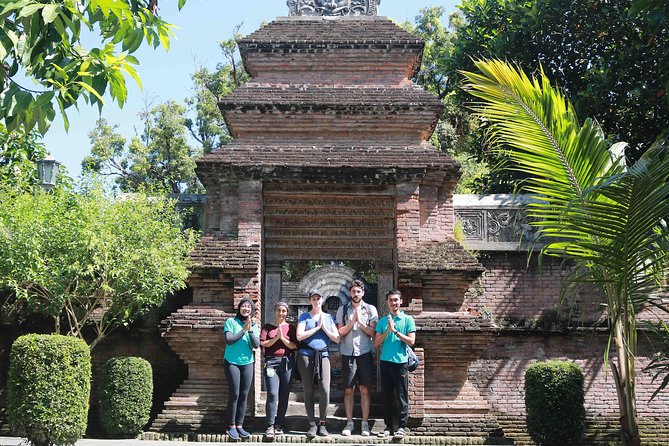
Reviewed · CYCLING & DOWNHILL BIKE TOURS
Kotagede Royal Route – Cycling Tour
Yogyakarta’s old town is best understood at bicycle speed, and this tour takes you past royal tombs, temples, markets, street art, and quiet lanes that are easy to miss from a car. I like the chance to see Kota Gede’s everyday life up close, and I like that the price includes local food, drinks, site fees, and a donation to the community. The low-carbon format gives the outing a useful purpose beyond sightseeing.
The main caution is the riding. You may use main roads as well as narrow footpaths and cobbled alleys, so you need steady bike skills and reasonable confidence around traffic. This is not a good pick for children or anyone who feels uneasy on a bicycle.
Key points at a glance
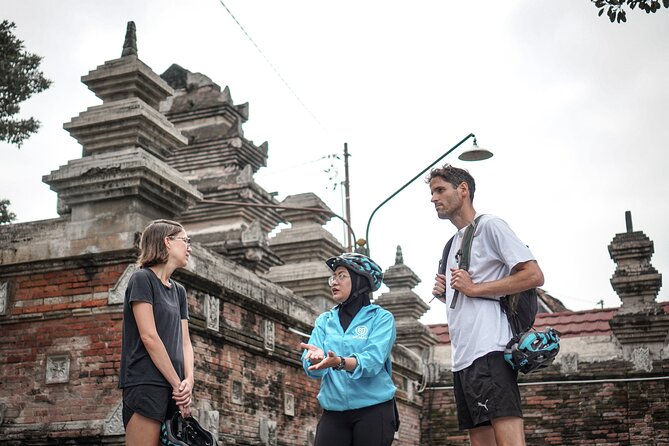
- Kota Gede by bicycle: Cover roughly 12 to 15 kilometers through old streets, side lanes, temples, and local neighborhoods.
- Royal Mataram tombs: Wear traditional Javanese clothing for a visit to the tombs and meet servants of the sultan.
- Food with local context: Stop at a traditional market for snacks or Indonesian food, with refreshing drinks included.
- A useful morning start: The morning departure runs from 7:00 to 10:00, when the ride is cooler and the streets may feel easier to manage.
- Small-group format: The maximum group size is 10, which gives the guide room to explain local life and manage the cycling route.
- Sustainable choice: Bike rental, a community donation, and a sustainability action fund are included in the $57 price.
Why Kota Gede works so well on two wheels
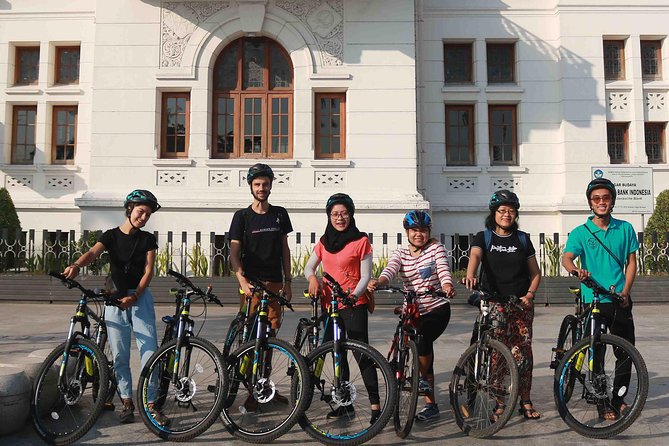
Kota Gede was the old center of the Mataram Kingdom, and the area still has a strong connection to royal Javanese culture. You are not simply moving from one large monument to another. The route leads through a network of streets where historic buildings, temples, markets, homes, and small businesses sit close together.
That mixture is the real reason to choose a bicycle tour. A car would carry you past the narrow lanes, while walking would limit how much ground you can cover in three hours. On a bike, you can move between districts while still seeing the details at street level.
I especially like the way this experience connects major cultural stops with ordinary city life. You might pause beside a market, notice the smell of food cooking, or watch daily activity continue around an old building. The point is not only to photograph a royal site. It is to understand how the old town functions now.
The route covers about 12 to 15 kilometers. That distance is manageable for anyone with medium cycling ability, but it is not a casual roll around one park. You need to pedal for several hours, steer through tight spaces, and stay alert when the route uses main roads.
Other cycling tours in Yogyakarta people book:
- Menoreh Village Cycling
★ 5.0 · 611 reviews - Authentic Yogya Bicycle Tour
★ 5.0 · 232 reviews - Jogja Hidden Gems – Cycling Tour
★ 5.0 · 158 reviews
Leaving Prawirotaman for the old town
The tour begins and ends at MOANA Hub Prawirotaman on Jl. Gerilya No. 646 in Brontokusuman. Transport to the meeting point is not included, so plan your own way there. The meeting point is near public transportation, which helps if you are staying elsewhere in Yogyakarta.
You can choose between a morning departure from 7:00 to 10:00 or an afternoon departure from 14:30 to 17:30. I would choose the morning if you handle heat poorly or prefer a calmer start. An early departure also gives you time afterward for lunch, museums, or another Yogyakarta sight.
The afternoon option may suit you better if you prefer a slower morning. Still, cycling in a warm city takes effort, and the exact feel of the ride will depend on the day’s weather and traffic. You can request a mountain bike or city bike, so consider which style feels more natural to you before setting off.
A helmet is available if you want one. It is listed as optional, but I would use it, particularly because the route may include traffic, cobbled surfaces, and narrow footpaths.
Through Kota Gede’s lanes and old buildings
Once you leave the starting point, the ride focuses on the old town and the neighborhoods around it. The guide leads you through a maze of streets rather than keeping to a simple point-to-point route. That design lets you see the contrast between larger roads and smaller lanes where local life is easier to notice.
The old buildings and temples are central to the experience. Some of the appeal comes from their architecture, but the setting matters just as much. You see these places surrounded by working neighborhoods rather than isolated behind a large entrance plaza.
Street art is also part of the route. It adds a modern note to a district often associated with royal history and traditional buildings. That balance helps keep the tour from feeling like a history lecture. You get cultural context, then shift back to the streets, food, and people around you.
Your guide is there to explain local customs, history, and daily life as you ride. The small maximum group of 10 is useful here. The guide can stop the group without creating a long line of bicycles, and you should have a better chance of hearing explanations at each pause.
The tradeoff is that a route through narrow lanes does not always feel smooth. Some sections may have cobbles or uneven surfaces. One especially useful piece of advice is to bring decent confidence on a bike, not just the ability to ride in a quiet park.
Visiting the Mataram royal tombs
The tombs of the Mataram Kingdom provide the tour’s most formal cultural moment. You are asked to wear traditional Javanese clothing before entering, which makes the visit different from a quick stop outside a historic building.
The clothing is not just a photo opportunity. It signals that the tomb complex is a place with customs and expectations. Your guide can help you understand the setting and the appropriate behavior, while the visit connects Kota Gede’s present-day streets with the royal family that shaped the area.
You will also meet servants of the sultan. That detail gives the visit a human connection. Instead of treating the tombs as a silent monument, you get a sense of the continuing traditions linked to the royal court.
Site entrance fees that are part of the program are included. The supplied information does not specify every site or the length of the tomb visit, so you should think of this as one part of a wider cycling route, not a long guided tour of a single complex.
Dress and behavior matter at a sacred or royal site. The tour provides the traditional clothing, but you should still approach the visit with respect and follow the guide’s instructions.
Other rides on two wheels around Yogyakarta:
- Electric Cycling Tour of Ubud with Free Hotel Transfer and Lunch
★ 5.0 · 1,397 reviews - Ubud: Downhill Cycling with Volcano, Rice Terraces and Meal
★ 5.0 · 536 reviews - Half-Day Ubud Electric Cycling Tour to Tirta Empul Water Temple
★ 5.0 · 315 reviews - Kintamani Cultural and Nature Cycling Tour ( Manual Bike )
★ 5.0 · 257 reviews
Markets, snacks, and a traditional baker
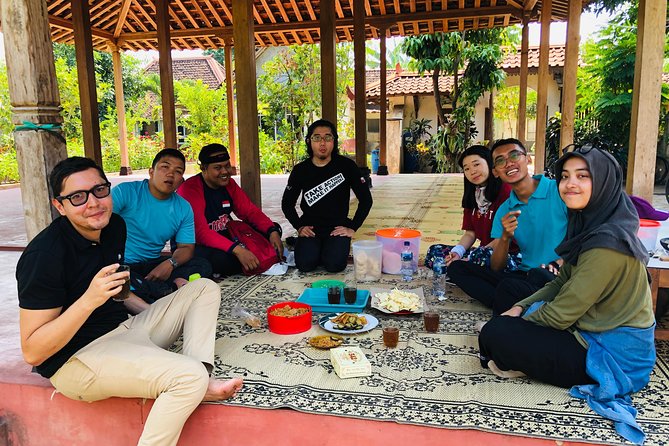
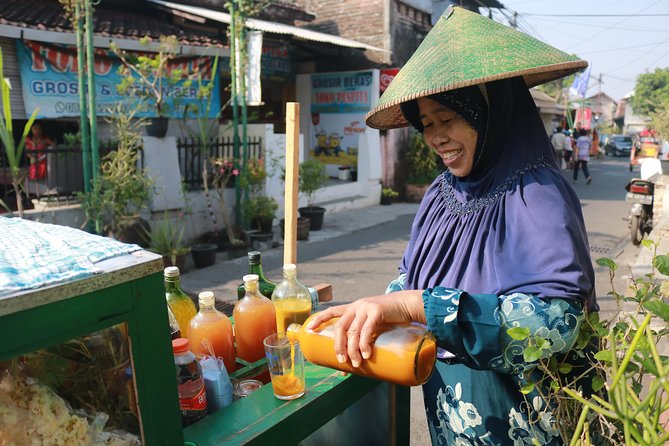
Food is one of the tour’s strongest features because it gives you a taste of Yogyakarta without turning the outing into a formal food tour. The route includes a stop at a traditional market for local snacks or Indonesian food, along with refreshing drinks.
A market stop also changes the pace of the ride. After cycling through lanes and seeing historic sites, you have time to pause, eat, and watch ordinary commerce. You may encounter a traditional baker, an especially appealing detail for anyone curious about how local food is made and sold.
The exact snacks are not fixed in the information provided, so do not book this expecting a set tasting menu. Instead, see it as a chance to try local-style food selected during the route. If you have dietary restrictions, ask the operator before booking, since no specific dietary arrangements are stated.
I value this part because food can explain a place in a way dates and architectural terms cannot. A small snack at a market gives you a direct connection to the city’s routines. It also makes the tour feel less like a checklist of attractions.
What the cycling is really like
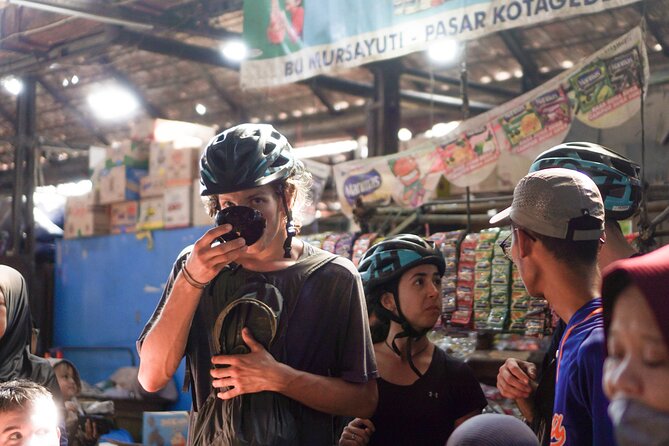
The cycling is the deciding factor. The route may include main roads, quiet side streets, small alleyways, narrow footpaths, and cobbled sections. That variety is what makes the ride interesting, but it also means you cannot switch off and simply follow a flat bike path.
You need medium cycling ability. In practical terms, you should be comfortable starting and stopping often, steering around uneven surfaces, and keeping control when other road users are nearby. The tour is not suitable for children, and I would not recommend it if you have not cycled in a city before.
The guide’s route planning helps. Quieter alleys and side streets can take you away from the heaviest traffic, while the guide leads the group through more difficult sections. Still, one past participant described the mix of main roads and cobbled alleys as harrowing, so take that warning seriously.
Wear comfortable clothes and shoes suitable for three hours on a bike. Bring water if you like having your own supply, although refreshing drinks are included. The morning departure is the safer choice for many people simply because it avoids the hottest part of the day.
What the $57 price covers
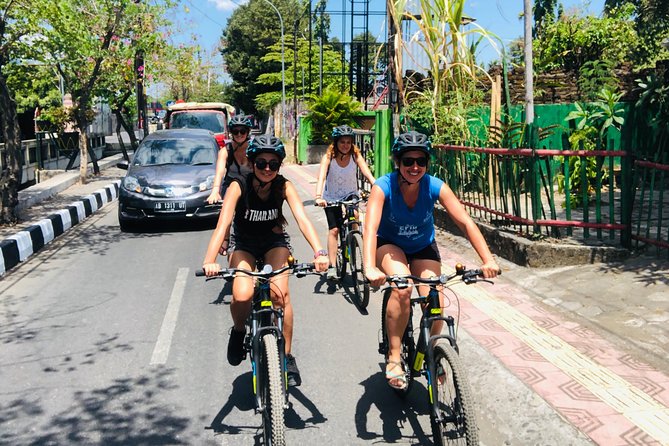
At $57, this is not the cheapest way to rent a bicycle in Yogyakarta. But you are paying for more than the bike. The package includes the bicycle, an experienced guide, local food and drinks, entrance fees for sites included in the program, a community donation, and a sustainability action fund.
That combination improves the value. You do not need to arrange a separate bike rental or pay small entrance charges along the way. More important, the guide provides access to cultural settings and local neighborhoods that would be difficult to understand on your own.
The community donation and sustainability fund also give the price a clear purpose. Cycling produces less transport impact than a vehicle-based tour, and part of the payment supports local action. The information does not specify the donation amount or exactly how the fund is used, so I would not assign it a larger benefit than the operator states. Still, it is a useful feature for anyone who wants a lower-carbon outing.
Group discounts are available, and the group maximum is 10 people. If you are traveling with several companions, check the current discount before booking. Tips are not included, but they are optional and depend on whether you feel the guide provided good service.
Morning or afternoon: which departure fits you?
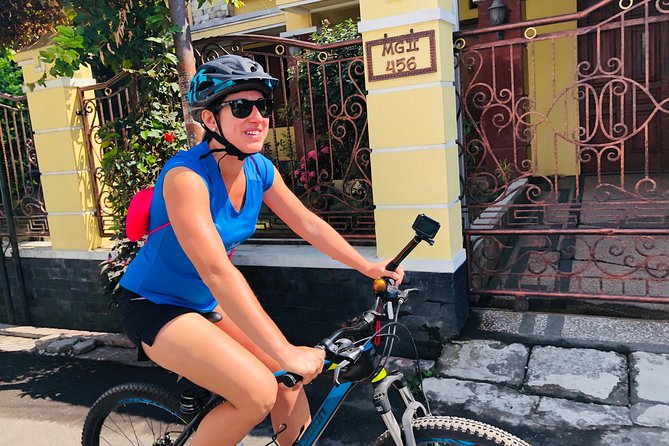
The morning tour runs from 7:00 to 10:00. I would pick it if you want cooler conditions, a fresh start, and the rest of the day free. It also suits anyone who wants to make the ride the main activity before moving on to other sights.
The afternoon tour runs from 14:30 to 17:30. Choose it if an early morning is difficult or if you prefer to keep the first half of the day open. The later start may feel less rushed, but heat and traffic can affect how comfortable the ride feels.
Both options last about three hours and return to MOANA Hub Prawirotaman. There is no one-way drop-off, so plan your onward transport from the same meeting point.
Who should book this ride
This tour suits you if you want history mixed with daily life, rather than a string of formal monuments. It is a strong choice for confident cyclists who enjoy local food, small streets, and cultural encounters that require some flexibility.
It also works well for people who want to see more of Yogyakarta in a short time. The bicycle lets you cover a broad area while staying close to the street. The guide fills in the background, and the market stop keeps the experience grounded in the present.
You should think twice if you want a quiet, traffic-free ride. You should also skip it if you are traveling with young children, have limited cycling ability, or dislike uneven roads. The operator says most people can participate, but that does not remove the need for medium cycling skill.
The tour is private guided in style, yet the maximum group size is 10. Confirm the group arrangement when booking if having a truly private party is important to you.
Booking details worth knowing
Confirmation is provided at the time of booking, and mobile tickets are available. You are responsible for reaching the starting point, so allow enough time to arrive at MOANA Hub Prawirotaman before the scheduled departure.
Free cancellation applies when you cancel at least 24 hours before the local start time. Cancellations or changes made inside that 24-hour window are not refunded or accepted. This matters if your Yogyakarta plans depend on a flight connection. A flight delay is not covered by the stated cancellation rule, so avoid booking the tour too close to an uncertain arrival.
The activity ends back at the starting point. Bike rental, optional helmet use, the guide, local refreshments, site fees that fall within the program, the community donation, and the sustainability action fund are included.
Should you book the Kotagede Royal Route?
Book it if you want to see Yogyakarta from the back of a bicycle, visit the Mataram royal tombs in traditional clothing, and connect historic sites with markets and ordinary neighborhoods. The strongest parts are the local guide, the route through smaller streets, the food stop, and the chance to see Kota Gede at ground level.
Skip it if you want a gentle ride, a fully traffic-free route, or a family activity for young children. The 4.9 rating from 207 submitted ratings and 100 percent recommendation point to a consistently well-liked experience, but the cycling challenge remains real.
For most confident cyclists, the $57 price is fair because it combines transport, guiding, cultural access, food, site fees, and sustainability support. Choose the morning departure if you want the best chance of cooler riding, wear the helmet, and treat the route as an active cultural tour rather than a simple sightseeing loop.
FAQ
How long is the Kotagede Royal Route cycling tour?
The tour lasts approximately three hours.
How far do you cycle?
The route covers approximately 12 to 15 kilometers.
What time does the tour start?
The morning option runs from 7:00 to 10:00. The afternoon option runs from 14:30 to 17:30.
Where does the tour begin and end?
It begins at MOANA Hub Prawirotaman, Jl. Gerilya No. 646, Brontokusuman, Yogyakarta. The activity ends back at the same meeting point.
What type of bicycle is available?
You can choose a mountain bike or a city bike.
Is the tour suitable for children?
No. The tour is not suitable for children and requires medium cycling skill.
Is a helmet included?
A helmet is available if you want one.
What is included in the $57 price?
The price includes bike rental, an experienced guide, local food and drinks, entrance fees for sites included in the program, a community donation, and a sustainability action fund. Transport to the meeting point and guide tips are not included.
Just added in Yogyakarta
- Chicken Church Local Attraction Near Of Borobudur Temple★ 3.5 · 18 reviews
- Chicken Church at Karangrejo Village Admission Ticket★ 4.5 · 3 reviews
- Private Borobudur Village Trip By Volkswagen Safari★ 5.0 · 3 reviews
- Borobudur Temple Combined Ticket Admissions★ 5.0 · 7 reviews
- Borobudur Private Tour From Semarang Port★ 4.5 · 12 reviews
- Yogyakarta: Borobudur Temple Climb Up and Prambanan Temple Tour★ 5.0 · 53 reviews
- Borobudur: Pottery Making Workshop★ 5.0 · 5 reviews
- Yogyakarta Cultural Tour: Borobudur Temple, Prambanan Temple and Merapi Volcano★ 4.5 · 41 reviews
Cycling & Downhill Bike Tours, compared.
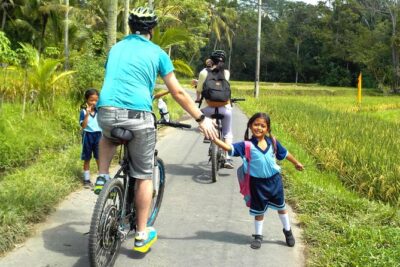
Electric Cycling Tour of Ubud with Free Hotel Transfer and Lunch
Read our review →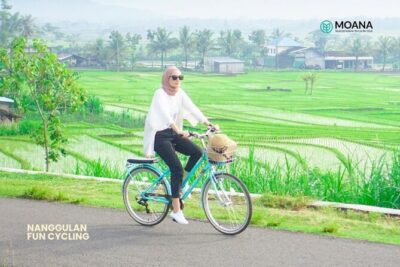
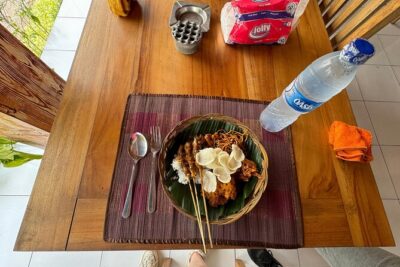
Downhill Cycling with Volcano, Rice Terraces and Meal
Read our review →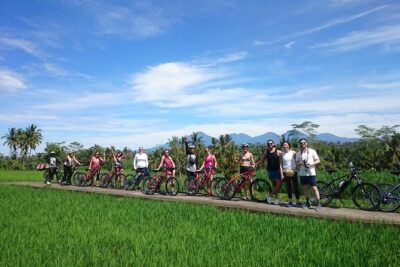
Half-Day Ubud Electric Cycling Tour to Tirta Empul Water Temple
Read our review →
Kintamani Cultural and Nature Cycling Tour ( Manual Bike )
Read our review →
Browse the lists this tour appears in