
Reviewed · COOKING CLASSES
Balinese Authentic Cooking Class in Ubud
The best part of this Ubud cooking class is that the food comes with a clear sense of place. You begin with local ingredients and Balinese home life, then harvest spices at the farm before making a meal with them. Ron, Putri, Don, Gustie, and Begul have all led highly praised sessions, though your instructor may vary.
I like the visit to a traditional family compound, and I like that the class uses hands-on tools such as a large lesung, the mortar and pestle used to pound spices. The main drawback is that the morning market visit is available only with the morning class, and some participants have found the pace a little quick when several dishes are underway.
Key points at a glance
- Morning market visit: See local produce and spices, and sample some fruit if the morning schedule works for you.
- Traditional Balinese home: Learn about family compounds, daily life, buildings, and local customs over coffee, tea, and snacks.
- Farm-to-table cooking: Walk through the farm and collect some of the herbs and spices used in your meal.
- Six-course style meal: Many sessions prepare six dishes, including dessert, with regular, vegetarian, and vegan choices available.
- Small-group format: The maximum is 15 people, but some sessions are much smaller and may feel almost private.
- Ubud pickup included: Transport is included within the Ubud area, with extra charges for pickup farther away.
Why this class feels different from a standard cooking lesson
A typical cooking class can begin at a kitchen counter with ingredients already measured and waiting. This one gives you more context first. In west Ubud, the setting is surrounded by greenery and has a countryside feel, so the class connects the meal to the plants, homes, and routines around it.
That matters in Bali. The ingredients are not just a shopping list. Garlic, chilies, shallots, ginger, turmeric, galangal, and other spices form the base of many Balinese dishes, and the work of pounding and combining them is part of the cooking tradition. You get to handle that process rather than watching a chef do everything.
The class also gives you a look at Balinese family compounds. You may see the arrangement of buildings and garden areas, hear about family life, and spend time over coffee, tea, local cake, or other snacks. The home visit is not a rushed photo stop. It helps explain the setting in which Balinese food is prepared and shared.
The experience lasts about five hours, including the cultural visits, farm walk, cooking, and meal. That is long enough to feel substantial without taking over your whole day in Ubud.
More cooking in Ubud:
- Ubud Cooking Class Bali with Balinese Chef
★ 5.0 · 1,609 reviews - PRIVATE Authentic Balinese Cooking Class in Ubud at Putu’s Home
★ 5.0 · 644 reviews - Balinese Ubud cooking school (9 Dish Cooking and Market Tour)
★ 5.0 · 540 reviews
Choosing morning, afternoon, or evening
You can choose a morning, afternoon, or evening class. The biggest difference is the market visit. Only the morning option includes the traditional market tour, where you see local produce, spices, and ingredients before heading to the home and farm.
If you want the fullest cultural program, I would choose the morning session. The market adds another layer to the class, and it gives you a practical look at how ingredients enter the kitchen. Some sessions also include chances to taste local fruit.
The afternoon or evening classes still include the local home, farm, and cooking lesson. They may suit you better if you prefer a slower start or already have morning plans. You should not book an afternoon or evening time expecting the market visit, since that part is reserved for the morning schedule.
Pickup timing and the exact order of stops can depend on your chosen session. The important point is that the class is designed as a half-day outing, not simply a two-hour kitchen demonstration.
The morning market: ingredients before recipes
The market visit gives you a useful introduction to Balinese food before you start chopping. You can see the produce and spices used in daily cooking, and your guide can explain what the ingredients are and how they fit into the menu.
This is the sort of stop that rewards curiosity. Ask about unfamiliar herbs, fruits, chilies, and spice mixtures as you go. The market is not only about buying food for the class. It also shows you the scale and variety of ingredients that shape Balinese meals.
The market can be lively and practical rather than polished. You may find unfamiliar smells, wet floors, crowded stalls, and produce displayed in ways that differ from a supermarket. That is part of its value, but it is worth choosing comfortable footwear and being ready for a more active start.
If you are not a morning person, the market portion may feel like an early commitment. If you are interested in food culture, it is one of the strongest reasons to select the morning class.
A Balinese compound and a slower introduction to local life
After the market, the program includes a visit to a traditional Balinese home. You learn about the buildings, family compound layout, and local ways of life. The exact access can differ, and one participant described viewing the grounds and garden rather than going inside every part of the home.
The visit usually includes coffee or tea and a Balinese snack or cake. That pause is welcome after the market and gives you time to ask questions. Guides such as Ron, Don, and Gustie have been praised for adding explanations about family, community, ceremonies, and daily routines.
This part is especially useful if you want more than a recipe lesson. Food in Bali is closely tied to home life, family gatherings, and local customs. Seeing the setting helps you understand why the cooking class includes more than a stove and a cutting board.
You should also keep expectations realistic. This is a cultural visit in a working local home, not a museum tour with a fixed exhibit. Some areas may be viewed from outside, and the amount of conversation may depend on your guide and group.
Same base, a different sort of day:
- All-Inclusive Ubud Private Tour
★ 5.0 · 14,344 reviews - Best of Ubud Full-Day Tour with Jungle Swing
★ 5.0 · 8,571 reviews - Ubud: Monkey Forest, Jungle Swing, Rice Terrace, and Water Temple
★ 5.0 · 7,160 reviews - Best of Ubud 1-Day Private Tour
★ 5.0 · 4,451 reviews
The farm and the ingredients you will actually use
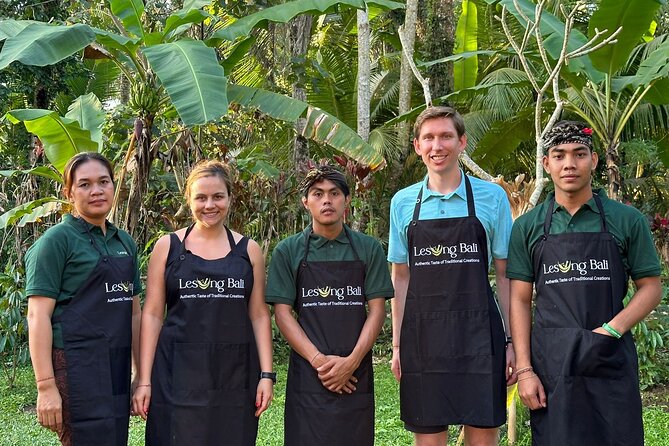
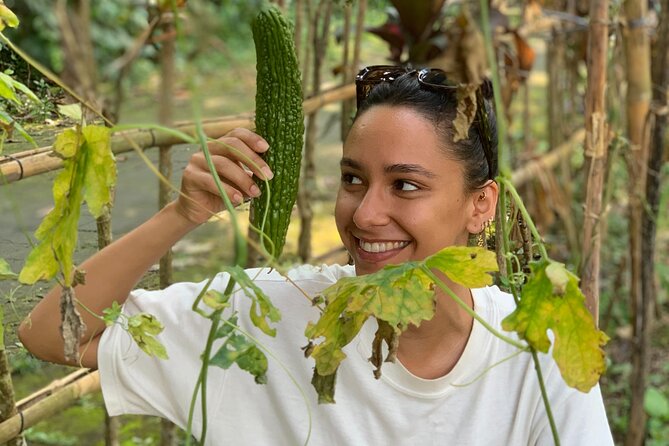
The class takes place at a farm in the west Ubud area. Before cooking, you explore the grounds and harvest some of the herbs or spices that will go into the menu. That small act changes the way you approach the meal. You see the ingredients before they are chopped, pounded, and cooked.
The farm setting is also a pleasant break from Ubud’s busy center. You can expect greenery, open air, and a relaxed countryside atmosphere. The cooking area itself is described as a separate, clean space with the tools needed for the class.
The farm visit will not turn you into a farmer, and you should not expect a long agricultural tour. Its purpose is direct: connect the ingredients to the food on your plate. If you have never seen some Balinese spices growing, this is a useful and memorable part of the day.
Because the class uses fresh ingredients, the menu can be adjusted for regular, vegetarian, or vegan cooking. You choose the menu option during the class, so make your dietary preference clear when you arrive.
Pounding spices and preparing the meal
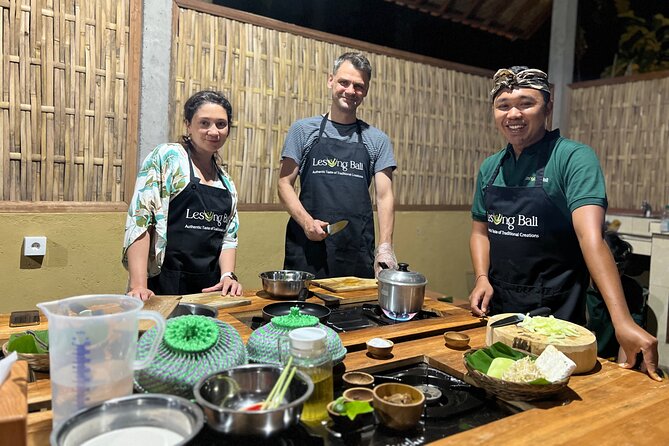
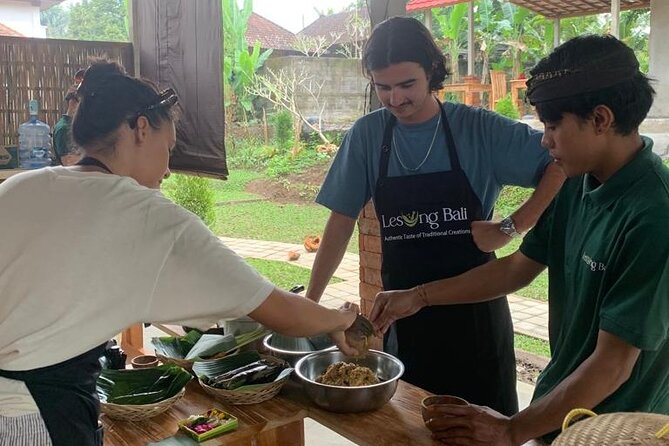
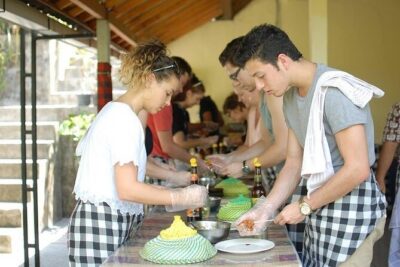
The cooking is hands-on. You learn Balinese chopping methods and use a lesung, a traditional mortar and pestle, to pound spices. This is more physical than stirring a sauce with a spoon, and it gives you a feel for the texture and fragrance of freshly crushed ingredients.
The chef explains how much of each ingredient to use, how the cooking process works, and what else each dish requires. Participants with little cooking experience receive help, so you do not need advanced kitchen skills.
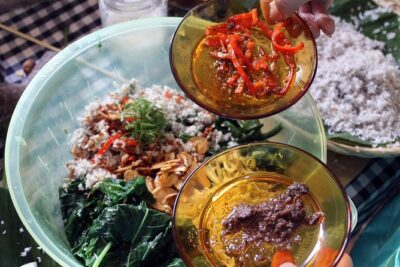
Many sessions prepare six dishes, with dessert included. The exact menu can vary, but the regular option may include meat, while vegetarian and vegan menus are available. You should arrive hungry. Several portions are served at the end, and the amount of food can be more than one person can finish.
The instructors generally balance demonstration with participation. You may prepare your own dishes while the chef moves around the group to offer help. Putri has been praised for her patience and clear explanations, while Ron is known for a funny, relaxed teaching style. Other guides, including Don, Gustie, and Begul, have also led well-received classes.
One useful caution: the lesson can move quickly when several recipes are being prepared at once. A participant also found that small amounts of spice were sometimes added without an explanation. If you want to copy the recipes accurately, ask questions as the dish develops and request measurements or ingredient names before moving on.
Eating what you prepared
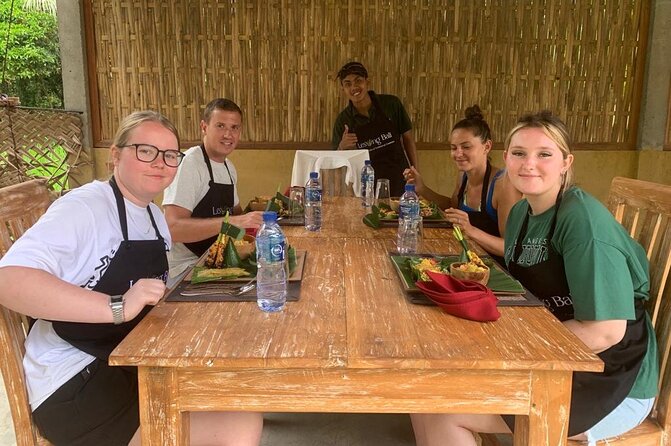
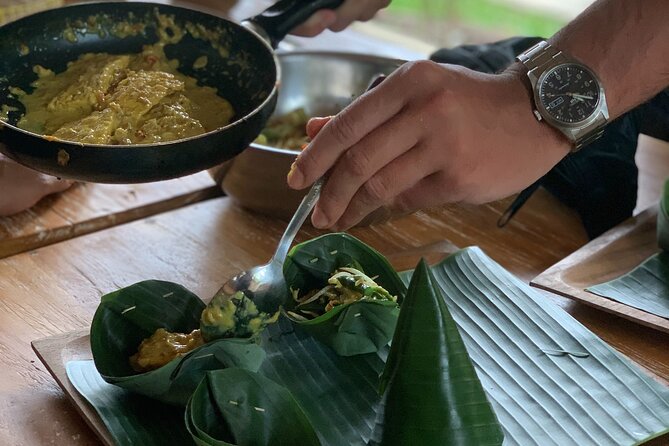
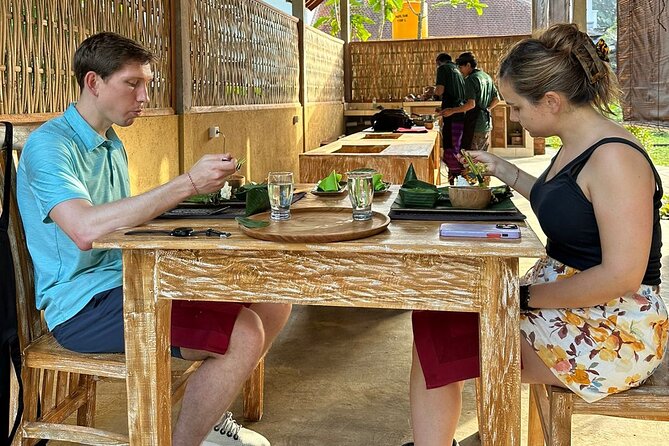
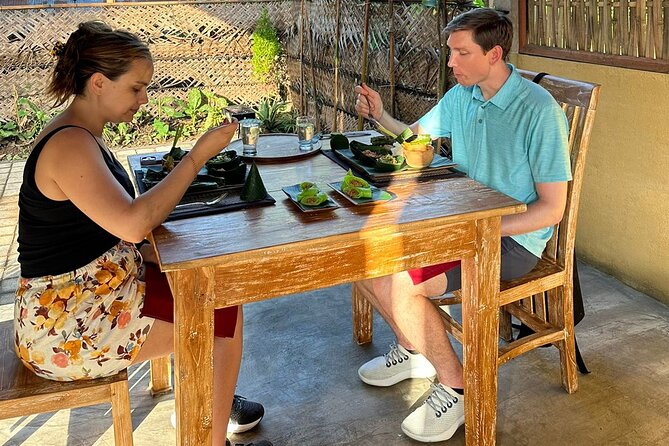
The meal at the end is not an afterthought. You sit down with the food you helped make, including the dishes that required the most chopping, pounding, and seasoning. This gives you a chance to taste how the spices work together rather than simply sampling one finished dish.
The meal is also where the class proves its practical value. You can compare textures, notice how fresh herbs change a dish, and ask the chef why a recipe tastes different from a Balinese restaurant version. The results are meant to be eaten, not just photographed.
Coffee, tea, mineral water, and a Balinese cake are included. The combination of snacks during the cultural visit and a full meal afterward makes this a food-heavy half-day. I would avoid scheduling it immediately before another large lunch or dinner.
You may not reproduce every dish perfectly at home, especially if you cannot find the same local spices. Still, the basic methods, flavor combinations, and use of a mortar and pestle are practical lessons you can adapt.
Group size, guides, and the feel of the day
The maximum group size is 15 people. That is still a group, but it is small enough for the chef to move around and give individual help. In practice, some sessions have had only a few participants, and one morning class became a private market tour and cooking lesson for a solo participant.
Your instructor is not guaranteed to be a particular person. Names connected with the class include Ron, Putri, Don, Gustie, and Begul. Their styles differ, but the strongest pattern is personal attention, humor, and willingness to explain Balinese life alongside the recipes.
A smaller group will make the cooking easier to follow and give you more time with the chef. A full group may feel more social, but you could have to wait briefly for help during a busy stage of the cooking.
Solo visitors can fit in well here. The work is shared, the meal creates easy conversation, and the cultural visits give the day structure. Couples, families, and groups of friends also have enough variety to keep the experience engaging for everyone.
Is the $39.71 price good value?
At $39.71 per person, this is good value if you want more than a cooking demonstration. The price includes roughly five hours of activity, Ubud-area pickup, an air-conditioned vehicle, mineral water, coffee or tea, a Balinese cake, the farm and cultural visits, cooking instruction, ingredients, and taxes and fees.
The value comes from the combination. You are not paying only for food. You also receive transportation within Ubud, an introduction to a traditional home, a farm visit, a market tour with the morning option, and a full meal.
Pickup is included only within the Ubud area. Extra transportation charges apply outside it: IDR 450,000 per car from Kuta, Seminyak, Sanur, or Canggu; IDR 500,000 per car from Nusa Dua or Jimbaran; and IDR 550,000 per car from Uluwatu. Check the transfer cost before booking if your accommodation is outside Ubud, since it can change the total value.
For a five-hour experience with food and transport included, the base price is fair. It is less attractive if you only want a short lesson or if you are staying far from Ubud and must add a costly car transfer.
Who should book this Ubud cooking class?
I would choose this class if you want to connect Balinese food with local homes, farms, and markets. It is also a good fit if you enjoy hands-on activities but do not consider yourself a cook. The instructors help beginners, and the format gives you plenty to do without expecting professional skills.
Choose the morning session if the market matters to you. Choose another time if you want the same home, farm, and kitchen program without an early start.
Vegetarians and vegans have menu choices, but you should state your preference clearly. Meat eaters can select the regular menu. Families should note that the class involves chopping, pounding, and several hours of activity, so younger children may need close help.
The class is not ideal if you dislike group activities, want a tightly timed professional lesson, or expect a fully private tour. The maximum group is 15, and the pace may occasionally feel rushed when several dishes are being prepared.
Booking includes free cancellation up to 24 hours before the start time. Cancellations or changes made within 24 hours are not refundable. Poor weather or failure to meet the minimum group size can lead to a different date or a full refund.
Should you book it?
Yes, if you want a half-day that combines Balinese food, family life, and practical cooking rather than a recipe lesson alone. The market, home visit, farm, and meal give the experience a useful sense of place, while the mortar-and-pestle work keeps you involved.
Pick the morning option for the most complete schedule, and arrive hungry. If you stay outside Ubud, check the extra car charge first. For everyone else, this is a well-priced choice for learning how Balinese flavors are built and sharing a meal you helped prepare.
FAQ
How long does the Balinese cooking class last?
The experience lasts approximately five hours.
Where does the cooking class take place?
The class is located on the west side of Ubud, in a green countryside setting with a farm and cooking area.
Is hotel pickup included?
Free shuttle service is included within the Ubud area only.
Is the morning market visit included with every class?
No. The traditional market visit is available with the morning class only.
Can I choose a vegetarian or vegan menu?
Yes. Regular, vegetarian, and vegan menu options are available.
How many people can join the class?
The maximum group size is 15 participants. Some sessions may be smaller.
What is included in the price?
The price includes cooking instruction, ingredients, an air-conditioned vehicle, mineral water, coffee or tea, a Balinese cake, all fees and taxes, and Ubud-area shuttle service.
Are transfers from outside Ubud available?
Transfers from outside Ubud are not included in the base price, but extra transportation can be arranged for an additional car charge. The listed charges vary by area.
What is the cancellation policy?
You can cancel at least 24 hours before the start time for a full refund. Cancellations or changes made less than 24 hours before the start time are not refunded. If poor weather or insufficient bookings cancel the class, you can receive a different date or a full refund.
Just added in Ubud
- Mount Batur jeep sunrise with breakfast★ 5.0 · 9 reviews
- Mount Batur Sunrise Trekking (Private, Breakfast and Visiting coffee plantation)★ 5.0 · 27 reviews
- Bali Food Tour: Savor Street Food and Night Market Adventures★ 5.0 · 46 reviews
- Ubud ATV Quad Bike and Snorkeling at Blue Lagoon Beach★ 5.0 · 64 reviews
- Bali Iconic Tour with Buffet Lunch and Attraction Tickets★ 5.0 · 66 reviews
- Bali Amazing Cooking Class★ 5.0 · 63 reviews
- 3 Days for the best of Ubud Private Tour★ 5.0 · 63 reviews
- Ubud Countryside Tour: Campuhan Ridge Walk and Rice Terrace★ 5.0 · 72 reviews
Cooking Classes, compared.
PRIVATE Authentic Balinese Cooking Class in Ubud at Putu’s Home
Read our review →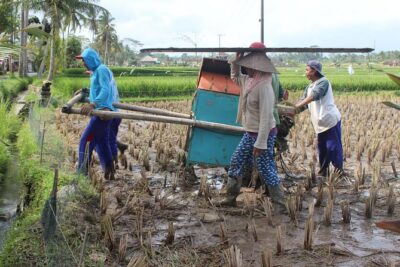
Balinese Ubud cooking school (9 Dish Cooking and Market Tour)
Read our review →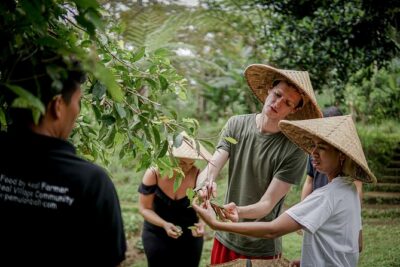
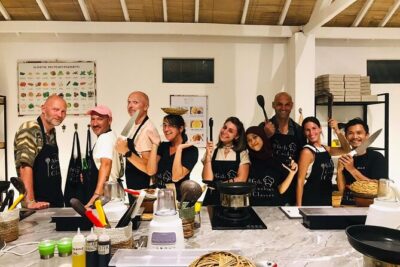
Learn to cook Indonesian food at Gili Cooking Classes Trawangan
Read our review →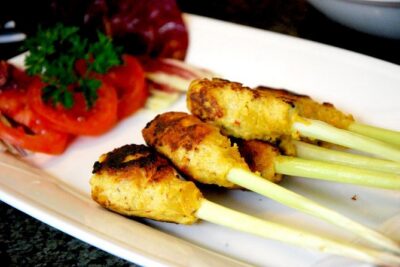
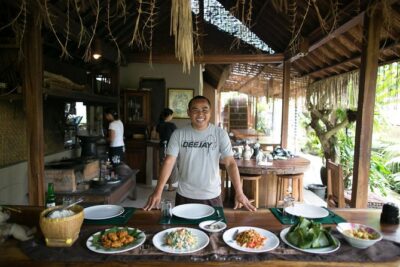
PRIVATE Balinese Cooking Class in Ubud with Dewa with Transfers
Read our review →Browse the lists this tour appears in