
Reviewed · COOKING CLASSES
Balinese Cooking class with traditional morning market visit
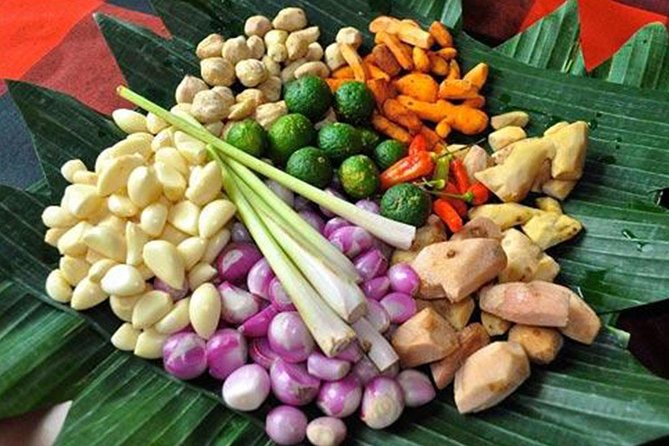
The best part of this Ubud experience happens before the cooking begins. You visit a local morning market, taste unfamiliar fruits, learn about herbs and spices, and help choose the ingredients that later become your lunch. At the village workshop in Laplapan, you also learn to make a canang, the small flower offering seen throughout Bali.
I like the mix of food and culture here. You do not simply follow a recipe in a classroom: you see where ingredients come from, meet local hosts, and learn traditional preparation methods. I also like the small-group limit of eight, plus hotel pickup in an air-conditioned vehicle. The main consideration is the early market visit and roughly six-hour schedule, which may feel long if you only want a quick cooking lesson.
Key details before you book

- Morning market visit: Choose from local vegetables, herbs, meat, spices, fruit, and sweets while learning how they are used in Balinese cooking.
- Canang-making lesson: Learn the purpose and construction of a traditional Balinese offering before cooking.
- Small class size: The advertised maximum is eight people, allowing more time for questions and hands-on work.
- Several dishes in one session: The menu can include starters, main courses, dessert, and as many as nine preparations, with some advance preparation to keep the class moving.
- Village setting: Cooking takes place in Laplapan, in a clean, attractive setting surrounded by the quieter scenery around Ubud.
- Good value at $35: Pickup, transport, equipment, class fees, taxes, and the meal are included, while personal purchases are extra.
Starting with Ubud’s morning market
Your day begins with hotel pickup and a ride in an air-conditioned vehicle. The provider offers pickup from Ubud and has also handled longer transfers, including from Sanur, so the transport is useful if you are not staying right beside the cooking school. The exact pickup time is not provided, so confirm it when booking.
The market visit gives the class a useful foundation. Instead of being handed a tray of measured ingredients, you see the raw materials in their everyday setting. Your guide may point out herbs, vegetables, fruit, spices, meat, and local sweets, explaining which items are common in Balinese kitchens and which are less familiar to you.
This is also your best chance to ask questions about ingredients you might later see on a menu. Some people have enjoyed tasting unfamiliar produce during the visit, though tasting is not described as compulsory. If you are curious about food, this part can be as interesting as the cooking itself.
The market stop is described as brief, so do not expect a long food tour with every stall covered. Its purpose is to help you understand the ingredients and select what the class will use. That makes it more practical than a market walk added only for sightseeing.
Wayan is one of the instructors associated with the class, and Dewa is also named as part of the cooking team. Other feedback names Putu and Puthu as guides, so the person leading your session may vary. The consistent thread is a local host who explains the produce, answers questions, and keeps the group moving.
More cooking in Ubud:
- Ubud Cooking Class Bali with Balinese Chef
★ 5.0 · 1,609 reviews - PRIVATE Authentic Balinese Cooking Class in Ubud at Putu’s Home
★ 5.0 · 644 reviews - Balinese Ubud cooking school (9 Dish Cooking and Market Tour)
★ 5.0 · 540 reviews
Learning to make a Balinese canang

Before the cooking starts, you learn how to make a canang and other items used in Balinese offerings. This is a small but meaningful cultural lesson. The offering is not just decoration: it helps you understand one of the daily traditions you will notice around homes, shops, temples, and streets in Bali.
The activity gives the morning a better balance. You are not only learning how to pound spices or prepare vegetables. You are also handling a tradition connected to family and community life. For many people, this is the part that turns a standard cooking class into a broader introduction to Balinese culture.
Do not expect a lengthy religious lecture. The useful value is hands-on: you are shown the process and make an offering yourself. The activity is also suitable for families, with children aged six, eight, and nine taking part successfully in one session. As with any craft lesson, the pace may vary depending on the group.
Cooking in Laplapan village
After the market, you continue to the traditional village of Laplapan. The setting is described as clean, attractive, and surrounded by the countryside near Ubud. You receive a welcome drink and snack before the cooking begins, then move into the practical work.
The class is built around traditional Balinese techniques. You can expect to prepare starters, main dishes, and an authentic dessert, although the exact menu is not specified and may change. Several people have cooked a large number of dishes in one morning, with one account describing nine very tasty preparations and another mentioning a five-course set.
That variety is a major reason the class offers good value. You are not paying $35 to learn one dish and eat a small portion. You may work on several components, then sit down to eat the finished meal. Some chopping or preparation may be done in advance so the group can complete the menu within the available time.
That balance matters. If every vegetable and spice were prepared from scratch by each person, the class could become slow and tiring. Some advance preparation lets you focus on the techniques that are most useful to take home, while still giving you plenty of hands-on work.
The instructors demonstrate each stage, then guide you as you prepare your part. One solo participant had the chance to prepare and cook every meal during a private-feeling session. In a full group, your hands-on time can depend on the size of the class and how tasks are divided, but the small-group limit should help.
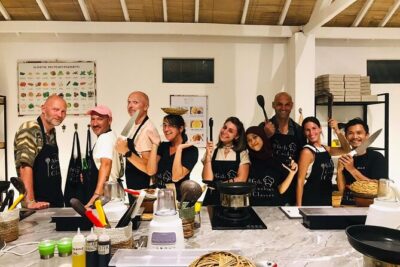
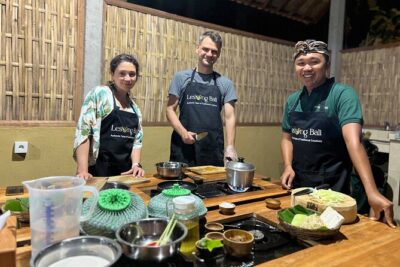
The class is designed to be social without losing its practical side. You cook alongside other people, share tasks, and eat together at the end. If you like asking questions as you work, the setting should suit you better than a large demonstration where you only watch the chef.
What you may cook and eat

The class covers the main building blocks of Balinese food: fresh produce, aromatic herbs, spices, sauces, and traditional cooking methods. You can expect a mixture of vegetable, meat, and spice-based ingredients selected at the market, though the precise dishes are not guaranteed.
The meal may include:
- Starters
- Several main dishes
- Vegetable and spice preparations
- An authentic Balinese dessert
- A final sit-down meal made from the group’s work
The food is prepared fresh, and the final meal is part of the experience rather than an optional extra. This is important for value: you learn techniques, then immediately see how they work together in a complete meal.
Vegetarian options have been provided in past sessions, and dietary requirements have been accommodated. Still, you should state your needs clearly at booking because the menu is not listed in detail. Do not assume that every dietary request can be handled without advance notice.
You may also receive recipes to take home. That turns the class into something more useful than a pleasant morning in Bali. The recipes give you a chance to repeat the dishes after your trip, though the availability of a printed recipe book should be confirmed when you book.
Same base, a different sort of day:
- All-Inclusive Ubud Private Tour
★ 5.0 · 14,344 reviews - Best of Ubud Full-Day Tour with Jungle Swing
★ 5.0 · 8,571 reviews - Ubud: Monkey Forest, Jungle Swing, Rice Terrace, and Water Temple
★ 5.0 · 7,160 reviews - Best of Ubud 1-Day Private Tour
★ 5.0 · 4,451 reviews
The teaching style and group size

The advertised maximum is eight people. That is small enough for a more personal lesson, but it is not a private class by default. You may share the workstations and cooking tasks with several other people.
Wayan is repeatedly praised for being patient, funny, welcoming, and clear in her explanations. Dewa and Putu are also associated with warm hosting and good guidance. The names matter because the feel of this experience depends heavily on the people leading it. You are not simply following printed instructions from a distance.
The teaching appears suited to mixed ability levels. One person described having little cooking-class experience, while another had a private lesson and prepared every dish. You do not need to be an expert cook, but you should be ready to take part rather than sit back and watch.
Families can also fit into the class. Children have taken part and enjoyed learning about ingredients and cooking methods. Young children may not handle every task independently, so parents should expect to help them.
Solo visitors have an advantage here, too. The shared format gives you an easy way to meet people, and the meal at the end naturally brings the group together. Couples and families will find enough structure to work as a team without needing to organize the day themselves.
Transport, timing, and practical value

The experience lasts about six hours, including pickup, the market visit, the trip to Laplapan, the offering lesson, the class, and the meal. That makes it a substantial half-day activity rather than a short morning demonstration.
At $35 per person, the price is strong for what is included. You receive hotel pickup, air-conditioned transport, cooking equipment, the class itself, taxes, and the meal you prepare. Personal expenses are not included, so budget separately for market purchases or other items you choose to buy.
The included vehicle is especially useful in Ubud, where roads can be slow and the cooking location may not be easy to reach on your own. Air conditioning is a practical comfort in Bali’s heat. If you are staying outside Ubud, ask about the exact pickup area and timing before paying, since pickup details can affect how much of your day the excursion uses.
The class is also useful early in a Bali trip. You can learn about ingredients before ordering more confidently at local restaurants, and you may recognize herbs or spice pastes later in your holiday. If you already have a packed itinerary, remember that six hours plus transport is a serious commitment.
Confirmation is provided at booking. Free cancellation is available if you cancel at least 24 hours before the experience starts. Changes or cancellations inside that window are not accepted for a refund, and the cut-off uses local time.
What I like most about the experience

The market makes the cooking class more grounded. You see the ingredients before they are chopped and cooked, and you get a better sense of how food fits into daily life in Bali.
The canang lesson adds a cultural layer without taking over the day. You learn by making something with your own hands, which is more memorable than a quick explanation during a sightseeing stop.
The food-to-price ratio is another strong point. For $35, you can spend most of a day with a local cooking team, prepare multiple dishes, eat the results, and possibly take recipes home.
I also like the flexibility shown in the teaching. Vegetarian meals and dietary needs have been accommodated, and instructors have worked well with both solo participants and families. Still, you should confirm your needs early rather than rely on a last-minute adjustment.
Possible drawbacks to consider

The menu is not published, so you cannot book this experience knowing exactly which dishes you will cook. If you have a particular Balinese favorite in mind, ask whether it can be included.
The morning market is described as brief. It is an ingredient-focused visit, not a full market exploration with unlimited shopping time. You should choose this tour for the combination of market, culture, and cooking, not for the market alone.
The six-hour length may also be more than you want if you have limited time in Ubud. A cooking class takes much of the day, and hotel pickup can lengthen the schedule if you are staying farther away.
Finally, the class is small but not necessarily private. A full group means tasks are shared, and you may not personally prepare every single component. If you want one-on-one instruction, ask about private availability rather than assuming it is included.
Who should book this Ubud cooking class
I would recommend it to anyone who wants food to serve as a doorway into Balinese life. It works particularly well for people who enjoy markets, hands-on activities, and meals where the preparation matters as much as the eating.
Families should consider it, since children have taken part successfully. Solo visitors can also benefit from the friendly group format. Couples will appreciate the chance to cook together, then sit down to a meal they helped create.
This is less suitable if you want a fast activity, a fixed menu, or a purely professional kitchen lesson. The appeal is the full package: market ingredients, a village setting, a canang lesson, local teaching, several dishes, and a shared meal.
Should you book it?
Yes, if you want a reasonably priced half-day that combines Balinese food with everyday culture. The strongest reasons are the small group, included transport, hands-on menu, local hosts such as Wayan and Dewa, and the chance to make a canang before cooking.
Ask about the menu, dietary requirements, pickup time, and recipe handouts before booking. If those details suit your plans, this is a good choice for learning something you can carry home, not just another meal you eat once in Bali.
FAQ
How long does the Balinese cooking class last?
The experience lasts approximately six hours, including hotel pickup, the market visit, transport to Laplapan village, the offering lesson, cooking class, and final meal.
Where does the cooking class take place?
The class takes place in the traditional village of Laplapan near Ubud, in a workshop setting surrounded by the countryside around Ubud.
Is hotel pickup included?
Yes. Hotel pickup is offered, and air-conditioned transport to the market and cooking workshop is included.
How many people can join the class?
The advertised maximum is eight people.
Are cooking equipment and taxes included?
Yes. Cooking equipment, cooking class fees, taxes, and the air-conditioned vehicle are included. Personal expenses are not included.
Can vegetarian or special dietary requirements be accommodated?
Vegetarian options and dietary requirements have been accommodated in past sessions. You should provide your requirements when booking so the cooking team can plan ahead.
What is the cancellation policy?
You can cancel at least 24 hours before the local start time for a full refund. Cancellations or changes made less than 24 hours before the experience are not refunded or accepted.
Just added in Ubud
- Mount Batur jeep sunrise with breakfast★ 5.0 · 9 reviews
- Mount Batur Sunrise Trekking (Private, Breakfast and Visiting coffee plantation)★ 5.0 · 27 reviews
- Bali Food Tour: Savor Street Food and Night Market Adventures★ 5.0 · 46 reviews
- Bali Amazing Cooking Class★ 5.0 · 63 reviews
- Ubud Countryside Tour: Campuhan Ridge Walk and Rice Terrace★ 5.0 · 72 reviews
- Full Day Private Guided Tour to Bali★ 5.0 · 65 reviews
- 3 Days for the best of Ubud Private Tour★ 5.0 · 63 reviews
- Balinese Cooking Class with Traditional Market Tour★ 5.0 · 66 reviews
Cooking Classes, compared.

PRIVATE Authentic Balinese Cooking Class in Ubud at Putu’s Home
Read our review →
Balinese Ubud cooking school (9 Dish Cooking and Market Tour)
Read our review →
Learn to cook Indonesian food at Gili Cooking Classes Trawangan
Read our review →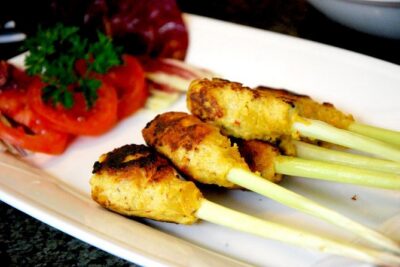
Browse the lists this tour appears in