
Reviewed · COOKING CLASSES
Bali Ubud Paon Cooking Class
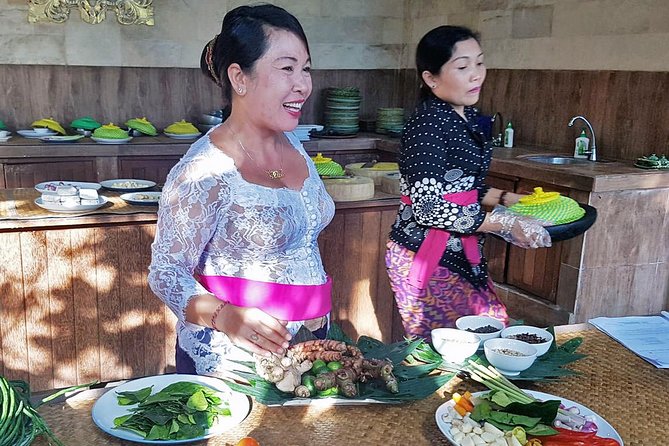
The best part of this Ubud cooking class is the clear link between market ingredients and the meal on your plate. On the morning session, you visit Ubud Traditional Art Market, then head to a Balinese home-style cooking setting to prepare dishes with a professional cook. It feels more useful than a cooking demonstration because you chop, mix, season, and cook the food yourself.
I like the small-group format, capped at 15 people, and the included Ubud hotel transfer. I also like the practical finish: you eat lunch, receive a cooking certificate, and may have the recipes sent to you through WhatsApp. The main consideration is timing. The market visit is available only in the morning, and hotel transfers cover Ubud only.
Key points before you book
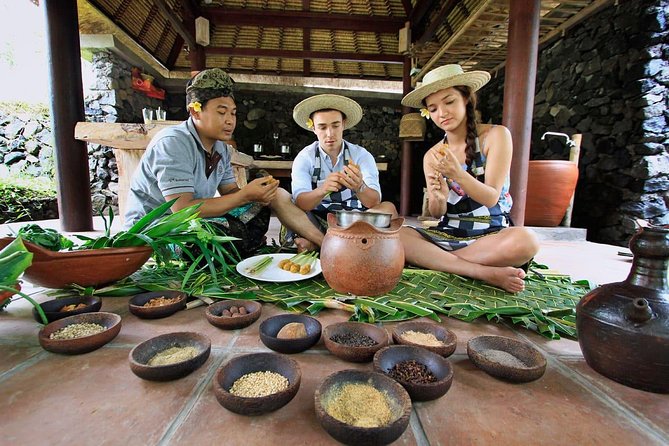
- Visit Ubud Traditional Art Market: The morning session gives you a look at local produce, fruit, spices, and cooking ingredients before class.
- Cook several Balinese dishes: Expect hands-on preparation of specialties such as banana-leaf fish and minced chicken satay.
- Eat what you prepare: Lunch is included, so the class ends with a proper meal rather than a quick sample.
- Choose your timing carefully: Afternoon classes include the cooking session but not the market visit.
- Keep the logistics simple: Transfers are included within the Ubud area, with extra charges for pickup and drop-off outside it.
- Plan ahead: Confirmation arrives within 48 hours, and the booking is non-refundable and cannot be changed.
Why this Ubud cooking class is worth your morning
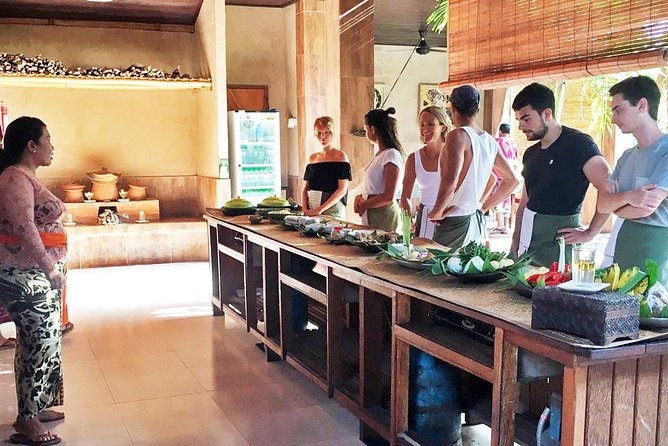
Bali is full of cooking classes, but the good ones show you how food fits into daily life. This experience begins with ingredients, not just recipes. You see the produce and spices at a traditional market, then learn how those ingredients become a Balinese meal.
That order matters. It helps you understand why Balinese food tastes the way it does. You can see unfamiliar fruits and spices before someone explains how they are used. You also get a better sense of the work behind dishes that may look simple when they arrive at a restaurant table.
The class lasts about five hours, which gives it enough time to feel like an activity rather than a rushed demonstration. You have time to prepare several dishes, ask questions, cook with other people, and sit down for lunch. I would allow most of a morning and early afternoon for the experience, including the transfer.
The group limit of 15 is a useful middle ground. It is large enough to meet people from different countries, but small enough for the instructors to offer help as you work. One class included people from Sweden, Switzerland, and Spain, creating the sort of casual conversation that often becomes part of the fun.
More cooking in Ubud:
- Ubud Cooking Class Bali with Balinese Chef
★ 5.0 · 1,609 reviews - PRIVATE Authentic Balinese Cooking Class in Ubud at Putu’s Home
★ 5.0 · 644 reviews - Balinese Ubud cooking school (9 Dish Cooking and Market Tour)
★ 5.0 · 540 reviews
Starting at Ubud Traditional Art Market
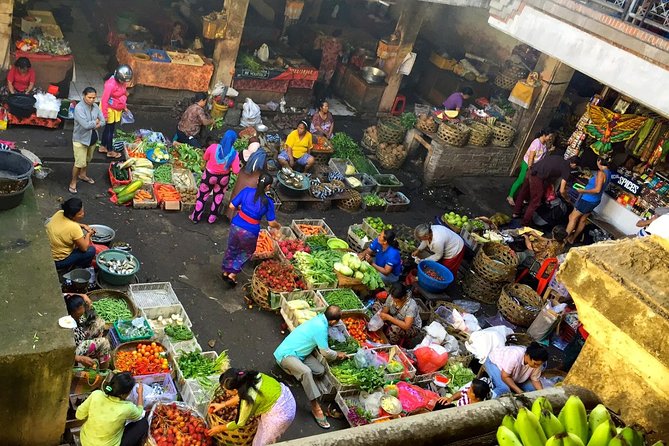
If you choose the morning session, the day begins with a visit to Ubud Traditional Art Market. This is the part I would not skip. The market gives you a reason to look closely at the food before you start cooking it.
You might see local fruit, vegetables, herbs, and spices that are unfamiliar if you usually cook in Europe, North America, or Australia. The market guide explains the ingredients and their uses, helping you connect what you see to the recipes later in the day.
This is not just a shopping stop. It is a short introduction to the local food system and a chance to see produce in the setting where people buy it. You can also purchase spices that may be difficult to find at home, although shopping is not included as part of the class.
The market does require an early start, so it is less suitable if you want a slow holiday morning. Still, the early timing pays off because the market visit adds cultural context that an afternoon-only class cannot provide.
If you book the afternoon session, you go directly to the cooking location instead. That option may suit you better if you prefer a later start, but you give up the market visit. For first-time visitors to Bali, I would choose the morning unless your schedule makes that impractical.
Cooking in a Balinese home setting
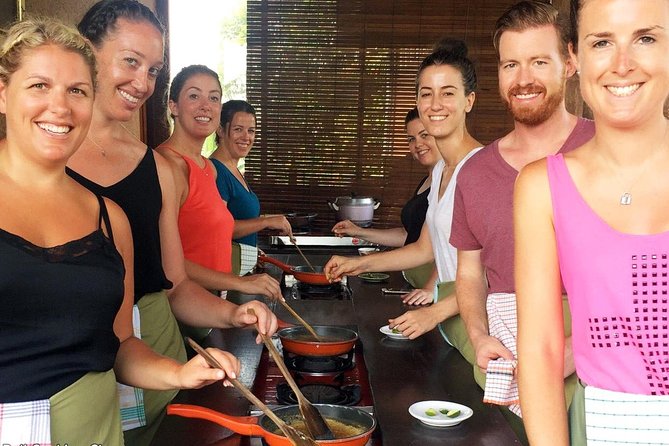
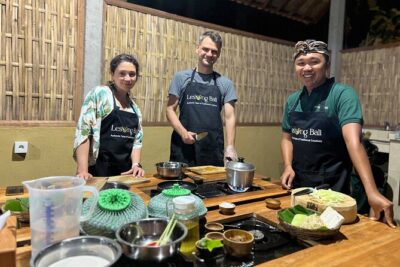
After the market, transportation takes you to the cooking class location. The class takes place at a traditional Balinese home with a dedicated setup for teaching. One of the most appealing features is the setting itself. You are not simply standing in a modern restaurant kitchen while an instructor works in front of you.
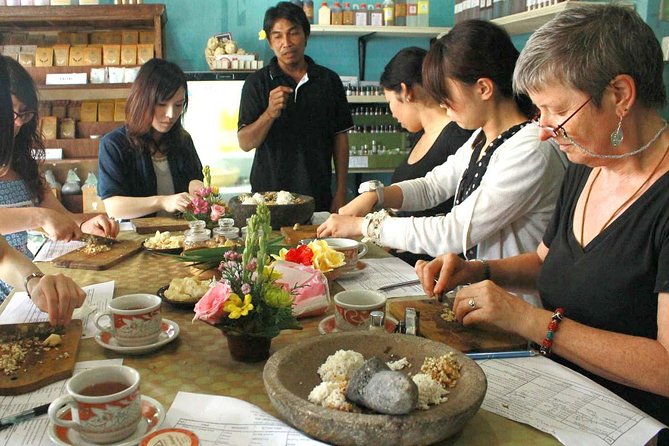
The professional cook leads the process, with support from additional staff. That support matters when a group is preparing several dishes at once. You can take part without the whole class slowing down each time someone needs help.
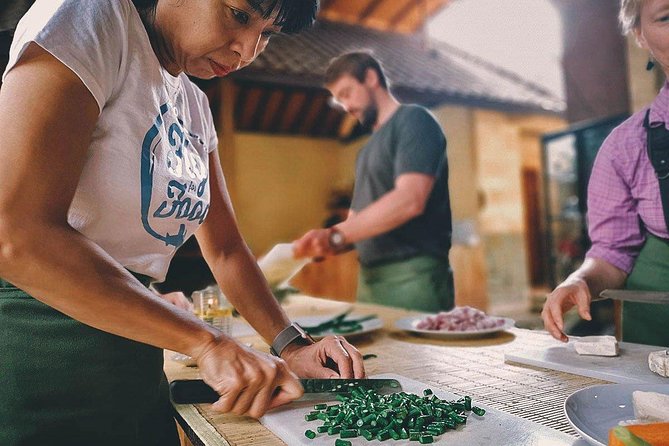
The instruction is hands-on. You do not just watch ingredients go into a pan. You take part in the preparation and learn how each ingredient contributes to the finished dish. The pace is organized, but there is still room for the social side of the class.
This is a good fit if you are an enthusiastic home cook, but you do not need advanced skills. The teaching is designed to make the steps easy to follow. You learn through demonstrations and direct participation, so the class works for beginners as well as people who already cook often.
The setting may also be part of the appeal for you. The home has views toward the forest, giving the class a pleasant sense of place. The surroundings are not the main reason to book, but they make the several-hour session more enjoyable.
The dishes you prepare and eat
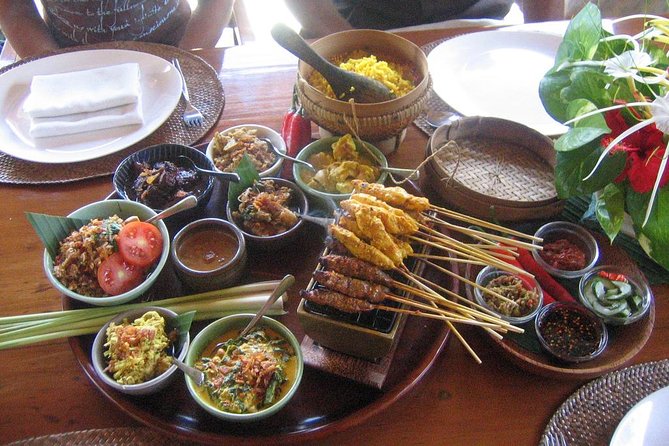
The menu includes traditional Balinese and Indonesian dishes, with examples such as banana-leaf fish and minced chicken satay. These are the kinds of dishes that give you something specific to recreate at home, rather than a vague introduction to local flavors.
Banana-leaf fish teaches you about wrapping and cooking food in a traditional way. Minced chicken satay gives you a different lesson in shaping, seasoning, and grilling. Together, they show how Balinese meals can combine fragrant seasoning with simple cooking methods.
You prepare multiple dishes during the session. The recipes are explained as you work, and the ingredients are discussed rather than treated as anonymous items on a workbench. That makes the class useful after your holiday, especially if you want to repeat the meal in your own kitchen.
The final meal is lunch, and it includes the food you have helped prepare. I prefer this format to a class that offers only small tastings. You can sit down and understand the full meal as a group, with each dish making more sense because you took part in its preparation.
If you have dietary needs, the supplied information does not spell out available substitutions. Ask about this before booking rather than assuming the menu can be changed. The class includes food and lunch, but it does not promise a custom menu.
Same base, a different sort of day:
- All-Inclusive Ubud Private Tour
★ 5.0 · 14,344 reviews - Best of Ubud Full-Day Tour with Jungle Swing
★ 5.0 · 8,571 reviews - Ubud: Monkey Forest, Jungle Swing, Rice Terrace, and Water Temple
★ 5.0 · 7,160 reviews - Best of Ubud 1-Day Private Tour
★ 5.0 · 4,451 reviews
What you take home after lunch
The most useful souvenir is the recipe information. You can have the recipes sent through WhatsApp if you want, which is handy because a printed sheet can easily disappear into a suitcase. If recreating the food at home is a major reason for booking, make sure you request or save the recipes before leaving.
You also receive a cooking class certificate. It is a small extra, but it gives the experience a clear finish and makes a nice keepsake.
The class can also change how you shop for ingredients later. The market visit may introduce you to spices that are hard to find in the United States and other countries. You may not reproduce every dish exactly at home, but you will have a better idea of which flavors matter and how the preparation works.
I would bring a phone for photos and for receiving the recipes, while keeping it out of the way during food preparation. The real value is not the certificate. It is the ability to remember the process and make a version of the meal again.
Transfers, timing, and group size
Pickup and drop-off are included for hotels within the Ubud area. If you are staying in a rental, select the nearest hotel as the pickup point. Pickup and drop-off outside Ubud cost extra, so check your location before you pay.
The class takes about five hours. That estimate includes the market visit for the morning option, the transfer to the cooking venue, instruction, preparation, and lunch. Give yourself extra breathing room around the scheduled time if you have another activity planned later.
The group maximum is 15 people. The actual feel of the class can vary depending on how many people book that day, but the stated limit keeps it from becoming a huge production. You will work alongside other people, and the mixed group can be part of the experience.
The activity is near public transportation, and service animals are allowed. Those details may help with planning, though the included hotel transfer is the simplest choice for most people staying in Ubud.
The price is about $44 per person. For roughly five hours, that includes transport within Ubud, the market visit on the morning session, ingredients, instruction, lunch, and a certificate. I consider that fair value, especially if you would otherwise pay separately for a meal, transport, and a food-focused cultural activity.
Morning or afternoon: which session should you choose?
Choose the morning session if the market is important to you. It gives you the complete sequence: see the ingredients, learn about them, cook with them, and eat the result. For many people, this is the stronger choice.
Choose the afternoon session if you need a later start or your morning is already occupied. You still receive the cooking instruction, meal, and transfer from an Ubud hotel, but you do not visit the traditional market.
The afternoon option can also work well if you have already spent time in an Indonesian market or if you care more about cooking than shopping. Just know that it is not the same full experience as the morning schedule.
I would not choose based only on the possibility of sleeping later. The market visit is one of the most distinctive parts of the day, and it helps make the class feel connected to Ubud rather than interchangeable with a cooking lesson anywhere else.
Who will enjoy this class most?
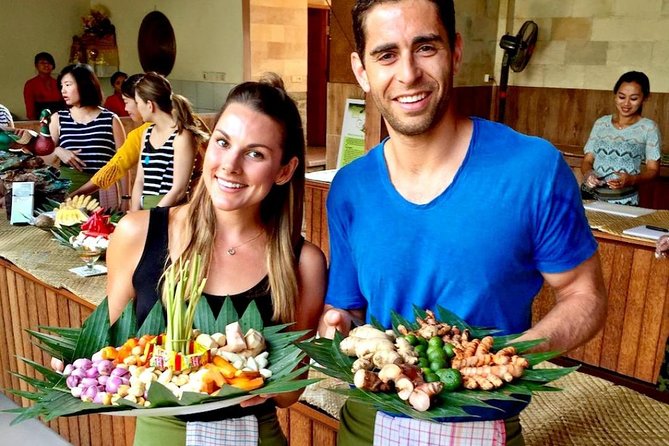
This experience suits couples, families with older children, solo visitors, and small groups of friends. The hands-on structure gives everyone something to do, while lunch and shared preparation create natural chances to talk with other people.
It is especially useful for anyone who has already enjoyed Balinese food and wants to understand how to prepare it. The class also works for beginners who want a relaxed introduction to local cooking without committing to a professional-level lesson.
Families should note that the information provided does not state a minimum age. If you plan to bring young children, confirm the age policy before booking. The activity includes knives, hot cooking surfaces, and a five-hour schedule, so the format may suit older children better.
This is less ideal if you dislike group activities, want a private lesson, or need a fully customized menu. The class is designed as a shared experience, with a maximum of 15 people and a set sequence.
Things to know before paying
Confirmation is sent within 48 hours of booking, subject to availability. Since the experience is non-refundable and cannot be changed for any reason, check your dates, hotel location, and preferred morning or afternoon session before making the reservation.
Tips are not included, and neither is individual travel insurance. The price covers the listed inclusions, but not personal purchases at the market or anything else outside that list.
Pickup outside the Ubud area costs extra. If you are staying beyond Ubud, compare that added transport charge with the cost and effort of reaching the meeting point yourself.
I would also avoid booking this on a day when you have a tight evening plan. A five-hour class with transfers needs room in your schedule, and cooking activities are more enjoyable when you are not watching the clock.
Should you book Paon Bali Cooking Class?
I would book it if you want more than a meal and prefer to learn by doing. The strongest version is the morning session, with the market visit included. You see the ingredients, prepare several dishes, eat lunch, and leave with recipes you can use at home.
At $44 per person, the combination of instruction, food, market access, lunch, and Ubud transfers is good value. The main limits are the non-refundable booking terms, Ubud-only transfers, and the fact that afternoon participants miss the market.
Book this class if Balinese food is part of your reason for visiting Bali, or if you want a social, practical activity between temple visits and walks around Ubud. Skip it if you need a private lesson, a flexible cancellation policy, or a menu tailored to specific dietary needs.
FAQ
How long does the Paon Bali cooking class last?
The experience lasts approximately five hours, including the class activities and lunch. The morning session also includes the traditional market visit.
Does the tour include a market visit?
Yes, the traditional market visit is included with the morning session. The afternoon session does not include the market visit.
Is hotel pickup included?
Hotel transfer services are included for locations within the Ubud area. Pickup and drop-off outside Ubud are available for an additional charge.
What food will I prepare?
The class includes dishes such as banana-leaf fish and minced chicken satay, along with other Balinese and Indonesian dishes. Lunch is included after the cooking session.
What is the maximum group size?
The activity accepts a maximum of 15 people.
Can I cancel or change the booking?
No. The experience is non-refundable and cannot be changed for any reason after booking.
Just added in Ubud
- Mount Batur jeep sunrise with breakfast★ 5.0 · 9 reviews
- Mount Batur Sunrise Trekking (Private, Breakfast and Visiting coffee plantation)★ 5.0 · 27 reviews
- Bali Food Tour: Savor Street Food and Night Market Adventures★ 5.0 · 46 reviews
- East Bali Tour: Lempuyang Temple – Gate of Heaven, Tirta Gangga, Virgin Beach★ 5.0 · 67 reviews
- Cliff Jumping and Sliding at Aling Aling Waterfall★ 5.0 · 71 reviews
- Private Full-Day Lempuyang Gate of Heaven Tour★ 5.0 · 67 reviews
- Half-Day Tour: Uluwatu Temple and Kecak Fire Dance Show★ 5.0 · 63 reviews
- Mount Batur Sunrise Trekking★ 5.0 · 65 reviews
Cooking Classes, compared.

PRIVATE Authentic Balinese Cooking Class in Ubud at Putu’s Home
Read our review →
Balinese Ubud cooking school (9 Dish Cooking and Market Tour)
Read our review →
Learn to cook Indonesian food at Gili Cooking Classes Trawangan
Read our review →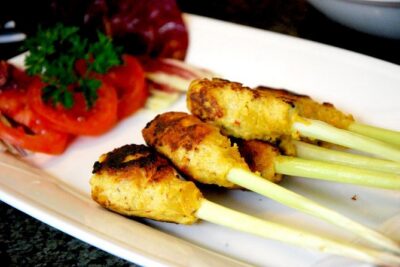
Browse the lists this tour appears in