
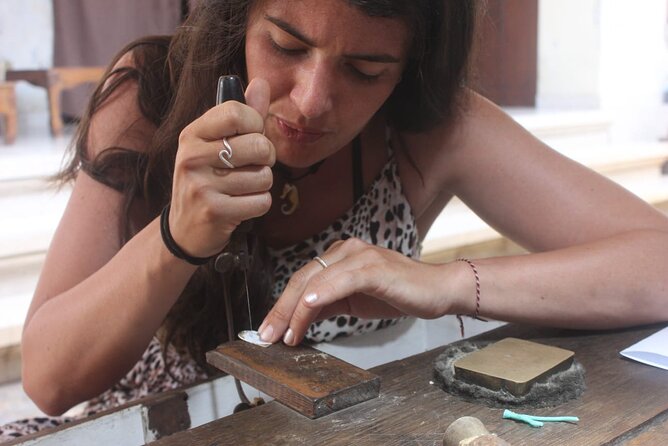
Reviewed · SILVER & CRAFT WORKSHOPS
Private Traditional Bali Silver Jewelry Making Class
Celuk’s silver tradition becomes much more meaningful when you work the metal yourself. At Rajata Silver Class, you sit with a private tutor and turn a small piece of silver into a ring or another personal design, using the same basic skills that give Bali its reputation for handmade jewelry. Arik is named by several participants as a patient, careful teacher, while Ari is also praised as a helpful instructor.
I like two things here: you get genuine one-to-one help rather than a crowded demonstration, and you leave with a keepsake made by your own hands. The family setting, cold drink, snacks, and chance to add initials or follow your own design give the afternoon a personal feel. One point needs checking before you pay: the tour details list both 5 grams and 10 grams of silver, so confirm your allowance and the extra charge for additional metal.
Key points to know before booking
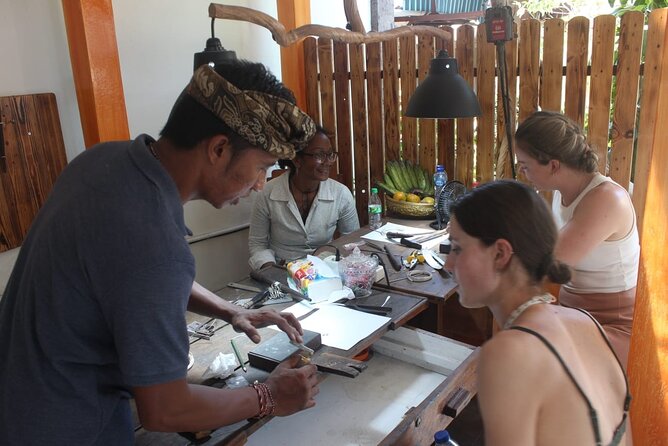
- You work in Celuk, Bali’s main silver-making village, rather than only watching a craft demonstration.
- The class is private, so your tutor can slow down for tricky steps or help simplify an ambitious design.
- You learn real hand skills, including sawing, stamping, hammering, soldering, sanding, and polishing.
- You can bring your own idea, use a workshop sample, or add a personal touch such as initials.
- The class lasts about three hours and includes tools, a private guide, drinks, and snacks.
- Extra silver costs IDR 50,000 per gram, and hotel transfers are available for an additional fee.
Why making silver in Celuk feels different
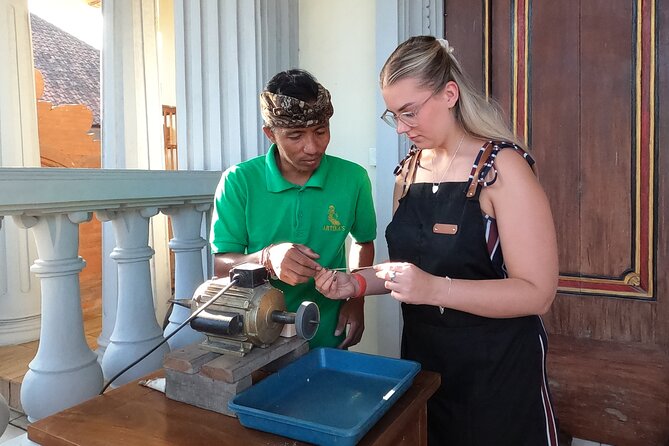
Many Bali souvenirs are easy to buy, wrap, and forget. A ring or pendant you shape yourself has a different value. You remember the first cut, the moment the metal starts to take form, and the final polish that makes the piece look finished.
Celuk, in Sukawati, is the right setting for this kind of class. The village is known as a center for Bali’s silver craftsmen. You are not simply being shown a craft in a resort activity room. You are visiting a place tied to the work itself, then spending time with a local family-run workshop.
The class is designed for beginners. You do not need prior metalworking experience, and the guide covers tool use and basic safety before you begin. That matters because silver jewelry making involves small tools, heat, sharp edges, and careful handwork. The goal is not to make you a professional silversmith in one afternoon. It is to give you a real sense of the process and help you complete one attractive piece.
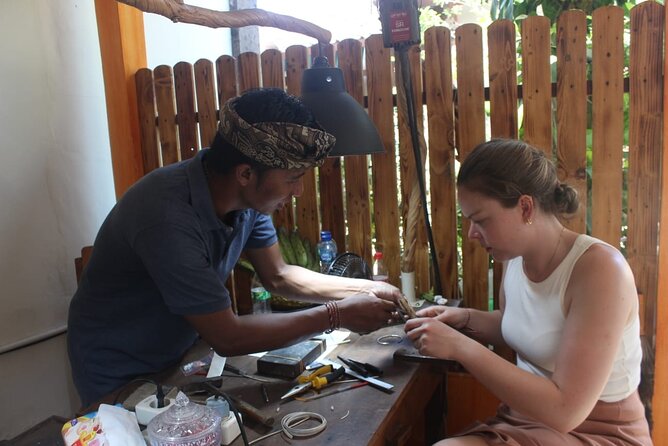
The private format makes this more useful than a large group class. If your saw slips or your design proves too complex, your tutor can show you how to correct it. If you already have a clear idea, you can spend more time refining it rather than waiting for other people to finish.
Other things to make with your hands in Ubud:
- Ubud Silver Class Jewelry making in bali
★ 5.0 · 978 reviews - Crafting Heritage Batik Painting Workshops
★ 5.0 · 164 reviews - Ubud Bali Silver Jewelry Class
★ 5.0 · 163 reviews
Arriving at Rajata Silver Class in Celuk
The meeting point is Rajata Silver Class in Celuk, Sukawati, Gianyar Regency. The activity begins and ends there. Hotel pickup is not included, so you need to arrange your own way to the workshop or pay for a return transfer.
The paid transfer rates vary by area:
- Sanur or central Ubud hotels: IDR 450,000 per car
- Seminyak, Kuta, or Legian: IDR 500,000 per car
- Canggu: IDR 550,000 per car
- Nusa Dua or Jimbaran: IDR 550,000 per car
- Uluwatu: IDR 600,000 per car
For a couple or small group sharing one vehicle, this can be practical. For a solo visitor, it changes the total cost quite a bit. Check the pickup price before booking if you are staying outside Ubud.
The workshop welcome sounds simple and personal. You may be offered a cold drink on arrival before getting started. Snacks and bottled water or a soft drink are included, which is useful during a three-hour session involving steady handwork.
The family setting is part of the appeal. You may meet members of the family involved in the workshop, rather than only dealing with a guide who appears for the lesson and leaves. Several participants particularly enjoyed the warmth of the family atmosphere, and one even mentioned meeting the family kitten. That is a small detail, but it helps explain why this feels more like a local craft visit than a standard tourist class.
Choosing a ring, pendant, or personal design
Your first creative decision is the hardest one: what should you make?
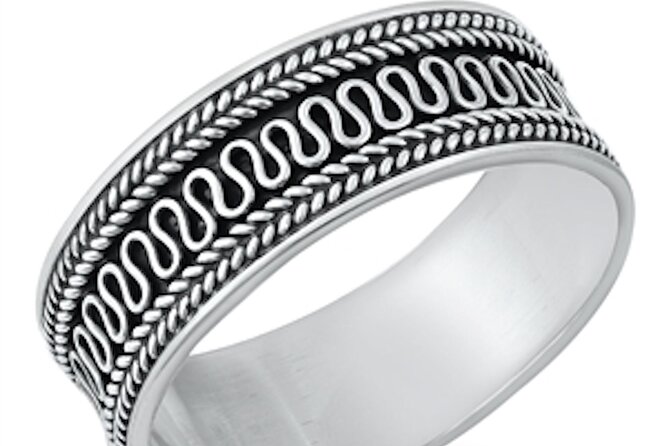
The workshop has sample designs to guide you. You can also bring an idea of your own. A good plan is to arrive with two or three simple designs rather than one complicated picture. A plain band, textured ring, initial, small symbol, or basic pendant is more realistic for a three-hour class than a large piece with many fine details.
Your tutor helps judge what will work. This is one of the most useful parts of the class. A design may look simple on paper but require more metal, time, or soldering than the session allows. A good instructor will help you keep the idea while making it achievable.
One participant created a ring and added initials. Another made two rings with a daughter. These examples show what the time can allow, but your result depends on the design, the amount of silver, and how quickly you work.
The listed price is $48 per person. That is fair if you value the instruction and the finished object, not just the raw metal. You are paying for a private lesson, workshop access, equipment, guidance, drinks, snacks, and the chance to make a personal souvenir. It is not the cheapest way to buy a silver ring in Bali, but buying a finished item would not give you the same connection to the piece.
The first cuts: tools, sawing, and shaping
The lesson covers the tools and how to use them before you begin. This introduction is important because jewelry tools can feel unfamiliar at first. You learn how to hold and control them, how to work safely, and how each tool changes the metal.
Sawing is usually the point where patience matters most. You work through the silver with small, controlled movements. Rushing can produce an uneven edge or damage the shape. Your tutor can help you find a steadier rhythm and show you how to follow the planned outline.
At this stage, the piece may not look like jewelry. That is normal. You are cutting and shaping a small amount of silver, so mistakes are visible. The benefit of a private class is that help should come quickly when you need it.
The experience is hands-on, but it is not completely independent. Your tutor supports you throughout the process. That balance works well for beginners: you do the meaningful parts yourself, but you are not left to guess what comes next.
Same base, a different sort of day:
- All-Inclusive Ubud Private Tour
★ 5.0 · 14,344 reviews - Best of Ubud Full-Day Tour with Jungle Swing
★ 5.0 · 8,571 reviews - Ubud: Monkey Forest, Jungle Swing, Rice Terrace, and Water Temple
★ 5.0 · 7,160 reviews - Best of Ubud 1-Day Private Tour
★ 5.0 · 4,451 reviews
Stamping and hammering add the character
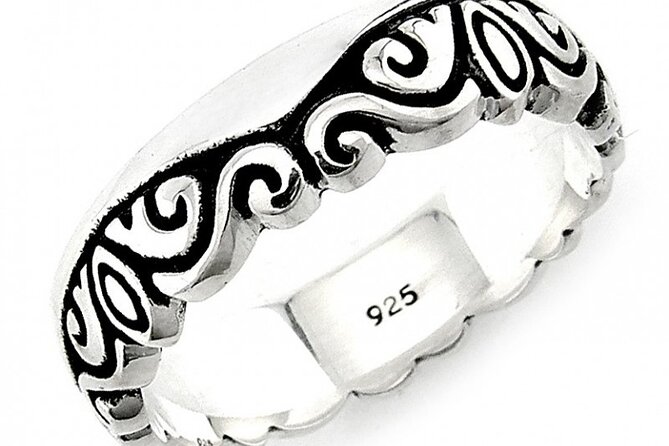
Once the basic shape is ready, stamping and hammering can give the silver texture or detail. These techniques are simple in concept but require care. A few well-placed marks can make a plain ring look more distinctive. Too much force or an awkward strike can leave unwanted dents.
This is where your design choice matters. A simple piece with one strong detail may look better than an overcrowded design attempted under time pressure. Ask your tutor what will suit the shape and thickness of your silver.
The workshop samples help if you need ideas. You can see how texture, initials, and small patterns look on finished pieces before committing to your own. That is particularly helpful if you know you want something personal but have not planned the exact design.
The class also gives you a better understanding of traditional handwork. You are not just pressing a button on a machine. You are learning how force, angle, and repetition affect a small piece of metal.
Soldering, sanding, and polishing finish the piece
Soldering joins parts of the design. This is one of the stages where close instruction matters most. Your tutor explains the process and helps you work safely with the equipment. You may handle the step yourself under guidance, depending on the design and the workshop process.
After joining the metal, sanding removes rough edges and helps refine the shape. This can take longer than expected. A ring that looks finished from a distance may still have sharp points or uneven surfaces close up. Do not rush this stage. It affects both comfort and appearance.
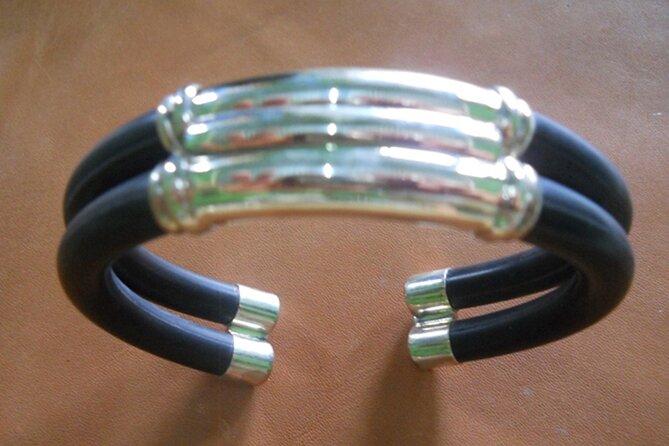
Polishing provides the final change. Dull silver begins to reflect light, and the object finally reads as jewelry rather than a work in progress. That moment is satisfying because you can see the result of every earlier stage.
The finished piece is not factory-perfect, and that is part of its character. Small variations show that you made it by hand. If you want a flawless commercial finish, buying a ready-made piece may suit you better. If you want a personal souvenir with a story behind it, the handmade result is the point.
What the private format is really worth
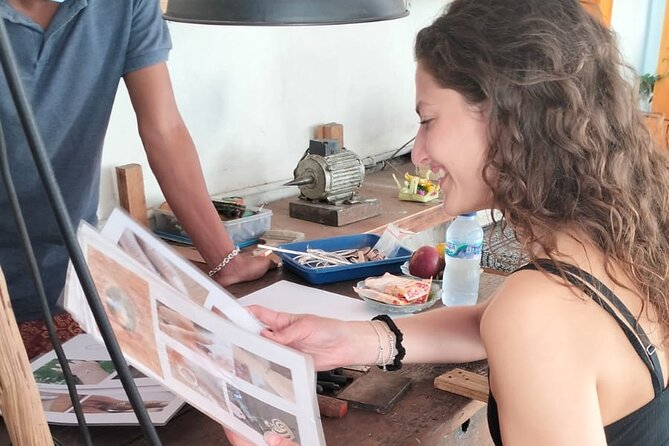
A private class is especially useful for couples, families, and friends who want to make related pieces. You can work on your own design while sharing the same lesson and family workshop setting. One parent and daughter made rings together, which shows how the activity can work across ages, provided each person can follow the safety guidance and handle the tools.
The private arrangement also helps if your group has different skill levels. One person may need more help with sawing, while another may want advice on design or finishing. A single tutor can focus where needed instead of moving between a large room of participants.
The class is not a quiet sightseeing stop. You will spend much of the time concentrating on small tasks. That makes it a good choice for people who enjoy making things, but less suitable if you want a relaxed activity that requires little effort.
Allow about three hours. The exact pace will depend on the number of people in your group and the design you choose. A straightforward ring may leave more time for finishing. A detailed piece may require simplification or an additional silver charge.
Silver allowance and the extra-cost question
The supplied details are inconsistent about the included silver. One section says 10 grams, or 0.35 ounce, while the included-items section says 5 grams. The additional charge is stated as IDR 50,000 per gram.
You should contact the provider before the class and ask three direct questions:
- How many grams are included in the $48 price?
- What design size can that amount normally produce?
- When is the extra silver charge collected?
This is not a minor detail. Five grams may be enough for a small ring or simple piece, while a larger design or multiple pieces could need more. Knowing the limit helps you arrive with a workable idea and avoid an awkward price surprise.
Personal expenses are not included. The class supplies the tools and basic refreshments, but anything beyond the stated package is your responsibility.
Who will enjoy this class most
I would choose this experience if you want an activity that gives you something physical to take home and a story to attach to it. It suits people who enjoy crafts, couples seeking a shared project, families, and anyone who prefers a local workshop to a quick shopping stop.
It is also a good option for a repeat visit to Bali. You may already have seen temples, rice terraces, and markets. A silver class gives you a different way to spend an afternoon and a closer look at one of Bali’s established craft traditions.
You should think twice if you dislike detailed handwork, have very little time, or want guaranteed transport from your hotel without an added fee. The class takes place at the workshop, and the activity ends there. You also need to accept that the final piece will reflect beginner-level work, even with good instruction.
Most people can participate, according to the activity information. The class does involve tools, sawing, hammering, soldering, sanding, and polishing, so you should be comfortable following safety instructions and working with your hands.
Booking, timing, and cancellation details
Confirmation is provided when you book, and the activity is often reserved about 24 days ahead. If your Bali dates are fixed, booking early is sensible, especially if you want a certain day or have a private group.
The mobile ticket makes access simple. Keep the booking available on your phone and check the meeting point before leaving your hotel.
Free cancellation is available up to 24 hours before the local start time. Canceling within 24 hours or changing the booking during that period does not qualify for a refund. The class also requires suitable weather. If poor weather causes cancellation, you are offered another date or a full refund.
Should you book the Celuk silver class?
Book it if you want more than a purchased souvenir. For $48 per person, you get a private lesson, direct help from a local silversmith, workshop tools, refreshments, and a piece shaped by your own hands. The family atmosphere and the option to add initials or use your own design make it feel personal rather than mass-produced.
Before paying, settle the silver allowance. The difference between the stated 5 grams and 10 grams should be clarified, especially if you want a large design or more than one item. Also price the return transfer if you are not staying near Ubud.
With those points sorted, this is a strong choice for a creative afternoon in Bali. You may leave with an imperfect ring, but you will also leave knowing how it was made, and that is worth more than another souvenir pulled from a shop shelf.
FAQ
Where does the silver jewelry class take place?
The class takes place at Rajata Silver Class in Celuk, Sukawati, Gianyar Regency, Bali. Celuk is a craft village outside Ubud known for silver craftsmen.
How long does the class last?
The class lasts approximately three hours.
Is the class private?
Yes. Only your group participates in the private activity, with a private silver class guide.
What jewelry-making skills will I learn?
You learn basic tool use, sawing, stamping, hammering, soldering, sanding, polishing, silver work, and safety procedures.
Can I make my own design?
Yes. You can create your own design or use inspiration from samples at the workshop. The instructor can help you decide what is practical.
How much silver is included?
The supplied details list both 5 grams and 10 grams, or 0.35 ounce, of silver. Confirm the exact allowance with the provider before attending.
What does extra silver cost?
Additional silver is listed at IDR 50,000 per gram.
Is hotel pickup included?
No. Hotel transfer is available for an extra charge. The listed return car prices range from IDR 450,000 to IDR 600,000, depending on your hotel area.
What is the cancellation policy?
You can cancel at least 24 hours before the local start time for a full refund. Cancellations or changes made within 24 hours are not refunded. If poor weather cancels the class, you can choose another date or receive a full refund.
Just added in Ubud
- Mount Batur jeep sunrise with breakfast★ 5.0 · 9 reviews
- Mount Batur Sunrise Trekking (Private, Breakfast and Visiting coffee plantation)★ 5.0 · 27 reviews
- Bali Food Tour: Savor Street Food and Night Market Adventures★ 5.0 · 46 reviews
- Bali Amazing Cooking Class★ 5.0 · 63 reviews
- 3 Days for the best of Ubud Private Tour★ 5.0 · 63 reviews
- Ubud Countryside Tour: Campuhan Ridge Walk and Rice Terrace★ 5.0 · 72 reviews
- Full Day Private Guided Tour to Bali★ 5.0 · 65 reviews
- Balinese Cooking Class with Traditional Market Tour★ 5.0 · 66 reviews
Silver & Craft Workshops, compared.
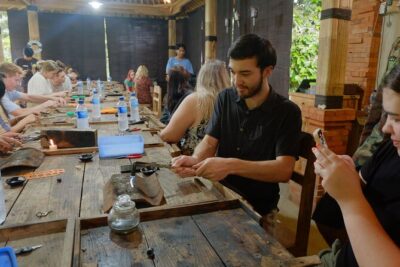
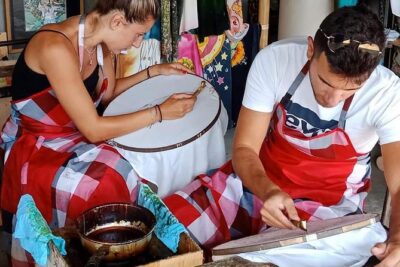

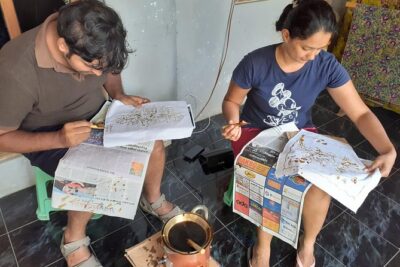
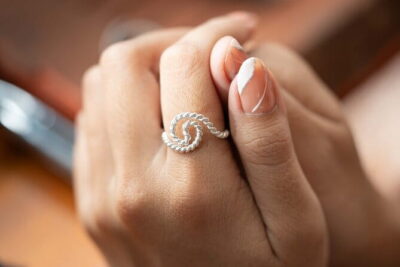
Kuta Bali Silver Jewelry Making Class Near Kuta Beach
Read our review →
Silver Jewelry Making Class in Seminyak and Legian
Read our review →
Bali Seminyak Silver Class Activity and Take Your Own Creation
Read our review →
Borobudur: Village Tour with Pottery and Tofu Making
Read our review →Browse the lists this tour appears in