
Reviewed · SILVER & CRAFT WORKSHOPS
Crafting Heritage Batik Painting Workshops
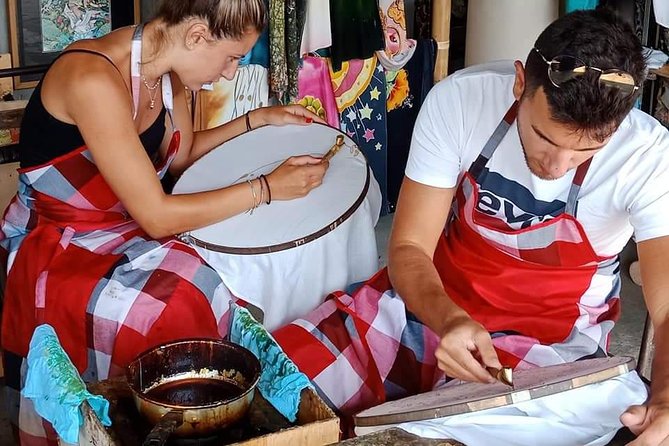
The best part of this Ubud experience is that you do not just buy a piece of batik, you make one. At Five Arts Studio, you sketch a design, trace it in hot wax, add dye, and watch the pattern appear when the wax is removed. Your finished cloth becomes a personal souvenir, not another shop-bought decoration.
I like the calm setting in a Balinese family compound, and I like that the instructors give you room to work at your own pace. Dika and Agong are among the instructors praised for patient, friendly help, especially with children and first-time artists. The main drawback is that batik takes more patience and hand control than you may expect, so a perfect result is not guaranteed.
Key points to know before booking
- You make the artwork yourself: Sketch, wax, dye, and finish your own batik piece with step-by-step help.
- The setting feels personal: Class takes place at Five Arts Studio, part of a Balinese family home compound outside central Ubud.
- Beginners are welcome: You do not need formal art training, and instructors can help you choose a motif and manage the technique.
- Hot wax requires care: Fine lines and stray drops can be tricky, so patience matters more than artistic confidence.
- The price includes small comforts: At $29 per person, you get the class materials, snacks, coffee or tea, and mineral water.
- Plan your own transport: The meeting point is Five Arts Studio on Jl. Raya Keliki, and the activity ends there.
Making Batik Instead of Buying It
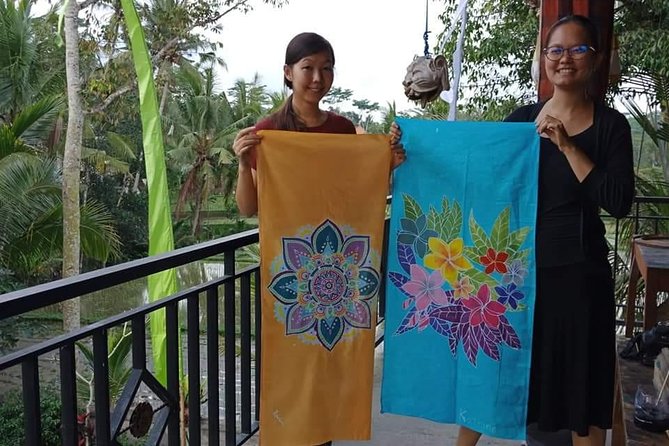
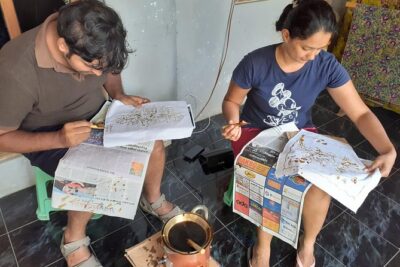
Batik is made by controlling where dye can reach fabric. You draw with hot wax, then add color to the open areas. The wax acts as a barrier, and when it is washed away, the original fabric color remains along the lines.
That simple explanation makes the process sound easy. It is not difficult to understand, but it does demand a steady hand and a little patience. A wax line that is too thin may let dye seep through. A small accidental drip may become part of the final design. That is not a failure. It is part of learning a craft by hand.
You begin by choosing or sketching a design on fabric. The studio provides materials, and you can work from one of the suggested motifs or bring your own idea. This choice makes the class useful for different kinds of people. You can follow a prepared pattern if you want a clear path, or create something looser if you enjoy making decisions as you go.
The process gives you several satisfying stages. First comes the drawing. Then you handle the hot wax. After that, you add colors to selected sections. Finally, the wax is removed so the pattern can be seen more clearly. You get a better feel for the work involved in finished batik than you would from a short demonstration.
Other things to make with your hands in Ubud:
- Ubud Silver Class Jewelry making in bali
★ 5.0 · 978 reviews - Ubud Bali Silver Jewelry Class
★ 5.0 · 163 reviews - Ondox Silver Class and jewelry UBUD
★ 5.0 · 132 reviews
Five Arts Studio in Keliki
The class takes place at Five Arts Studio, at Jl. Raya Keliki, Keliki, in the Tegallalang area of Gianyar Regency. This is outside central Ubud, so check the address carefully when planning your day. The meeting point and end point are the same.
The studio operates in a family home compound. That detail matters. You are not sitting in a polished hotel activity room or a large commercial workshop. You see a working art space connected to a Balinese household, with artists and students sharing the same setting.
The atmosphere is casual and comfortable. Some sessions may feel quiet and intimate, while others may have a family or small group energy. The stated maximum is 30 people, though the experience can also be much smaller. One student described receiving one-on-one instruction on a quiet day, while another family worked with help for a six-year-old.
You should allow about three hours. That is long enough to learn the basic method without turning the class into a full-day commitment. It also gives you time to slow down, correct mistakes, and finish a piece you feel good about.
A Three-Hour Batik Process
Choosing a design
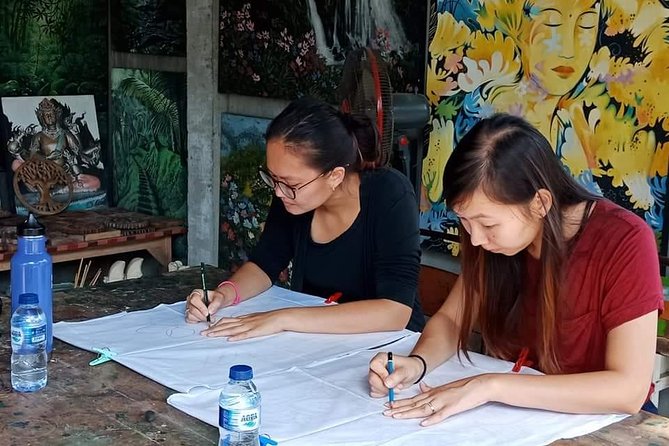
The first stage is deciding what you want to place on the cloth. You may bring your own motif or select from suggestions at the studio. The available designs range in detail, so do not pick something far beyond your comfort level unless you are happy to spend extra time on the drawing.
This is also where the instructors can help you judge the amount of work involved. A simple pattern leaves more time for color and experimentation. A detailed pattern may produce a striking result, but it requires more care when tracing with wax.
A few more things to do in Ubud worth a look
- Jakarta Heritage of Old Batavia Private City Tour (Historical)
★ 5.0 · 143 reviews - Bali Unesco World Heritage Sites Tour (Private & All-Inclusive)
★ 5.0 · 91 reviews - Private Tour: Bali UNESCO World Heritage Sites
★ 5.0 · 62 reviews - Yogyakarta Cultural Tour: Borobudur Temple, Prambanan Temple and Merapi Volcano
★ 4.5 · 41 reviews
Drawing with hot wax
The wax stage is the technical heart of the class. You use hot wax to mark the areas where dye should not spread. This is where the activity feels different from ordinary fabric painting. You are not simply brushing color onto a blank surface. You are planning the final image in layers.
Expect a learning curve. Wax can land where you did not intend it to, and keeping a line even is harder than it looks. The instructors guide you through the steps and help you recover when something goes wrong. That support is important, especially if you are making batik for the first time.
The class is best approached with a relaxed attitude. If you insist on perfect lines, you may spend the whole session worrying about small errors. If you accept a few happy accidents, the work becomes more enjoyable and the finished cloth gains a handmade character.
Applying color
Once the wax outline is in place, you add colorful dyes to selected parts of the fabric. The color stage gives you more freedom. You can follow a suggested palette or make your own choices, depending on the guidance provided during your session.
The dyes can be blended, which allows you to add variation instead of filling every section with a single flat color. This is one of the most creative parts of the workshop, but it still rewards restraint. Too many competing colors can make a design harder to read.
The instructors remain available as you work. Several people specifically valued the balance between help and independence. You are shown what to do, but you are not forced to copy every decision made by the teacher.
Revealing the finished design
The final result becomes clearer when the wax is washed away. The original-colored lines remain, separating the dyed areas and showing the pattern you created.
Your piece may not look exactly like the sample you had in mind. That is normal for a first attempt. The process is manual, and each person handles the wax and dye differently. The reward is seeing a real object emerge from your own decisions, including the imperfect parts.
Ask about the final handling of the fabric during the class if you need to know when it is ready to pack. The supplied information confirms that you take home your creation, but it does not specify a particular size, drying time, or packaging method.
Patient Help From Dika, Agong, and the Studio Team
The teaching style is one of the strongest reasons to book this class. Dika is praised for giving clear instructions and helping participants stay on track. Agong is also singled out for friendly, patient support, including with a young child.
You can expect an introduction to the basic background of batik before starting the hands-on work. The explanation is brief enough to keep the class moving, but it gives meaning to the technique. You learn why wax and dye are used together, rather than treating the activity as a generic painting session.
English-language instruction is available. One participant specifically noted that the teacher spoke very good English, while others described the directions as easy to follow. As with any hands-on class, ask questions early if you are unsure about the wax tool, dye placement, or order of steps.
The instructors also seem to understand that confidence matters. They encourage you when the work feels messy and help you adjust rather than simply pointing out mistakes. That approach is especially useful for families and for anyone who does not think of themselves as artistic.
What the $29 Price Really Buys
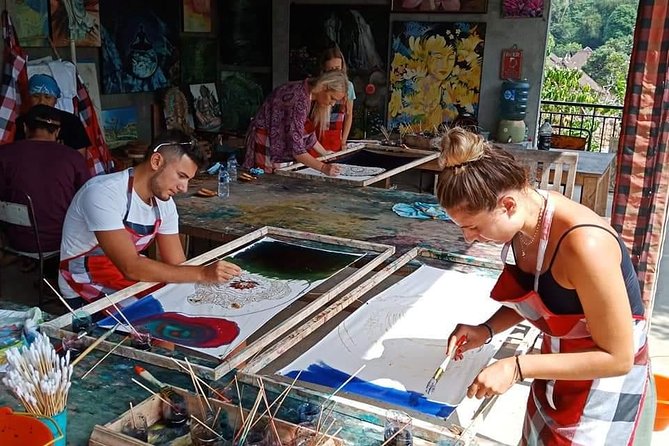
At $29 per person, this is a good-value activity if you want more than a short demonstration. You receive roughly three hours of instruction, all the materials needed for your batik, and a finished piece to take home. Snacks, coffee or tea, and mineral water are included.
The value comes from the combination of teaching and making. A souvenir bought in Ubud may be attractive, but it will not carry the memory of drawing the wax lines and choosing the colors yourself. Here, the object is tied to a specific afternoon and a skill you learned.
The price does not include lunch. Local food can be ordered, and alcohol is available to purchase, but these are extra. If you expect a full meal, plan for that separately or confirm what food is available before class.
Transport is also not listed as included. You need to reach Five Arts Studio at the stated meeting point in Keliki, and the activity ends there. A mobile ticket is provided, which is handy, but it does not remove the need to plan your route.
Who Will Enjoy This Class Most
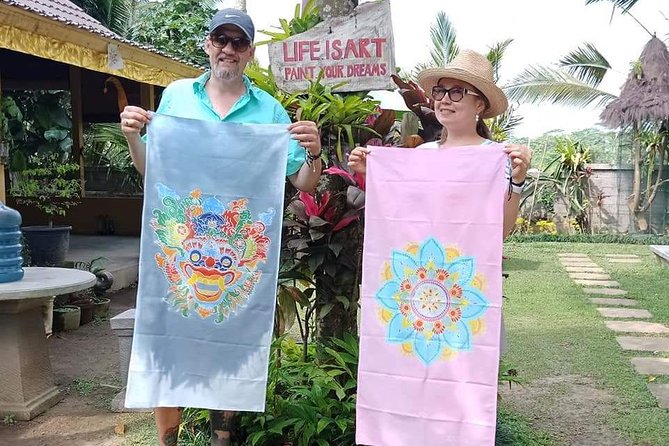
I would recommend this workshop to anyone who wants a creative break from sightseeing. It suits couples, families, solo participants, and groups with mixed artistic ability. You can work independently or ask for closer guidance, so the experience does not depend on already being good at drawing.
Children can take part with adult support. The class has worked well for a six-year-old when an instructor helped throughout the process. Still, hot wax is involved, so adults should stay attentive and follow the studio’s instructions.
This is also a good pick for people who enjoy quiet, hands-on activities. The class is not built around a packed schedule or a long list of stops. You spend most of the time at one studio, working on one object.
You may want to skip it if you dislike slow manual work or want an instant souvenir. The wax lines take care, and the dye stage can feel less controlled than ordinary painting. The experience rewards curiosity and patience more than speed.
The activity requires a strong physical fitness level according to the supplied conditions. No further details are given about seating or the physical setup, so contact the provider if you have specific mobility concerns. Service animals are allowed, and the studio is near public transportation.
A Calm Alternative to Ubud Shopping
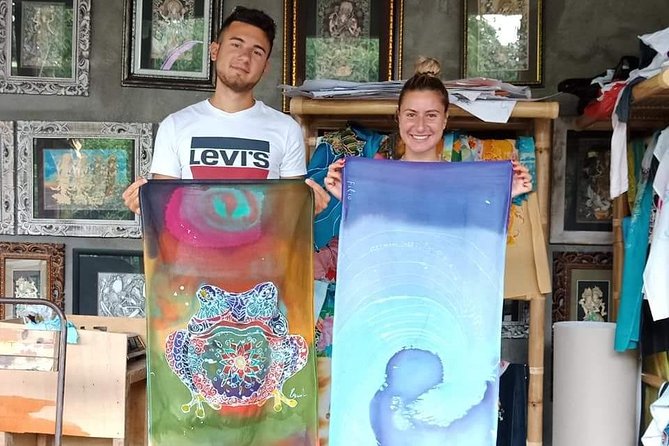
Ubud has no shortage of art shops, galleries, and craft stalls. This class gives you a different way to connect with local art. You see how a Balinese artist lives and works in a family compound, then try a traditional process under guidance.
That does not make you a master batik artist in three hours. It does give you a better sense of the time behind finished fabric art. Even a simple piece requires planning, careful wax work, controlled dye, and several stages of handling.
The setting also keeps the experience personal. You are not just watching a finished product appear on a shelf. You are making choices at every stage. That is why the class works well as a vacation memory, even if your final design contains a few uneven lines.
Bring an open mind and avoid comparing your first piece with professional work. The most satisfying result is usually the one that reflects your own choices.
Booking, Timing, and Cancellation
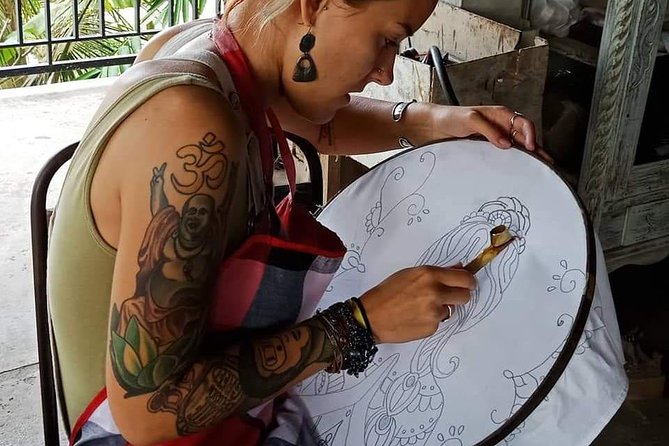
Confirmation is provided when you book, and the activity uses a mobile ticket. The workshop lasts about three hours and returns to the same meeting point at Five Arts Studio.
The cancellation policy is generous if you keep an eye on the clock. You can receive a full refund by canceling at least 24 hours before the local start time. Cancellations or changes within 24 hours are not accepted for a refund.
Because the studio is outside central Ubud, give yourself enough time to arrive at Jl. Raya Keliki, Keliki, Tegallalang, Gianyar, Bali 80561. The supplied details do not include hotel pickup, so do not assume transportation is part of the booking.
Should You Book the Five Arts Studio Batik Class?
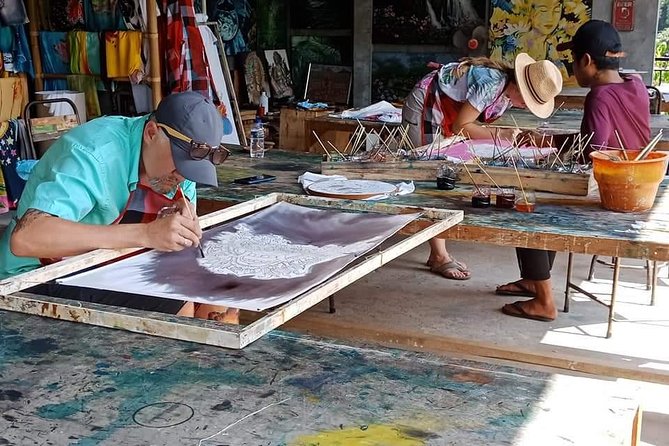
Book it if you want a personal souvenir, a calm creative activity, and a closer look at a Balinese family art setting. The strongest reasons are the patient instruction, the freedom to choose your design, and the fact that you complete the whole process yourself.
Keep your expectations realistic. Batik is more demanding than it first appears, and the finished piece may include small mistakes. That is part of its charm, but it may frustrate anyone looking for a polished result with no effort.
For $29, the combination of materials, instruction, refreshments, and a take-home artwork makes this a strong choice in Ubud. I would especially choose it for families, first-time artists, and anyone who wants to spend an afternoon doing something rather than simply buying something.
FAQ
Where is the batik workshop held?
The class is held at Five Arts Studio, Jl. Raya Keliki, Keliki, Kec. Tegallalang, Kabupaten Gianyar, Bali 80561, Indonesia.
How long does the batik class last?
The experience lasts approximately three hours.
What happens during the workshop?
You sketch a design, draw it on fabric with hot wax, apply colorful dyes to selected areas, and wash away the wax so the original-colored outline remains.
Do I need previous art experience?
No. The activity is designed for beginners as well as people who already enjoy art. Instructors provide guidance throughout the process.
Can I choose my own batik design?
Yes. You can bring your own idea or choose from suggested motifs at the studio.
Do I take my batik artwork home?
Yes. Your original batik piece is intended to be your souvenir from the workshop.
What is included in the price?
The $29 price includes the workshop, materials, snacks, coffee or tea, and mineral water.
Is lunch included?
No. Lunch is not included, but local food can be ordered. Alcohol is also available to purchase.
Where does the activity end?
The class ends back at Five Arts Studio, the same place where it begins.
What is the cancellation policy?
You can cancel at least 24 hours before the experience start time for a full refund. Cancellations or changes made within 24 hours are not refunded or accepted.
Just added in Ubud
- Mount Batur jeep sunrise with breakfast★ 5.0 · 9 reviews
- Mount Batur Sunrise Trekking (Private, Breakfast and Visiting coffee plantation)★ 5.0 · 27 reviews
- Bali Food Tour: Savor Street Food and Night Market Adventures★ 5.0 · 46 reviews
- Mount Batur Sunrise Trekking★ 5.0 · 65 reviews
- Trunyan Cemetery, Hot Spring, Penglipuran Village, and Waterfall Tour★ 5.0 · 65 reviews
- Ubud: Monkey Forest, Rice Terraces & Sacred Temples★ 5.0 · 69 reviews
- Ubud ATV Quad Bike and Snorkeling at Blue Lagoon Beach★ 5.0 · 64 reviews
- Bali Iconic Tour with Buffet Lunch and Attraction Tickets★ 5.0 · 66 reviews
Silver & Craft Workshops, compared.

Private Traditional Bali Silver Jewelry Making Class
Read our review →
Kuta Bali Silver Jewelry Making Class Near Kuta Beach
Read our review →
Silver Jewelry Making Class in Seminyak and Legian
Read our review →
Bali Seminyak Silver Class Activity and Take Your Own Creation
Read our review →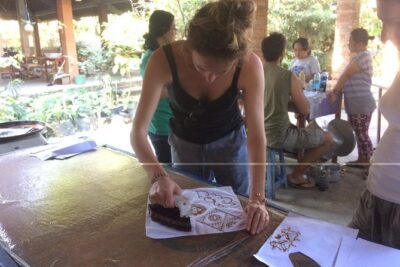
Borobudur: Village Tour with Pottery and Tofu Making
Read our review →Browse the lists this tour appears in