
Reviewed · HIKING & TREKKING
Rinjani trekking 2D 1N RIM
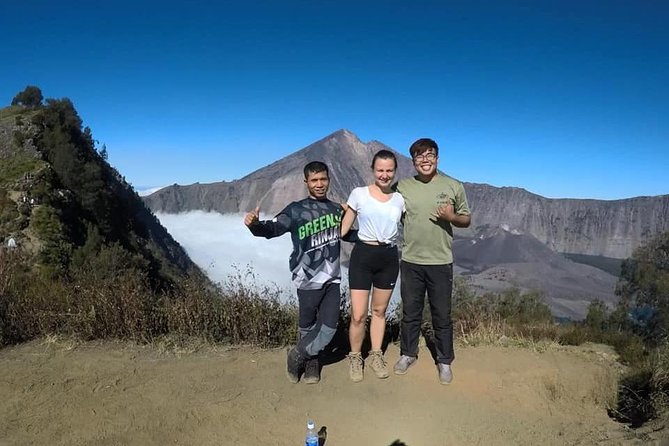
Mount Rinjani’s Senaru crater rim gives you one of Lombok’s great mountain views without requiring the full summit trek. You climb through coffee trees, bamboo, rainforest, and open savanna, then camp high above the crater lake with the Gilis and Bali’s Mount Agung in view.
I like the private format, which lets your group set its own pace, and the generous camp setup, with meals, water, snacks, tents, sleeping bags, and porters included. The trade-off is clear: this is not an easy walk. The climb to 2,641 meters is steep, and the five-to-six-hour descent on day two can be hard on tired legs.
Key points to know before you book
- Senaru route to 2,641 meters: You hike up and down the same trail, rather than continuing to the summit or Lake Segara Anak.
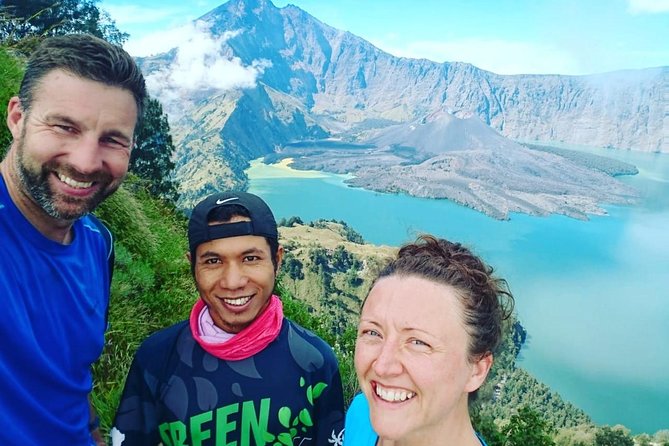
- Sunset above the crater: The rim offers views toward the three Gili islands, Bali’s Mount Agung, the crater lake, and Rinjani’s 3,726-meter peak.
- Private pacing: Only your group takes part, so you can ask for extra breaks and move at a comfortable speed.
- Full camp support: A guide and porter team carries equipment, prepares meals, and sets up the overnight camp.
- Bring your own light: A headlamp or hand torch is not included, and neither are trekking shoes, warm clothing, or a daypack.
- Strong food reputation: Meals are plentiful, with rice-based dishes, fruit, biscuits, snacks, coffee, tea, and bottled water supplied along the way.
Why the Senaru crater rim makes a good two-day trek
Rinjani is a major mountain, but this route does not attempt the summit. Instead, you climb from Senaru village to the western crater rim and return by the same path. That makes the trip shorter and simpler than a summit or crater-lake trek, though it does not make it casual.
The route reaches 2,641 meters, high enough for wide views and a proper mountain campsite. From the rim, you can look across the crater toward Lake Segara Anak, see smoke from the newer volcanic cone in the lake, and look up toward Rinjani’s 3,726-meter summit.
I like this choice for people who want the famous Rinjani view but have only two days. You get the mountain setting, the sunset, the camp, and the morning light without adding the extra days needed for the summit route. Still, the climb is a serious physical effort, especially because much of the gain comes on the first day.
The private setup matters here. A fixed group tour can force you to match another party’s pace. This trip is only for your group, so your guide can build in rest stops, adjust the rhythm, and keep the day manageable. The supplied information calls for a moderate fitness level, which is a fair description, but you should expect sustained uphill walking rather than a gentle nature stroll.
Other treks in Lombok people book:
- 2D1N Senaru Crater Rim Trekking
★ 5.0 · 178 reviews - 3D-2N Explore Mount Rinjani – Summit -Lake and Hotspring
★ 5.0 · 112 reviews - 3D/2N Rinjani trekking summit,lake and hot springs.
★ 5.0 · 85 reviews
Day one: coffee trees, rainforest, and the long climb
The day begins around 7:00 to 8:00 in the morning, with registration at the Rinjani Trekking Centre in Senaru. The early section passes through open village land, where coffee trees, bamboo, and other plants grown by local residents line the route.
After about 30 minutes, the trail enters tropical rainforest. This is one of the more pleasant parts of the climb because the trees provide shade from the sun. The air can feel humid, and the uphill work begins to settle into your legs, but you may hear or spot black and brown monkeys in the forest.
The first major rest point is Pos 2, also called Montong Satas, at about 1,500 meters. The break is more than a quick pause. The guide and porters prepare soft drinks, biscuits, and fresh fruit, including bananas and pineapple. That kind of support is useful on a climb where small snacks and regular fluids can make the difference between a steady day and a miserable one.
From Pos 2, allow about two hours to reach Pos 3, known as Mondokan Lokak, at roughly 2,000 meters. The route remains in the rainforest for much of this section. In June, July, and August, you might see local wild strawberries along the trail.
Pos 3 is the main lunch stop. The team cooks here, and you can rest for about an hour and a half before tackling the final push to the rim. Brown monkeys are also found around this area. Keep a small backpack close and do not leave food or belongings unattended, since the monkeys may try to take them.
This is a good example of why the porter support adds real value. You do not need to carry the tent, sleeping bags, cooking supplies, table, chairs, or much of the food. You still carry your own daypack, but the heavy camp load is handled by the local team.
The final climb to 2,641 meters
After lunch, the trail leaves the rainforest and reaches open savanna. The change is welcome because the views widen, but you lose the shade. Take sun protection seriously: bring a hat, sunglasses, sun lotion, and enough water for the exposed section.
A steep section near Cemara Lima gives you a broad view over Senaru village. The route then becomes stony and continues uphill toward Pelawangan 1, the Senaru crater rim. The final hour can feel long, particularly after several hours of climbing already behind you.
The rim campsite sits at about 2,641 meters. This is the reward for the hard work, but the surface is not described as smooth or easy. Wear proper trekking shoes with a firm sole, and consider trekking poles if you like extra balance on rough ground.
Your guide and porters set up the camp. The package includes a tent, sleeping bag, sleeping mat, camping pillow, camping table and chairs, and a toilet tent. You should not expect a hotel-style night. The value is in having a protected place to sleep and a prepared meal high on the mountain.
Warm layers are important. Bring a windproof jacket, long trekking trousers, and extra shirts. The packing instructions also suggest a small towel, insect repellent, muscle balm, toiletries, and sandals. A swimsuit is listed as optional, though this two-day route does not include a stated swimming stop.
Sunset over the Gilis and Bali
The crater rim is especially worthwhile late in the day. From this high point, you can watch the sun drop toward the three Gili islands and Bali’s Mount Agung. The changing light across the crater and surrounding peaks is the main visual prize of the trip.
You may also see the valley beside Mount Sangkareang, smoke rising from the volcanic cone in Lake Segara Anak, and the higher summit of Rinjani. The views are broad, but conditions can change. Clouds, haze, and weather may affect what you see, so treat the sunset as a strong possibility rather than a guarantee.
The camp lets you stay in place for the best evening light instead of rushing downhill. Dinner is included, along with coffee or tea, bottled water, and snacks. Several guide teams connected with Green Rinjani, including Dana, Adi, Yun, Ubang, and Sri, have been praised for keeping a close eye on pace, comfort, and safety. Your actual guide depends on availability, but the company’s support structure is a major part of the experience.
A headlamp or hand torch is not included. This is an easy item to overlook, yet it matters for moving around camp after dark and for any early morning packing. Bring your own rather than relying on a phone light.
More walking routes from Lombok:
- Rinjani Trekking 3D2N Summit
★ 4.5 · 85 reviews - Rinjani Trekking 3 Days 2 Nights (Sembalun – Senaru)
★ 5.0 · 84 reviews - Mt. Rinjani 2D1N Senaru Crater Rim
★ 5.0 · 75 reviews - Trekking Mt. Rinjani 2 Days 1 Night Senaru Crater Rim
★ 5.0 · 55 reviews
Day two: sunrise, crater views, and a long descent
The second morning begins with breakfast and time to enjoy the sunrise. You can take photographs of the crater lake, the surrounding ridges, and the peak before packing up for the return walk.
The descent to Senaru village takes about five to six hours. It follows the same route, but walking downhill creates a different challenge. Your knees and ankles take more impact, and the stony upper section can feel slippery or awkward when you are tired.
The forest becomes welcome again as the trail drops into shade. Lower down, the path passes back through the tropical vegetation and village-grown crops before reaching the trekking centre. Arrival is expected around 12:30 to 1:00 in the afternoon, followed by a private car transfer to your next destination.
That transfer is useful if you have onward plans. Still, avoid booking a tight flight or another fixed activity immediately afterward. Mountain timing can shift, and five to six hours downhill is a long morning even when everything goes well.
What is included, and what you still need to bring
At $205, this is a substantial package rather than a simple guided walk. The price includes the guide, porter team, transfers, food, drinks, overnight camping, and a broad set of camping equipment.
Included camp equipment covers:
- Tent
- Sleeping bag
- Sleeping mat
- Camping pillow
- Camping table and chairs
- Toilet tent
Food support includes breakfast, lunch, dinner, bottled water, coffee or tea, snacks, biscuits, and fresh fruit. Alcoholic beverages are also listed as included, though the practical priority on a high-altitude trek should be water and rest.
You need to supply several important personal items. These include trekking shoes, long trousers, warm clothing, a windproof jacket, a daypack, sun protection, toiletries, insect repellent, and a flashlight or headlamp. A private porter for your own luggage can be arranged for an additional $22 per day.
That extra porter charge is worth considering if you do not want to carry your own clothes and personal items. The included porters handle shared trekking equipment, but the supplied details do not say that your private luggage is automatically carried.
Guide support, meals, and the value of a private trip
The strongest part of this experience is the amount of practical help built into the price. You are not only paying for a guide on a trail. You are paying for transport, cooking, camp work, route support, and a private walking schedule.
Food is another strong point. The team serves fresh fruit, biscuits, snacks, and drinks at rest stops, then prepares cooked meals at Pos 3 and the crater rim. Several people who used the company’s service specifically praised the quantity and quality of the food, with one person joking that the trek ended with almost five extra kilograms from eating so well. That may be an exaggeration, but it gives you a useful picture: you are unlikely to be left short of calories.
The company also provides accommodation before the trek in some arrangements. A Green Rinjani guesthouse has been described as clean, comfortable, and equipped with hot water and good views. The exact pre-trek lodging depends on what you book and where you are picked up, so confirm this before assuming it is part of your package.
Transfers can begin from Lombok, and the operation has handled airport pickup and onward drop-off for some bookings. Confirm your pickup point and final destination in advance. The stated meeting point is Lombok, West Nusa Tenggara, and the activity ends back at that meeting point or with the arranged transfer.
Who should choose this Rinjani experience?
This trip suits you if you want:
- A private mountain trek rather than a large shared group
- One night of camping above Rinjani’s crater
- A two-day schedule instead of a longer summit trip
- Meals, water, camp gear, porters, and transfers arranged together
- A route with strong views but no summit climb
- The freedom to set a slower pace with your own group
It is less suitable if you dislike steep uphill walking, exposed sun, basic camping, or long downhill sections. Families should also check the child conditions carefully, since the child rate applies only when sharing with two paying adults, and the activity requires moderate physical fitness.
The route is described as relatively gentle compared with harder Rinjani options, but that wording should not fool you. You climb from 601 meters in Senaru to 2,641 meters at the rim in one day. That is a large gain, followed by a demanding descent the next morning.
Practical preparation for a better climb
Pack light, but do not leave out the basics. Your daypack should hold water, snacks, a rain or wind layer, sun protection, a small towel, personal medicine, a phone or camera, and your headlamp. Keep valuables and food secured around the monkey areas.
Wear shoes that you have already used. This is not the place to test new footwear. Long trousers protect your legs, while shorts can be useful around camp if conditions allow. A windproof jacket is more useful than a bulky city coat because it protects you from cool air without taking up too much space.
Trekking poles are optional, but I would consider them for the downhill. Sandals can be handy at camp, while a swimsuit and binoculars are optional items listed for the trip. You do not need to bring the shared camping gear, since it is provided.
The company offers free cancellation when you cancel at least 24 hours before the local start time. Changes or cancellations inside that window are not accepted for a refund. Confirmation is normally issued at booking, though bookings made within one day of departure depend on availability.
Should you book this Green Rinjani trek?
I would choose this trip if your priority is the classic Rinjani crater-rim view in a compact two-day format. The food, porters, private guide, camp equipment, and transfers make $205 look reasonable, especially if you would otherwise need to arrange each part separately.
Book it with realistic expectations. You need solid walking fitness, suitable shoes, warm layers, and a headlamp. The climb is steep, the campsite is basic, and the descent is long. If you accept those limits, this is a well-supported way to experience Rinjani without committing to a summit expedition.
FAQ
How long is the Rinjani trek?
The activity lasts approximately two days and one night. Day one goes from Senaru village to the crater rim, and day two returns to Senaru.
What route does the trek use?
You hike from Senaru village through Pos 1, Pos 2, and Pos 3 to Pelawangan 1 on the Senaru crater rim. You return to Senaru by the same general route.
How high is the campsite?
The campsite is on the Senaru crater rim at about 2,641 meters.
Is the summit of Mount Rinjani included?
No. This experience goes to the crater rim and back. The summit, listed at 3,726 meters, is viewed from the rim but is not climbed.
What equipment is supplied?
The package includes a tent, sleeping bag, camping pillow, sleeping mat, camping chairs and table, and a toilet tent.
Is a headlamp included?
No. You need to bring your own headlamp or hand torch.
Are meals and drinks included?
Yes. The package includes breakfast, lunch, dinner, bottled water, coffee or tea, snacks, fresh fruit, and other drinks.
Can I hire a porter for my personal luggage?
Yes. An extra porter for your own luggage can be arranged for $22 per day.
Is this a private tour?
Yes. Only your group participates, allowing your group to walk at its own pace.
What happens if I need to cancel?
You can receive a full refund if you cancel at least 24 hours before the local start time. Cancellations or changes made less than 24 hours before the start are not refunded or accepted.
Just added in Lombok
- Trekking Rinjani Volcano To Crater Rim Senaru 2D-1N Private – Syam Trekker★ 5.0 · 45 reviews
- Full-Day Private Trip to South Lombok★ 5.0 · 15 reviews
- Waterfall Tour And Sasak Traditional Tour★ 5.0 · 3 reviews
- MODERATE HIKING: 2D/1N Crater Rim Senaru | Rinjani Samalas Tour★ 5.0 · 8 reviews
- Trekking Rinjani Mountain Summit 2 Days 1 Night – Em Adventure★ 5.0 · 42 reviews
- Panorama Walking Tour and Culture, West Lombok★ 5.0 · 6 reviews
- Lombok Tour For Cruise Passangers★ 4.5 · 16 reviews
- Fantastic trip to Sindang Gile & Tiu Kelep Waterfall★ 4.5 · 3 reviews
Hiking & Trekking, compared.
Mount Batur Sunrise Hike and Natural Hot Spring Option
Read our review →
Mount Batur Sunrise Trekking Private All Inclusive
Read our review →
Mount Batur Sunrise Trekking Private Tour with Breakfast and Hotel Transfer
Read our review →
Private Tour Mount Batur Sunrise Trekking and Natural Hot Spring
Read our review →
3-Day Ethical Orangutan Jungle Trek | Bukit Lawang, Sumatra
Read our review →
Browse the lists this tour appears in