
Reviewed · WATERFALL TOURS
Private Tour: Batuan Temple, Tegenungan Waterfall, Elepahant Cave Free transport
Bali packs a lot into a small island, and this private day out gives you a broad look at its southern cultural belt in one long sweep. You move from the carved brick gates of Batuan Temple to a waterfall, an ancient cave, rice terraces, Ubud’s royal center, and two major craft stops.
I like the private car and flexible pace, especially because the route includes seven stops that would be awkward to connect by yourself. I also like that the $29 price includes hotel pickup and return, an air-conditioned car, an English-speaking driver, and entrance fees.
The catch is simple: this is a full day, not a leisurely village stroll. With eight to ten hours on the road and seven stops, you will see a lot, but some places may feel brief. The art market and Mas Village are also included mainly for browsing, so you should be ready to say no to purchases.
Key points at a glance

- Batuan Temple opens the day with unusual architecture, including a red-brick Candi Bentar gate and a distinctive standing Dwarapala guardian.
- Tegenungan Waterfall gives you the most active stop, with a walk to the falls and the option to bathe there.
- Goa Gajah and Tegalalang add two very different sides of Bali, one archaeological and one agricultural.
- Ubud Palace and the traditional market sit close together, making the middle of the day easy to combine.
- The driver is central to the experience, with past service from Nyoman and Ketut praised for clear English, patience, humor, and careful driving.
- The price is strong for a private outing, since transportation and attraction tickets are included, but meals and tips are extra.
Batuan Temple and its unusual gate design

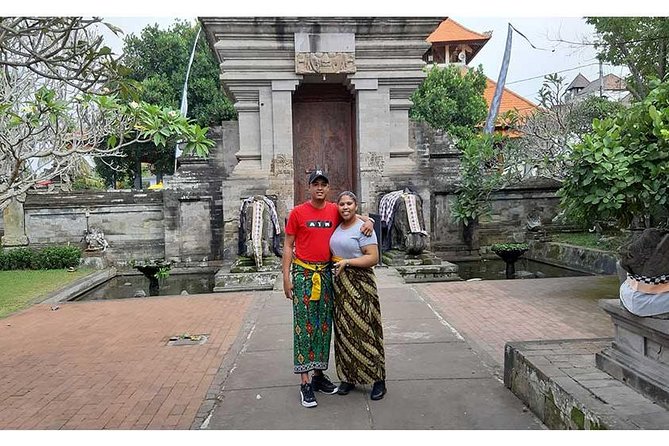
Your first stop is Puseh Batuan Temple, commonly called Batuan Temple, in Batuan village near Sukawati. This is a working Balinese Hindu temple cared for by local residents, not simply a monument arranged for sightseeing.
The entrance begins with a Candi Bentar, the split gate familiar from Balinese temple architecture. Here it is made from red brick and covered with floral decoration and curling motifs. The gate marks the passage from Nista Mandala, the outer temple area, into Madya Mandala, the central section.
Look closely at the gate guards. The temple’s Dwarapala figures differ from the usual design. Instead of sitting with one leg bent and holding a mace, the guard here is standing and carries no weapon. That small detail gives the visit a sharper focus than simply taking a quick temple photograph.
You have about 40 minutes at Batuan, which is enough for a look around but not a long, unhurried study of every structure. Wear suitable clothing for a Hindu temple and follow the driver’s advice about where to walk and what to photograph. The entrance ticket is included, which keeps this first stop easy.
I like beginning here because the temple introduces Bali through living religious design rather than a generic sightseeing viewpoint. The limitation is timing. If you enjoy architectural details, forty minutes can pass quickly.
Other temple tours in Kuta people book:
- Private Tour Bali Beaches and Uluwatu Temple with Dinner
★ 5.0 · 363 reviews - Tanah Lot Tour: Discover Bali’s Iconic Temple and Stunning Views
★ 5.0 · 109 reviews - Ubud Monkey Forest – Rice Terrace – Jungle Swing – Water Temple
★ 5.0 · 90 reviews
Tegenungan Waterfall and the walk to the water
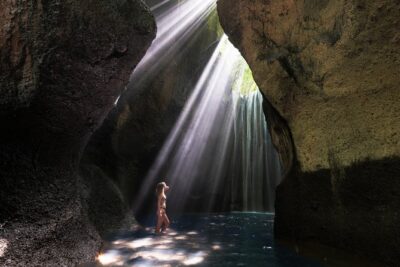
The drive then reaches Tegenungan Waterfall, one of the day’s most scenic and physical stops. The waterfall is near the routes linking Ubud, Sukawati, and Denpasar, so it fits naturally into a southern Ubud circuit.
You have about an hour here. That gives you time to walk toward the waterfall, enjoy the view, and decide how active you want to be. The path is part of the experience, and the walk can be more enjoyable when your driver helps keep the mood light. Ketut was specifically praised for entertaining his group during the walk, while the waterfall itself was described as well maintained and safe.
Bathing is possible, and it is the clearest chance to cool off during the day. If you want to enter the water, bring suitable clothing and allow time to dry before getting back in the car. The tour does not include meals or personal expenses, so carry what you need for the stop.
Tegenungan is likely to be the most memorable section for anyone who wants more than temples and shopping. At the same time, the waterfall requires a walk, and wet clothing can become inconvenient during the remaining stops. You should treat the bathing option as a choice, not a requirement.
Goa Gajah, where the name can mislead
The next major cultural stop is Goa Gajah, or Elephant Cave, near Bedulu village, roughly 6 kilometers from central Ubud. The name sounds as if you should expect a huge underground cavern. In practice, the name can create the wrong picture, so keep your expectations focused on the archaeological site and its carved entrance.
You have about an hour here. That is useful because the site is more than a quick photo stop. The cave, stonework, and surrounding remains offer a different experience from Batuan Temple. Batuan is an active local temple with carefully maintained decorative forms, while Goa Gajah feels like a place where layers of Bali’s past can be read through stone and layout.
This is also a stop where a good driver can add real value. Nyoman was praised for fluent English and for explaining places clearly, while another account described him as friendly, funny, patient, and responsible. The driver may not be a formally trained specialist guide, but having someone who can answer your questions is far better than being dropped off without context.
An hour should work well for most people, though anyone who wants to examine every detail may wish the schedule allowed more time. The entrance ticket is covered, so you can concentrate on the site instead of sorting out small admission costs.
Tegalalang Rice Terrace and the famous view

Tegalalang Rice Terrace gives the day its classic countryside image. Rice fields are visible in many parts of Bali, but Tegalalang is the major stop for the island’s stepped rice-growing scenery.
The schedule allows about an hour. That is enough to take in the terraces and make photographs, but it is not a full agricultural visit. You are seeing the setting from a sightseeing route, not spending a day learning how local farming works.
The value of this stop is contrast. After stone gates, carved guardians, falling water, and an archaeological cave, the terraces slow the eye down. The layered fields show how practical farming and careful design can shape the countryside.
Do not expect every moment here to feel quiet. Tegalalang is a well-known stop, and the tour’s broad schedule means you will have limited time to choose your preferred viewpoint. Still, it earns its place because it gives you a visual side of Bali that temples and Ubud streets cannot provide.
Other waterfall tours in Kuta people book:
- Ubud Day Tour: Sacred Monkey Forest, Tegenungan Waterfall, Rice Terrace
★ 5.0 · 190 reviews - Bali Tour : Tegenungan – Tukad Cepung – Kanto Lampo – Tibumana Waterfall
★ 5.0 · 63 reviews - Private Tour: Waterfall, Kintamani Volcano, Ubud Tour with Lunch
★ 5.0 · 60 reviews - Bali Atv Quad Bike Through Tunnel and Waterfall
★ 5.0 · 59 reviews
Ubud Palace and the royal center of town

Ubud Palace, also known as Puri Saren Agung, is the former home of the Ubud royal family and one of the town’s central landmarks. It now serves as a cultural center tied to dance, art, literature, meeting halls, and performances.
The planned visit lasts about an hour. That makes it possible to look at the palace buildings and understand its place in Ubud without turning the stop into a long museum visit. The location also pairs naturally with the traditional market, so you are not wasting time crossing town between the two.
I find this stop useful for understanding why Ubud became such an important cultural center. The palace is not just a decorative compound. Its stages and halls connect royal life with the arts that continue to shape Ubud’s identity.
The tradeoff is that one hour has to cover both orientation and sightseeing. If you want a detailed study of palace architecture or a performance, this tour does not promise either. It gives you a solid introduction, then moves on.
Ubud Traditional Art Market and the question of shopping
The traditional art market follows Ubud Palace, with another hour set aside. This is the part of the day built around browsing rather than admission. The market offers the chance to see the kind of art and craft goods that make Bali shopping a major part of many visits.
You should decide in advance how much shopping you want to do. An hour is enough to look through stalls and compare goods, but it can disappear quickly if you are searching for gifts. It is also wise to keep your budget in mind. The tour price does not cover purchases, and bargaining may be part of the process.
I like having the market included because it shows a working commercial side of Ubud. Bali is not only temples and scenery. Art is sold, discussed, carried home, and woven into daily business. Still, the market may be the least appealing stop for anyone who dislikes shopping or feels pressured by sales conversations.
You can use the private format to make your preference clear. If you want more time at the palace or less time browsing, ask your driver what can reasonably be adjusted. The advertised route includes all seven stops, so flexibility should be discussed rather than assumed.
Mas Village and Bali’s woodcarving tradition

The final listed stop is Mas Village, known as a center for Balinese wood carving. This adds a craft focus that differs from the market. Instead of simply seeing finished goods for sale, you get a sense of the village identity behind one of Bali’s best-known art forms.
The scheduled time is about an hour, and admission is free. That makes Mas a low-cost addition to the route, though personal purchases are not included. As with the market, you should view this as an opportunity to look and learn, not an obligation to buy.
The stop works best for people interested in how local artistic traditions are organized around villages. It also gives the day a more specific ending than another general viewpoint would. If your main goal is waterfalls and temples, though, you may find a full hour devoted to wood carving less important.
What the private car adds to the day
The tour is built around a private, air-conditioned car with pickup and return to your hotel. For a route covering Kuta, Batuan, Tegenungan, Bedulu, Tegalalang, Ubud, and Mas, that matters more than it might sound on paper.
You avoid arranging separate rides between each stop, and your group does not have to match the pace of strangers. The driver is also the person who ties the day together. Names connected with especially good service include Nyoman and Ketut, but the assigned driver can vary.
Nyoman was praised for fluent English, careful driving, patience, and clear explanations. Ketut was remembered for keeping the walk to the waterfall cheerful. Those details matter because this tour includes a great deal of road time and several transitions. A friendly, responsible driver can make the schedule feel manageable.
The description calls the driver your English-speaking guide. I would treat that as practical guiding rather than a promise of a specialist historian at every site. You can ask questions, and the driver can explain the route, but the depth of interpretation may depend on who is assigned.
Is $29 good value for seven stops?
At $29, this is a strong value if you want a private overview of the Ubud area. The package includes hotel pickup and return, an air-conditioned private car, an English-speaking driver, and entrance tickets for the attractions. Those inclusions reduce the small costs that can add up during a full day.
Meals are not included, and neither is tipping. Personal shopping at Ubud market or Mas Village is also your responsibility. The price therefore works best for someone who wants transport and access arranged, then is happy to handle lunch and purchases independently.
The main cost is not money but time. Seven stops in eight to ten hours create a busy day. You will get a useful first look at many sides of Bali, but you will not have the slow pace of a private temple visit, a long waterfall swim, or a full afternoon in Ubud.
Who should book this Bali day tour?
I would choose this outing if you are staying in Kuta and want to cover the Ubud area without arranging several separate transfers. It suits first-time visitors who want temples, nature, archaeology, terraces, royal architecture, shopping, and craft in one day.
It also fits families or small private groups that value hotel pickup and an air-conditioned car. Group discounts are available, and only your party takes part, so the format can be easier than joining a large coach.
I would think twice if you prefer slow travel. The route is ambitious, and each stop has a set time. Visitors focused mainly on Ubud’s art, temple details, or a long waterfall swim may prefer fewer stops and more time at each one.
Final call: book for range, not a slow pace
Book this tour if your priority is range and convenience. For $29, the included transport, tickets, and private format give you a practical way to see several important places around southern Bali and Ubud.
Skip it if you want a quiet, highly focused day. The best reason to book is the mix: Batuan’s unusual temple gate, Tegenungan’s bathing option, Goa Gajah’s archaeological setting, Tegalalang’s terraces, Ubud’s royal center, the art market, and Mas wood carving. The main warning is the clock. You will see a lot, but you must keep moving.
Free cancellation is available when you cancel at least 24 hours before the 8:00 am start. Changes or cancellations inside that window are not accepted for a refund.
FAQ
What time does the tour start?
The stated start time is 8:00 am.
How long does the tour last?
The tour takes approximately 8 to 10 hours.
Is hotel pickup included?
Yes. Pickup from your hotel and return to your hotel are included.
Is this a private tour?
Yes. Only your group participates in the activity.
Are entrance tickets included?
Yes. Entrance tickets for each listed attraction are included.
Are meals included?
No. Meals and other personal optional expenses are not included.
Can I cancel for a full refund?
Yes. You can cancel at least 24 hours before the experience start time for a full refund. Cancellations or changes made less than 24 hours before the start are not accepted for a refund.
More temple tours in Kuta
- Kecak Fire Dance and Sunset at Uluwatu Temple All Inclusive
★ 4.5 · 86 reviews - Best Bali Beaches – Uluwatu Temple – FREE Wi-Fi
★ 4.5 · 70 reviews - Bali: Uluwatu Kecak Dance Show, Bali Temple, and Lobster Dinner
★ 3.5 · 44 reviews - Bali Lempuyang Gate of Heaven and Besakih Mother Temple Tour
★ 5.0 · 31 reviews
More waterfall tours in Kuta
- Ubud: Swing – Monkey Forest – Waterfall – Temple – Rice Terraces – Art Crafts
★ 5.0 · 57 reviews - Ubud Experience ; Swing, Waterfalls, Art Market, Rice Terrace
★ 5.0 · 56 reviews - Ubud Hidden Gems Waterfall, Temple and Rice Terraces Private Tour
★ 5.0 · 31 reviews - All inclusive Bali Sekumpul Waterfalls Trekking Tour
★ 5.0 · 24 reviews
Just added in Kuta
- Your Fragrance Selection: Bali Perfume Workshop and Creations★ 5.0 · 3 reviews
- Nusa Penida 4 Spot Snorkeling with Manta and Island Tour★ 4.5 · 11 reviews
- Ubud Highlights Rice Terraces, Temple, Waterfall & Monkeys forest★ 5.0 · 23 reviews
- Bali Atv Riding through Cave and Waterfall★ 5.0 · 18 reviews
- Experience West Nusa Penida Private Tour★ 4.5 · 14 reviews
- Premium White Water Rafting and Jungle Buggies in Bali★ 4.0 · 15 reviews
- Waterbom Bali Tickets – Single Day Pass★ 5.0 · 5 reviews
- West Nusa Penida Day Trip★ 5.0 · 8 reviews
Waterfall Tours, compared.
Best of Bali Waterfalls: Tibumana, Tukad Cepung and Tegenungan
Read our review →
ATV Quad Bike Through Tunnel and Waterfall in Bali
Read our review →
ATV Quad Bike Bali with Waterfall Gorilla Cave and Lunch
Read our review →
Ubud Hot Springs and Waterfall Private Guided Tour
Read our review →
Bali Secret Waterfall Tour – Private and All-Inclusive
Read our review →
Bali ATV Quad Bike Through Tunnel, Waterfall, White Water Rafting
Read our review →
Blue Lagoon Snorkeling – Lunch – Kantolampo – Tibumana Waterfall
Read our review →
Ubud Tour with Monkey Forest Waterfalls Temples and More
Read our review →Browse the lists this tour appears in