
Reviewed · SILVER & CRAFT WORKSHOPS
Batik Master Class with Full Process
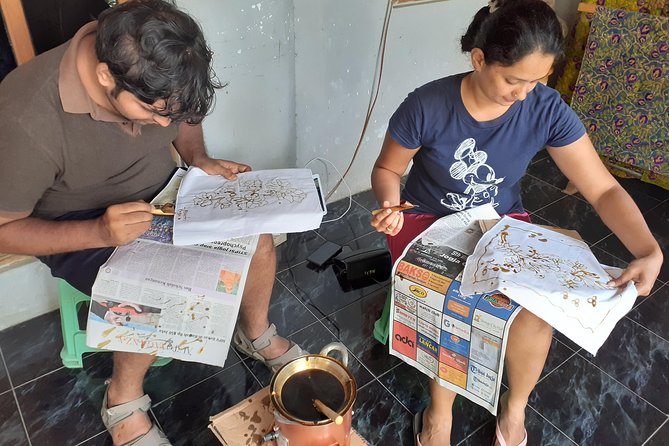
The most rewarding part of this Yogyakarta experience is that you do not just watch batik being made. You trace a design, handle the traditional canting tool, apply melted wax, add color, and leave with your own work. The class takes place near Prambanan, so it fits neatly into a temple day.
I like the patient one-on-one instruction, especially for first-time artists who may struggle with steady hands. I also like the simple local welcome: snacks, coffee, and tea while you work. The main consideration is time. Drawing, waxing, coloring, and drying can take three hours or more, and your piece may still be damp when you leave.
Key points to know

- You make a real batik piece: The process runs from design and wax application through coloring and drying.
- A master craftsman leads the class: You learn how to handle the canting tools instead of simply painting a ready-made souvenir.
- Prambanan is close by: The workshop works well before or after the Prambanan Temple Complex.
- A tote bag costs extra: The standard project is handkerchief-sized, with a tote bag offered as an upgrade.
- Snacks are part of the experience: Coffee, tea, and local bites make the long work session more comfortable.
- Plan for a possible wet finish: Drying and chemical treatment may not be fully complete when you depart.
Why making batik beats buying another souvenir
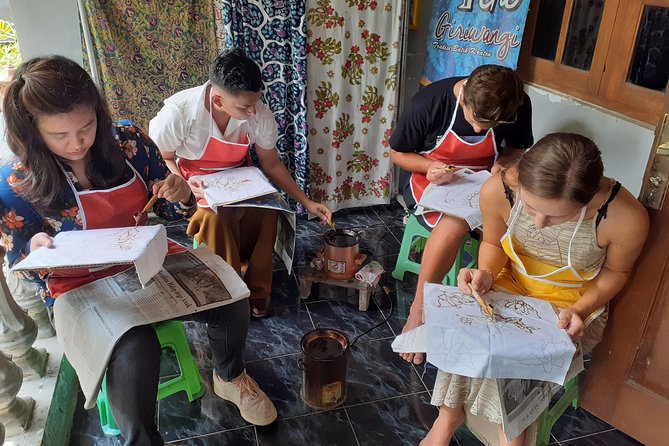
Batik is one of Yogyakarta’s signature textile arts, made by using wax to block sections of cloth before dyeing. The wax creates lines and patterns that remain lighter as the colors build up. You get to see this logic in your own hands, which makes the finished cloth far more meaningful than a quick purchase from a shop.
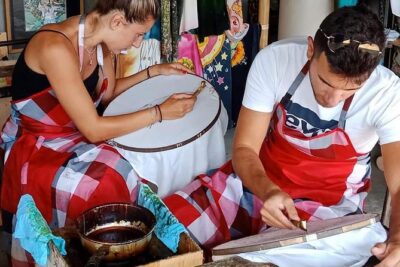
The class is not presented as a short painting stop. You work through the full process. First, the instructor explains batik and introduces the tools. Then you trace a pattern, outline it with melted wax, apply color in stages, and finish the cloth so you can take it home.
That sequence matters. Painting alone can be fun, but it does not show you why batik looks the way it does. Here, the wax is the key. It separates areas of color and gives the design its characteristic lines.
The result will not need to look perfect. In fact, the class is well suited to people who are not confident artists. A skilled instructor can help you control the tool, but your hand will still make its own marks. That is part of the point. You leave with an individual piece rather than a factory-made object.
Other things to make with your hands in Yogyakarta:
- Borobudur: Village Tour with Pottery and Tofu Making
★ 5.0 · 34 reviews - Borobudur: Pottery Making Workshop
★ 5.0 · 5 reviews - Ubud Silver Class Jewelry making in bali
★ 5.0 · 978 reviews
Starting at Pasar Prambanan
The meeting point is Pasar Prambanan, at Ps. Prambanan, Jl. Merpati No. 60, in Bokoharjo. This is useful to know because the activity does not begin at your hotel or directly at the temple entrance. You need to arrange your own way to the starting point.
The workshop is roughly 35 minutes from Malioboro by car in normal conditions, according to the practical timing given for the trip. One person described hiring a private car and driver for the journey, which can make sense if you are combining this with Prambanan and Sojiwan Temple in one day.
The experience is often booked about 10 days ahead, so I would not leave it until the last minute if your Yogyakarta schedule is tight. Confirmation arrives at booking, and the activity ends back at the same meeting point.
The maximum group size is 30 people. That is not the same as a private lesson, but the teaching style can include close help. Some sessions have been described as one-on-one instruction, while others included families or small groups. If personal guidance matters to you, ask how many people are expected on your date.
Meeting the tools and the master craftsman
The session begins with an introduction to batik, the equipment, and the correct way to use it. The key tool is the canting, a small traditional implement used to draw lines of melted wax onto cloth.
This is where the class becomes more interesting than a standard craft activity. The wax needs to flow in a controlled way, and your hand needs enough steadiness to follow the pattern. You may find the first lines awkward. That is normal, and the instructor’s role is to show you how to work with the tool rather than make you feel as if you have failed.
The class is led by a master batik artist in the Prambanan area. The teaching has been described as patient and encouraging, with English explanation available. One particularly useful idea from the instruction is that a mistake can still become part of the art. That is good advice for adults and children alike.
The setting is described as peaceful, which helps because this is not a rushed activity. You need to concentrate while waxing, then take your time with the color. Local snacks, coffee, and tea are served as you work, giving the session a relaxed rhythm.
Drawing and waxing your cloth
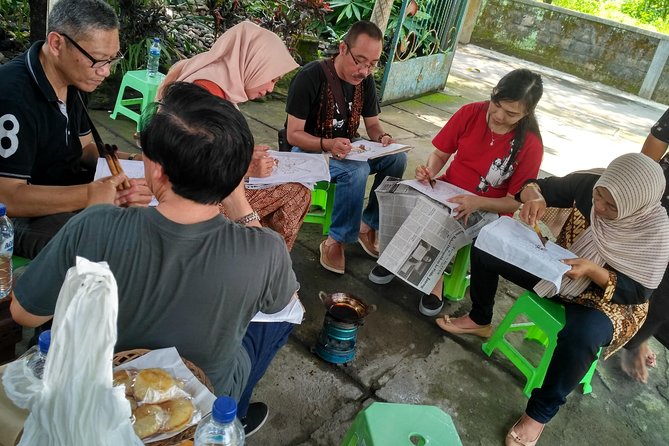
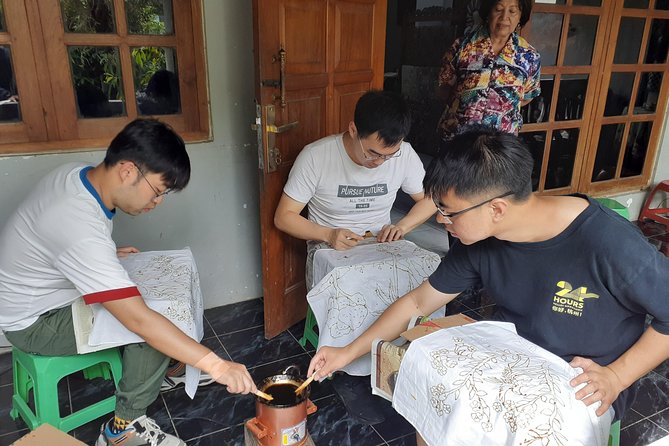
After the introduction, you work from a pattern on a handkerchief-sized piece of cloth. You trace the design, then go over its lines with melted wax using the canting tool.
This is probably the most demanding stage. Coloring can feel loose and playful, but waxing requires control. If the line is too thin, uneven, or misplaced, the final design may not develop as planned. That is also why the class feels genuine. You are learning a craft with a real technique, not following a paint-by-numbers exercise.
The instructor demonstrates the process before you begin. Pay close attention to how the tool is held and how the wax is guided. If you have children with you, they may enjoy the coloring more immediately, but younger children might need help during the waxing stage.
A tote bag is available for an extra cost if you prefer something more practical than a handkerchief. The tote option gives you a larger surface and a souvenir you can use, but confirm the additional price when booking or before the class begins. The standard price does not appear to include the tote upgrade.
Same base, a different sort of day:
- Borobudur Sunrise from setumbu Hill , Merapi Volcano & Prambanan Full Day Tour
★ 5.0 · 1,030 reviews - Borobudur Temple Climb To The Top & Prambanan Temple – 1 day tour
★ 5.0 · 638 reviews - Menoreh Village Cycling
★ 5.0 · 611 reviews - Yogyakarta: Borobudur Top Access & Prambanan Temple Private Tour
★ 5.0 · 390 reviews
Adding color and watching the pattern appear
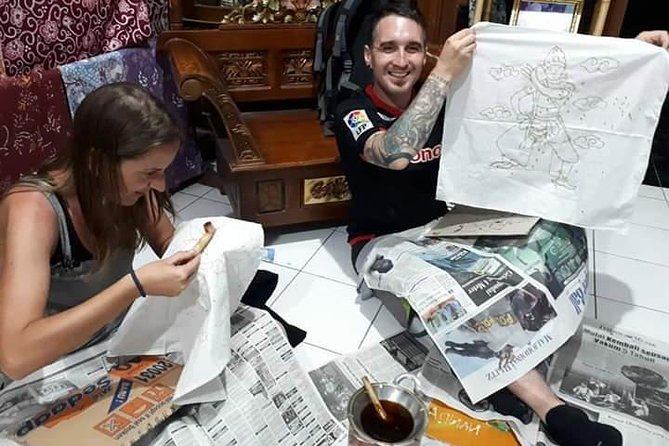
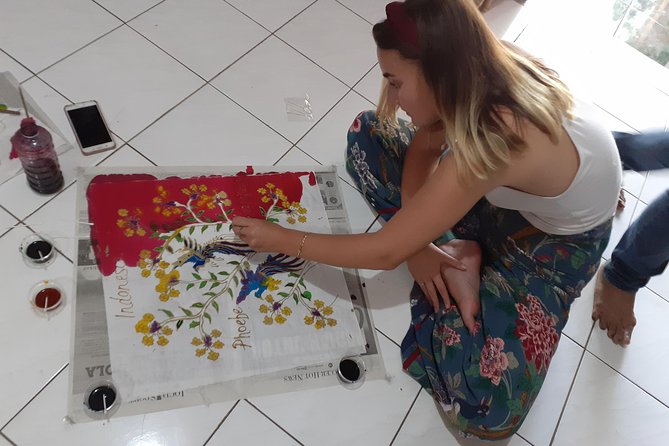
Once the wax outlines are in place, you add color in sequence. The wax protects selected lines and areas, allowing the design to take shape as the dyes are applied.
This is the most satisfying visual part of the class. You can see how the original drawing changes once the colors begin to separate. The process also explains why batik requires planning. Every color and waxed section affects what comes next.
You do not need to arrive with a complete design in mind. The workshop supplies the structure, and the instructor shows you how to proceed. Your choices and hand control still give the final cloth its personal character.
The class is a good fit for couples, families, and creative people who want an activity with more substance than sightseeing alone. It also gives you a break from temples and traffic. After several hours of walking around Yogyakarta’s historic sites, sitting down to work with your hands can be a welcome change.
The finishing treatment and taking your work home
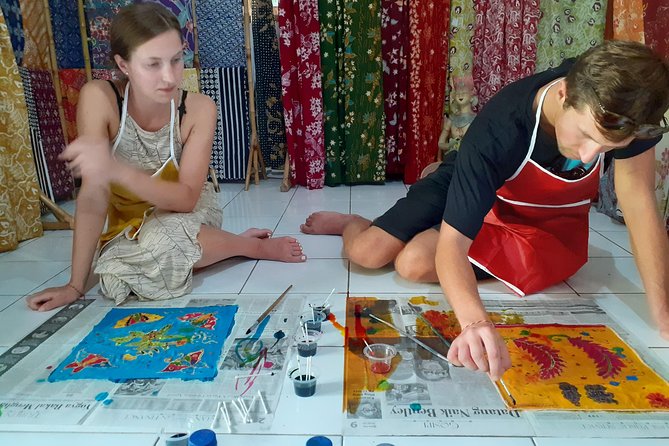
When the coloring is complete, the cloth is dried and treated so the process can finish. The timing of this final stage is worth understanding before you book.
At least one participant left with a piece that was still wet and placed it on newspaper in the car and hotel to dry. That does not mean the class failed. It means the final drying stage may not always be complete by departure time.
If you are carrying the piece straight onto another activity, keep this in mind. Pack a little flexibility into your day and avoid placing damp fabric against clothing or valuables. The work is yours to take home once the process is finished, but ask the instructor how best to carry it if it remains wet.
This is one of the few practical drawbacks of making a textile by hand. You do not receive an instantly packaged souvenir. You receive something that may need a little care before it is ready for your suitcase.
Adding Prambanan and Sojiwan to the day
The workshop is designed to pair with the temples around Prambanan. Prambanan Temple Complex is the major draw in the area, and the batik class is close enough to make a sensible follow-up or companion activity.
The itinerary also lists Sojiwan Temple. This gives your day a second temple stop with a quieter feel than the main Prambanan complex. The supplied details do not specify how much time is spent at each temple or exactly how transport between the stops is handled, so confirm the day’s order and inclusions before setting other plans.
The simplest plan is to group everything in the Prambanan area rather than travel back and forth to central Yogyakarta. A private car and driver can be useful for this, especially if you are traveling with family or carrying your finished cloth.
Do not treat the temple stops as a substitute for a full guided temple tour unless that is confirmed separately. The main focus here is batik. The temple visits make the location more worthwhile, but the craft class is the part that gives the activity its identity.
Is $19.50 a fair price?
At $19.50 per person, this is a strong value if you want instruction, a handmade souvenir, refreshments, and a three-hour cultural activity. The price is not just for a quick demonstration. You spend time producing your own piece and learning a traditional method.
The value is even clearer when compared with buying a batik item without learning how it was made. A shop-bought cloth may be more polished, but this class gives you a personal object and a better understanding of the work behind it.
The tote bag costs extra, so budget for that if you prefer a larger or more useful finished item. The standard project is a handkerchief-sized piece. That is enough for a meaningful souvenir, though not a large wall hanging or full garment.
The price does not appear to include transport from Yogyakarta hotels. Your meeting point is at Pasar Prambanan, so add the cost of a car, driver, or other transport when working out the full day’s budget.
Who will enjoy this class most
I would recommend this to you if you like learning by doing. It suits people who want a hands-on cultural activity, families looking for something children can take part in, and couples who prefer a shared project to another guided walk.
It is also a good choice if you are already visiting Prambanan. The short distance from the temple area makes it easier to fit into a packed sightseeing day.
You should be comfortable sitting and working for around three hours. The activity requires moderate physical fitness, though the main challenge is patience and hand control rather than strenuous movement.
This may not suit you if you want a quick souvenir stop, a perfectly finished professional textile, or a tightly timed activity with no possibility of delay. Waxing, coloring, and drying take time. Your finished work may show small irregularities, which are part of making it yourself.
The workshop can accommodate up to 30 people, so the experience may feel less intimate on a busy date. Still, the teaching approach is designed to give practical help, and the class has been especially well received for its patient instruction.
Booking, cancellations, and useful planning tips
The activity offers free cancellation if you cancel at least 24 hours before the local start time. Changes or cancellations inside that window are not accepted for a refund. Poor weather can also affect the schedule, in which case you are offered another date or a full refund.
Wear something you can manage around wax and dye, although the supplied information does not specify a dress code. Bring a way to protect the finished cloth during transport if it is still damp, such as newspaper or a spare bag.
Allow more than the advertised three hours if your day depends on an exact departure time. The class itself is approximately three hours, but drying and the final treatment may add uncertainty.
If you are combining the workshop with Prambanan and Sojiwan, confirm the meeting time, temple order, tote bag cost, and transport plan in advance. Those small checks will keep the day simple.
Should you book the Batik Master Class?
Book it if you want to take home something you made yourself and you have room for a relaxed three-hour session near Prambanan. The patient teaching, traditional tools, local refreshments, and full process make this more valuable than a short batik demonstration.
I would be especially keen to book it after visiting Prambanan, or as part of a private car day that includes Sojiwan Temple. Just allow time for a damp finished cloth, pay extra if you want the tote bag, and do not expect a factory-perfect result.
For a modest price, you get a practical lesson in one of Yogyakarta’s best-known arts and a souvenir with your own fingerprints all over it. That is a good trade for a little wax, uneven color, and three unhurried hours.
FAQ
Where does the batik class begin?
The meeting point is Pasar Prambanan, Ps. Prambanan, Jl. Merpati No. 60, Klurak Baru, Bokoharjo, Sleman, Yogyakarta.
Where does the activity end?
The activity ends back at the meeting point.
How long does the experience take?
The experience lasts approximately three hours.
What do I make during the class?
You make a handkerchief-sized piece of batik. A tote bag is available for an extra cost.
What does the batik process include?
You learn about batik and its tools, trace a pattern, outline it with melted wax using traditional canting tools, apply color in sequence, and complete the finishing process.
Can I take my finished batik home?
Yes. Once the process is complete, you can take the result as a souvenir. It may still be wet when you leave.
Are food and drinks included?
Local snacks, coffee, and tea are provided while you work.
Is the class close to Prambanan Temple?
Yes. The workshop is located near the Prambanan Temple Complex and is intended to combine with a visit to the area.
Does the itinerary include other temple stops?
The itinerary lists Prambanan Temples and Sojiwan Temple. Confirm the exact order and timing when arranging your day.
Can I cancel for a refund?
You can cancel at least 24 hours before the local start time for a full refund. Cancellations or changes made less than 24 hours before the start time are not refunded. If poor weather causes the activity to be canceled, you are offered another date or a full refund.
Just added in Yogyakarta
- Chicken Church Local Attraction Near Of Borobudur Temple★ 3.5 · 18 reviews
- Chicken Church at Karangrejo Village Admission Ticket★ 4.5 · 3 reviews
- Private Borobudur Village Trip By Volkswagen Safari★ 5.0 · 3 reviews
- Borobudur Temple Combined Ticket Admissions★ 5.0 · 7 reviews
- Borobudur Private Tour From Semarang Port★ 4.5 · 12 reviews
- Yogyakarta: Borobudur Temple Climb Up and Prambanan Temple Tour★ 5.0 · 53 reviews
- Borobudur: Pottery Making Workshop★ 5.0 · 5 reviews
- Private Car: Borobudur Temple Merapi Jeep Tour Prambanan Temple★ 5.0 · 30 reviews
Silver & Craft Workshops, compared.
Private Traditional Bali Silver Jewelry Making Class
Read our review →
Kuta Bali Silver Jewelry Making Class Near Kuta Beach
Read our review →
Silver Jewelry Making Class in Seminyak and Legian
Read our review →
Bali Seminyak Silver Class Activity and Take Your Own Creation
Read our review →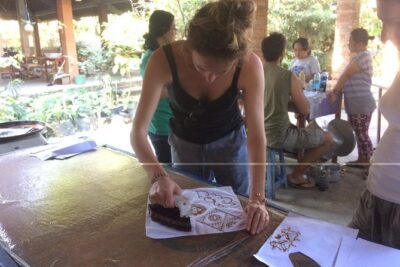
Borobudur: Village Tour with Pottery and Tofu Making
Read our review →Browse the lists this tour appears in