
Reviewed · HIKING & TREKKING
Sidemen Trekking: A Walk from a Different Perspective
Sidemen’s best scenery is not viewed from a roadside lookout. You reach it by following farmer paths beside the irrigation channels, stepping across rice terraces, and passing through villages where daily life still sets the pace. Mount Agung provides the grand backdrop, but the small details are the real draw: crops, offerings, temples, and local work.
I like the way this walk connects the scenery with the people who maintain it. I also like the guides, including Adi, Darya, Daria, Wayan, and Adidas, who explain rice farming, Balinese Hindu customs, local food, and village life in a relaxed way. The main caution is simple: this is not a hard hike, but narrow raised paths and slippery ground require balance.
Key points about the Sidemen walk
- Rice fields from the working side: Follow small paths used by farmers rather than viewing the terraces from a distant road.
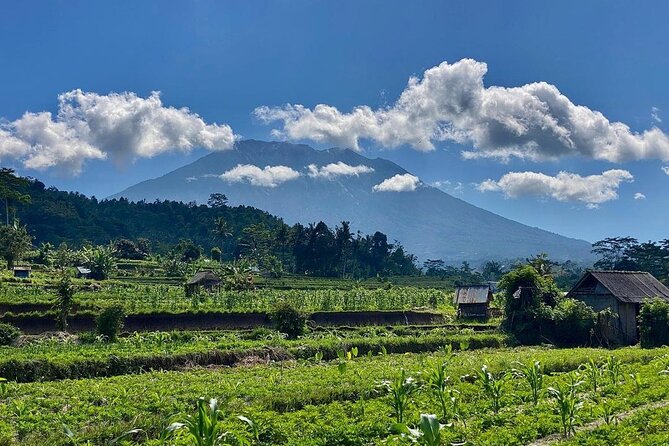
- Mount Agung views: Look toward Bali’s famous volcano from open rice-field viewpoints.
- Local guides: Adi, Darya, Daria, Wayan, and Adidas are among the guides praised for their stories, humor, and local insight.
- A gentle but uneven route: The effort is moderate, yet narrow terrace edges and irrigation paths demand careful footing.
- A useful two-hour outing: Start at Pasar Sidemen and finish at Warung Ume Anyar, where you can stop for food or a drink.
- Very low price: At $13.75 per person, the tour offers good value if you want context and direction rather than a strenuous trek.
Why Sidemen feels different from southern Bali
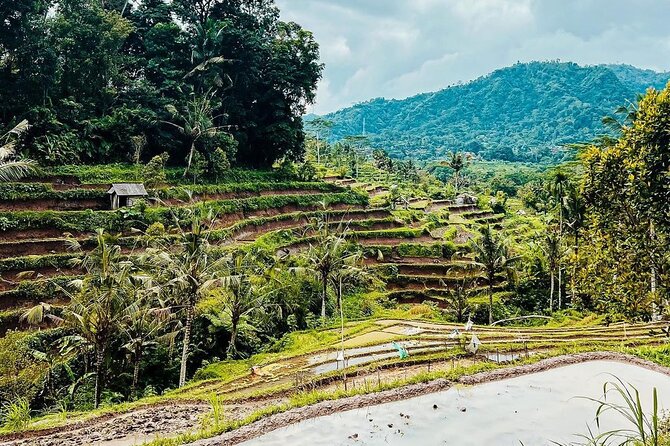
Sidemen is a good choice when you want to see a quieter side of Bali. The walk begins at Pasar Sidemen, the traditional market, then moves into village streets and agricultural areas. You are not simply looking at pretty rice terraces for photographs. You are walking through the places where crops are grown, water is managed, offerings are prepared, and village life continues.
That difference matters. In busy parts of Bali, it is easy to see temples, restaurants, and traffic without understanding how the surrounding community works. Here, the guide helps connect those pieces. You may learn how rice is grown, what other crops are planted between harvests, and how farming relates to local cooking.
The setting also gives you a clearer sense of scale. The terraces are not just a postcard view. They are narrow, uneven working spaces, often linked by irrigation channels and small paths. You will see why a local guide is useful: some routes are difficult to spot, and the path may look like an ordinary strip of grass until someone shows you where it leads.
Other treks in Ubud people book:
- Mount Batur Sunrise Hike and Natural Hot Spring Option
★ 5.0 · 1,927 reviews - Mount Batur Sunrise Hike with Breakfast
★ 5.0 · 1,757 reviews - Mount Batur Sunrise Trekking Private All Inclusive
★ 5.0 · 906 reviews
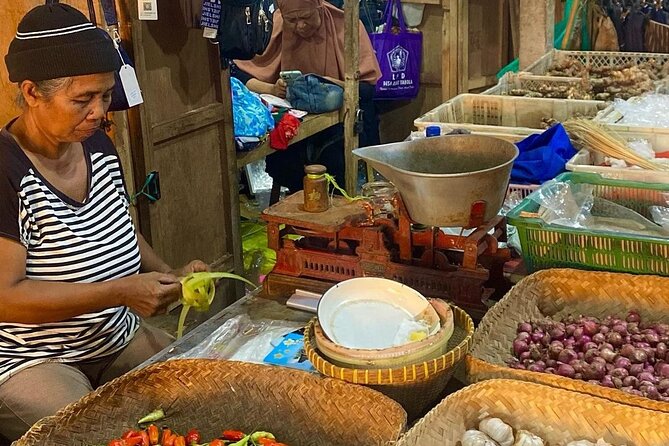
Starting at Pasar Sidemen before the fields
The meeting point is Pasar Sidemen, at the shop marked Upa Boga on Jl. Sidemen. If you are staying nearby, arrange transport through your hotel. The local instructions advise against relying on Grab for hotel pick-up because some Sidemen hotels allow drop-off but do not allow Grab drivers to collect guests.
The market is open from 5:00 AM to 10:00 AM. If you want to see it before the walk, book a morning start. That gives you a chance to see the market at work before moving into the countryside, though the market visit is optional and should not be treated as a separate included activity.
From the market, the walk heads through the traditional village and begins to climb and descend along local roads. This opening section helps you get your bearings, but it is not the most scenic part. The payoff comes as the route leaves the main streets and reaches the paddies.
Following irrigation channels into the rice paddies
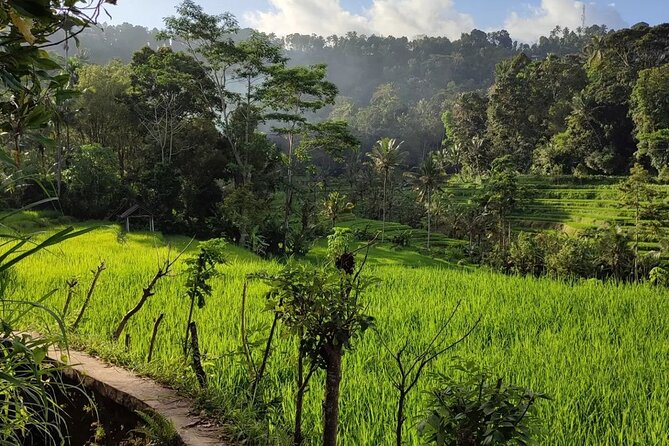
The central idea of the walk is to see Sidemen from the same side as the farmers. The route follows irrigation water coming down through the fields, then uses small paths alongside the rice terraces. The guide may point out how water reaches different plots and how crops change with the season.
The scenery depends on the time of year. In December, some rice may already have been harvested, with other crops being planted in its place. You might see chili, flowers used for offerings, or crops that later appear in local dishes. This seasonal variation is useful to understand: Sidemen is not a fixed green painting, and the fields will not look identical on every visit.
You should expect several photo stops. The walk is often described as easy in terms of exertion, and it is not designed as a demanding mountain hike. Still, you need to watch your feet. Some sections use narrow, raised paths along the edges of the paddies, while others follow waterways or uneven ground. A misstep could mean muddy shoes, so wear shoes with a good grip and do not bring footwear you want to keep spotless.
The route can be especially enjoyable if you ask questions. Guides such as Adi and Adidas have been singled out for explaining rice production, cooking, farming traditions, and changes in Bali. Darya, Daria, and Wayan are also associated with friendly, personal walks through the area. The exact guide depends on the date, but the experience is built around local guidance rather than a simple self-guided stroll.
Crossing the wooden bridge and viewing Mount Agung
One memorable feature is a hanging wooden bridge used by both people and motorbikes. It is not presented as a major adventure obstacle, but it adds a bit of character to the route and shows how practical village connections can be. Follow the guide and take care with your footing as you cross.
The walk also turns toward Mount Agung. On a clear day, the volcano provides the broad view that helps define Sidemen. The rice terraces spread below it, giving you a viewpoint that is harder to find from the main road.
Weather matters here. Mount Agung may be hidden by cloud, and the tour requires suitable conditions. If poor weather causes a cancellation, you can receive a different date or a full refund. This is one reason not to pack the walk too tightly against an important onward plan.
More walking routes from Ubud:
- Private Mount Batur Sunrise Trekking Tour
★ 5.0 · 634 reviews - Mount Batur Sunrise Trekking (Private Tour and Breakfast at Restaurant)
★ 5.0 · 598 reviews - Private Tour : Mount Batur Sunrise Trekking With Private Guide
★ 5.0 · 422 reviews - Mount Batur Sunset Trekking
★ 5.0 · 353 reviews
Temples, village life, and the human side of the route

The walk passes through the village and by a temple used by local residents for prayer. Your guide can explain how Balinese Hindu practice appears in ordinary life, rather than treating religion as something you only see at a formal attraction.
You may also notice small offerings, local gardens, farming activity, and people working in the fields. The value here is not a staged cultural performance. The walk passes through places that serve the community, so respectful behavior matters. Keep your voice low near temples, follow the guide’s advice, and ask before photographing people.
The guides are a major part of the experience. Several are described as funny, patient, and easy to talk to, and some know many of the villagers along the route. That local familiarity can make the walk feel more like an introduction to a community than a route between scenic stops.
This also makes the outing flexible in feel. If you are interested in agriculture, ask about rice and seasonal crops. If you want cultural context, ask about temples, offerings, and village customs. If you are mainly there for scenery, the guide can point out the best angles toward the terraces and Mount Agung.
How difficult is the two-hour trek?
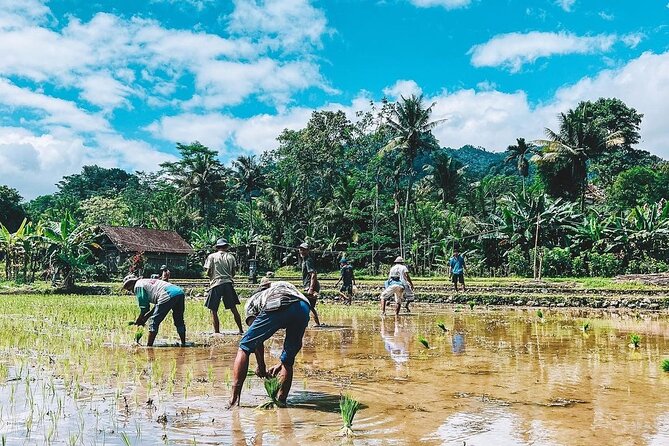
The walk lasts about two hours, with some descriptions putting the route at roughly four kilometers. The effort is generally manageable, with regular stops for photos and explanations. You do not need the fitness level required for a long mountain hike.
Balance is more important than speed. Some paths are narrow and raised above the rice fields, and some sections can be slippery. One description specifically notes that the route may not suit older people unless they are fit and agile. That is a useful distinction: the issue is not mainly steep climbs or endurance, but confidence on uneven ground.
Bring the items requested for the activity:
- Hiking shoes or sturdy walking shoes
- Sun hat
- Sunscreen
- Sunglasses
- Water, although bottled water is included
A moderate level of physical fitness is expected. If you have poor balance, feel uneasy on narrow paths, or want a fully paved walk, this may not be the right outing. If you can walk comfortably on uneven village paths and do not mind a little mud, the route should feel manageable.
What the $13.75 price really gives you

At $13.75 per person, this is inexpensive for a guided two-hour walk. The price is especially fair if you value access to routes you would not easily find alone and want explanations about farming, religion, and village life.
The tour is not a full-day excursion, a private car service, or a strenuous trek. Hotel pick-up and drop-off are not included, and tips are separate. You are paying mainly for the guide, the route, the local interpretation, and bottled water.
The group size is capped at 10 people. That is small enough to hear the guide and move along narrow paths without a large crowd, though it is not necessarily a private tour. Some bookings may be operated privately if the group is small, but you should not assume that when booking.
Group discounts are available. For couples or small groups, the price makes this a practical way to add a local activity without committing to an expensive full-day program.
Finishing at Warung Ume Anyar
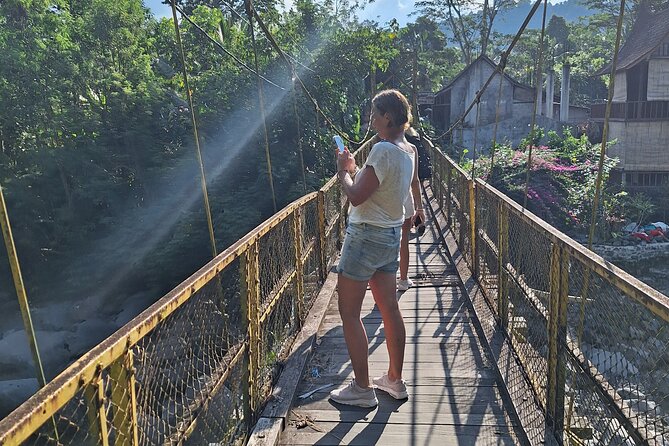
The walk ends at Warung Ume Anyar in Ogang Village. This is a useful finish because you can stop for a drink or meal after walking. Food is not listed as included, so plan to pay separately.
Transport planning is the part you should take seriously. Arrange a driver in advance and ask for pick-up at the restaurant about two to two and a half hours after the start time. Grab operates in the area, but there are only a few drivers, and some may ask for offline payment or an extra charge.
You can walk back to the starting point if needed. It is about three kilometers, or 30 to 40 minutes, along the main road. That is possible in a pinch, but arranging a driver is more comfortable, particularly after the walk or in hot weather.
The end point also makes the activity easy to combine with a relaxed meal. I would avoid scheduling a tight connection immediately afterward. Allow extra time for the walk, photographs, questions, and the possibility of waiting for transport.
Who will enjoy this walk most?
This is a strong fit for you if you want:
- A short introduction to Sidemen’s countryside
- Rice terraces viewed from local paths
- Explanations of farming and village customs
- A guide who can answer questions and add humor
- A low-cost activity away from Bali’s busy southern resorts
- A moderate walk rather than a demanding hike
It is less suitable if you want a polished sightseeing route with flat paving throughout. It is also a poor match for anyone uncomfortable with narrow paths, slippery sections, or uneven rice-field edges.
Photographers should bring a phone or camera, but do not expect every field to be bright green. Crop cycles change the view. The reward is a more truthful picture of farming life, including harvested paddies and new plantings.
Booking, timing, and cancellation advice
You receive confirmation at booking, and mobile tickets are accepted. The activity requires good weather, so keep some flexibility in your schedule during rainy periods.
You can cancel for a full refund up to 24 hours before the start time. Changes or cancellations made less than 24 hours ahead are not refunded, and late changes are not accepted. Cut-off times follow local time in Bali.
I would book a morning session if you want to visit Pasar Sidemen before walking. If the market is not important to you, choose the time that gives you the best transport plan and enough daylight for the return journey.
Should you book the Sidemen trekking tour?
Book it if you want to understand Sidemen rather than simply photograph it. The combination of rice fields, irrigation paths, a village temple, local farming stories, and Mount Agung views gives you a useful two-hour introduction to rural Bali.
The main trade-off is the footing. This is an easy walk by effort, not a perfectly easy walk underfoot. Wear proper shoes, arrange your ride from Warung Ume Anyar, and leave room in your schedule.
At $13.75, the tour is good value for a short, guide-led look at daily life around Sidemen. It suits curious walkers who want local context, quiet scenery, and a little mud on their shoes.
FAQ
Where does the Sidemen trekking tour start?
The tour starts at Pasar Sidemen, the Sidemen Traditional Market, at the shop marked Upa Boga on Jl. Sidemen.
Where does the walk finish?
The walk finishes at Warung Ume Anyar Restaurant in Ogang Village.
How long does the activity last?
The walk takes approximately two hours, though you should allow about two to two and a half hours for the full activity.
Is hotel pick-up included?
No. Hotel pick-up and drop-off are not included. You should arrange transport to the start and a pick-up from the finish point.
Can I visit the traditional market before the walk?
Yes. Pasar Sidemen is open from 5:00 AM to 10:00 AM, so a morning booking gives you the option to visit before trekking.
Is the route difficult?
The walk requires a moderate level of physical fitness. It is not a strenuous hike, but narrow raised paths, irrigation routes, uneven ground, and slippery sections require balance.
What should I bring?
Bring a sun hat, hiking shoes or sturdy walking shoes, sunscreen, and sunglasses. Bottled water is included.
How many people can join the tour?
The activity has a maximum of 10 travelers.
Can I cancel for a refund?
You can cancel at least 24 hours before the start time for a full refund. Cancellations or changes made less than 24 hours before the start are not refunded. If poor weather forces cancellation, you can receive a different date or a full refund.
Just added in Ubud
- Mount Batur jeep sunrise with breakfast★ 5.0 · 9 reviews
- Mount Batur Sunrise Trekking (Private, Breakfast and Visiting coffee plantation)★ 5.0 · 27 reviews
- Bali Food Tour: Savor Street Food and Night Market Adventures★ 5.0 · 46 reviews
- East Bali Tour: Lempuyang Temple – Gate of Heaven, Tirta Gangga, Virgin Beach★ 5.0 · 67 reviews
- Cliff Jumping and Sliding at Aling Aling Waterfall★ 5.0 · 71 reviews
- Private Full-Day Lempuyang Gate of Heaven Tour★ 5.0 · 67 reviews
- Half-Day Tour: Uluwatu Temple and Kecak Fire Dance Show★ 5.0 · 63 reviews
- Mount Batur Sunrise Trekking★ 5.0 · 65 reviews
Hiking & Trekking, compared.

Mount Batur Sunrise Hike and Natural Hot Spring Option
Read our review →

Mount Batur Sunrise Trekking Private All Inclusive
Read our review →
Mount Batur Sunrise Trekking Private Tour with Breakfast and Hotel Transfer
Read our review →
Private Tour Mount Batur Sunrise Trekking and Natural Hot Spring
Read our review →
3-Day Ethical Orangutan Jungle Trek | Bukit Lawang, Sumatra
Read our review →
Browse the lists this tour appears in