
Reviewed · INDONESIA
3-Day Freediving Level 1 Course
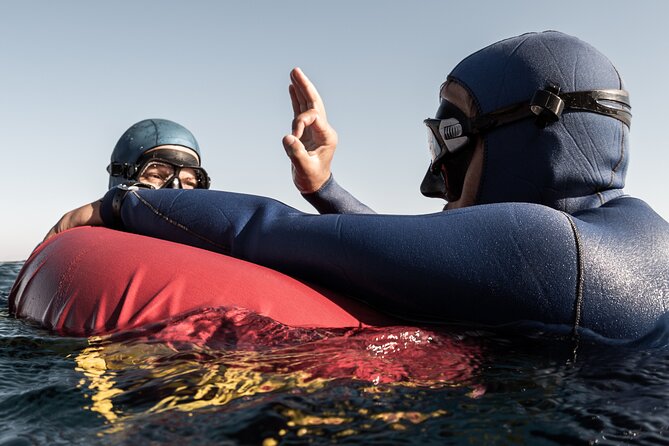
This three-day course takes you from basic breath control to open-water descents around Nusa Penida, with pool work, classroom lessons, and guided ocean sessions. By the end, many students reach 15 to 20 meters and hold their breath for more than two minutes, though your result depends on comfort, fitness, and practice.
I like the tiny class size, capped at four people per instructor, and the fact that you do not need to buy fins, a mask, or other special gear. I also like the patient teaching style reported from instructors including Artem, Roberto, Seva, Gaston, Hamza, and others.
The main drawback is the schedule. This is not a casual morning activity. You spend three days from 8:30 a.m. to 4:30 p.m., and lunch, lodging, and private transport are not included. You also need to be able to swim and have moderate fitness.
Key points to know before booking
- Three full days of training: Expect classroom theory, land practice, two confined-water sessions, and three open-water sessions.
- Small groups: The maximum is four students per instructor, which allows close attention and steady progress.
- Good for complete beginners: No previous freediving or water-sport experience is required, but you must be able to swim.
- Everything essential is supplied: Equipment, fees, digital learning materials, and certification are included.
- Realistic end goals: Many students reach 15 to 20 meters and hold their breath for more than two minutes by the final day.
- Bring time and energy: The course runs roughly 8:30 a.m. to 4:30 p.m. each day, with lunch outside the price.
A serious first step into freediving
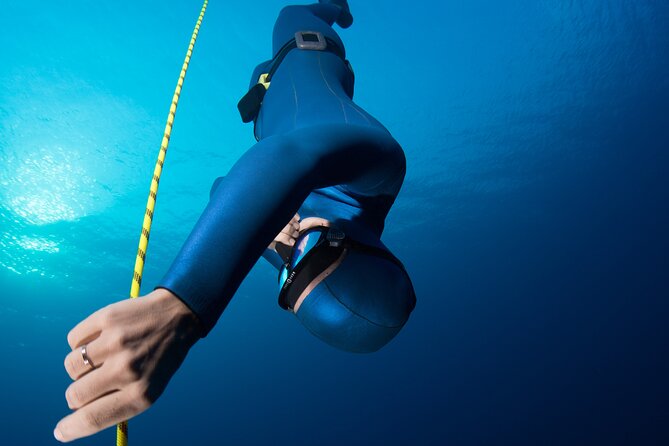
Freediving is quiet, simple, and more demanding than it first appears. You use one breath, control your body, and descend without an air tank. That makes safety and technique more important than raw courage.
Freedive Nusa presents Level 1 as a measured introduction. You start on land, learn the basic theory, and work through exercises before heading into deeper water. That order matters. A beginner who feels nervous about staying underwater gets a chance to build trust slowly rather than being pushed straight into the sea.
I especially like that the course welcomes people with no previous experience. The only stated water requirement is the ability to swim. You do not need to arrive with a special mask, fins, or wetsuit, since the essential equipment is supplied.
Still, this is a full course, not a sightseeing outing with a short underwater demonstration. You need enough stamina for long days and enough patience to repeat skills. Your instructor may encourage you to reach a new personal best, but the advertised depth and breath-hold figures are typical outcomes, not promises.
Other trips people book in Nusa Penida:
- ️Nusa Penida by Private Boat – Snorkeling 4 spots, Swim with Mantas + Land Tour
★ 5.0 · 6,424 reviews - Nusa Penida Two Dives Trip for Certified Divers
★ 5.0 · 197 reviews - Two fun dives morning trip (Certified Divers only)
★ 5.0 · 170 reviews
What three days on Nusa Penida look like
The school is Freedive Nusa, at Jalan Ped-Buyuk in Ped, Nusa Penida. Each day runs from about 8:30 a.m. until 4:30 p.m., including a lunch break. The activity begins and ends at the school, so you arrange your own way to Nusa Penida, accommodation, and daily transport to the meeting point.
The course combines four types of work:
- Theory and practice on land
- Two confined-water sessions
- Three open-water sessions
- A final assessment leading to certification
That mix gives the course a useful rhythm. You learn the reason behind a technique, try it in controlled water, and then apply it in the ocean. The confined-water sessions are especially valuable for beginners who need time to settle their breathing and body position before handling open-water conditions.
You should expect progress to be gradual. The aim is not simply to stay underwater for as long as possible. You learn how to prepare, descend, return, and recover in a controlled way. A small class helps here because the instructor can watch each person rather than offering only broad group advice.
Land lessons and breath control
The early theory work gives you the foundation for the whole course. The supplied details do not list every classroom topic, but the course is built around safe practice, breath control, and measured progress. You will spend time learning how your body responds before testing yourself underwater.
This is where the course can be useful even if your first breath-hold is modest. Many beginners arrive focused on a number, perhaps two minutes or 20 meters. In practice, comfort, relaxation, and good habits matter more than chasing a target.
The instructors also appear to take different teaching styles into account. Artem is described as careful but encouraging, with a knack for pushing students in the right direction. Roberto is praised for helping a nervous beginner feel supported. Seva is noted for patience, humor, and a reassuring manner. Those details matter because a calm instructor can make the difference between useful challenge and needless stress.
You should tell your instructor if you feel anxious, tired, or uncomfortable. The course is designed for progression, not bravado. Your own pace is part of the result.
Pool work before the open sea
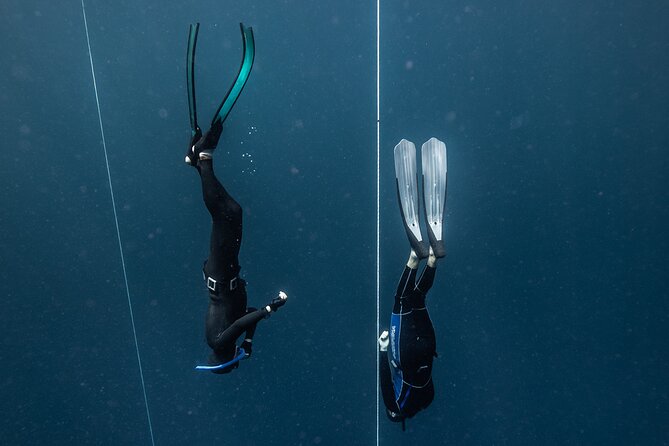
The two confined-water sessions give you a controlled place to practice. For a first-time student, that can be the most important stage of the course. You can focus on body position and breath control without also dealing with all the sensations of the open ocean.
The pool sessions also let the instructor identify problems early. You might need to relax your shoulders, adjust your fin movement, or work on a smoother descent. Small corrections are easier to make before the open-water sessions begin.
I like this structure because it avoids the common mistake of treating a first lesson as an instant stunt. You build a base, then move into the sea. Students who begin with fear often become more comfortable after repeated, supervised practice.
The equipment is included, which keeps the course simple for you. There is no need to shop for a full set of freediving gear before arrival. The school also includes all fees and taxes, so the listed price is not just an entry fee for a lesson.
Same base, a different sort of day:
- Snorkeling Manta Ray Safari in Nusa Penida
★ 4.0 · 167 reviews - Snorkeling and Freediving Trip around Nusa Penida
★ 4.5 · 77 reviews - Nusa Penida Three Dives Trip for Certified Divers
★ 5.0 · 66 reviews - East Nusa Penida With Tembeling Beach Natural Pool – Private tour
★ 5.0 · 65 reviews
Three open-water sessions around Nusa Penida
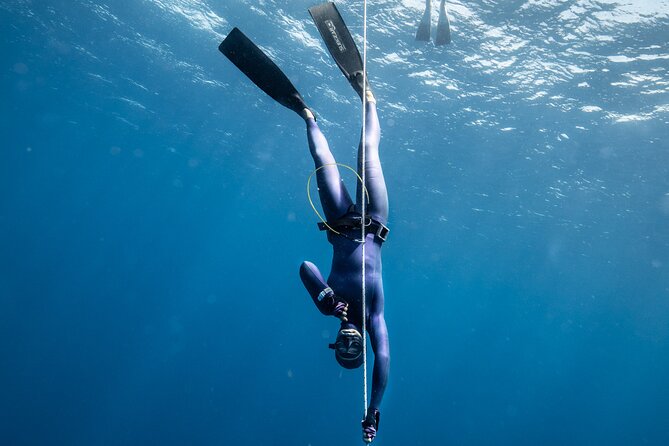
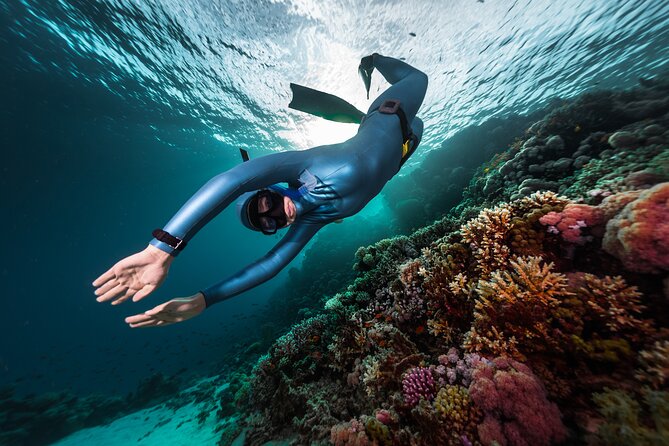
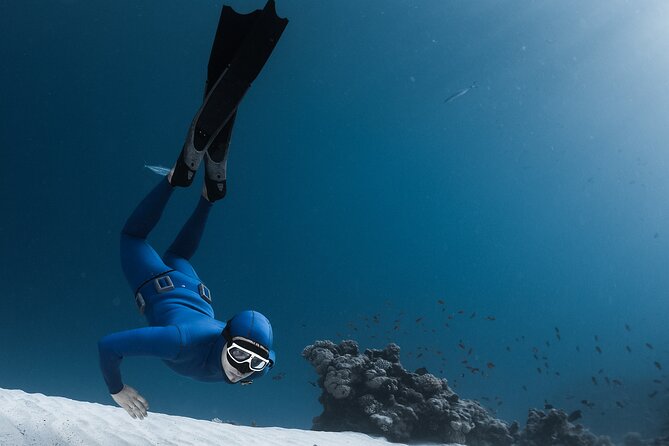
The open-water work is where the course becomes more than a pool class. You practice in the sea around Nusa Penida, with coral and tropical fish forming the setting for the underwater photos included with the experience.
The photos are a nice practical touch. You leave with a record of your progress, not just a memory of the day. They can also help you see your body position and movement, though the main value is the chance to have a personal image of your first ocean descents.
Open water also brings conditions you cannot fully reproduce in a pool. You may notice changes in visibility, water movement, or your own comfort level. The provided information does not promise a particular site, marine animal, water temperature, or weather condition, so you should treat the scenery as a welcome part of the course rather than the main guarantee.
The course advertises a typical final depth of 15 to 20 meters, or about 50 to 65 feet. That is a substantial distance for a beginner, but not every student will reach it. Your instructor’s job is to help you progress safely, and a shorter controlled descent is better than an uncomfortable attempt at a greater one.
Why the four-person limit matters
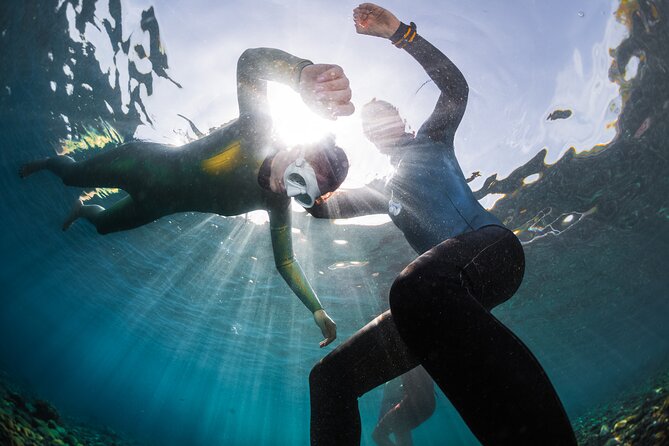
A maximum of four students per instructor is one of the strongest features here. In a water-based course, the instructor needs to watch technique, comfort, and recovery. A crowded class can turn a personal skill lesson into a wait-your-turn exercise.
With four or fewer students, you have a better chance of receiving specific feedback. You can ask questions without losing half the session, and the instructor can adjust the challenge to suit your experience.
The small-group format also helps couples or friends learn together without joining a large, anonymous class. The course can still feel intensive because the days are long, but the attention should be more personal than in a big group.
Instructor quality is central to this experience. The staff names associated with positive feedback include Artem, Roberto, Seva, Gaston, Hamza, Sabli, Chiara, and Gas. The available information does not guarantee which instructor you will receive, so I would not book solely to request one particular person unless the school confirms it. The broader pattern is more useful: the teaching team places emphasis on clear explanations, patience, encouragement, and safety.
Price and what the $450 includes
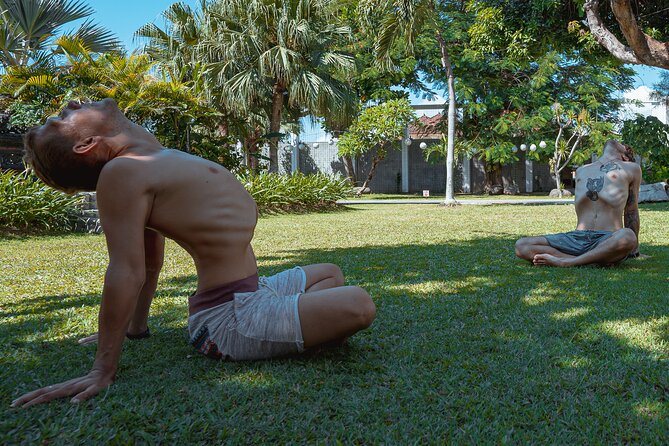
At $450 per person, this is an investment rather than a cheap island activity. The value depends on whether you want a proper foundation and certification, not just a few minutes in the water.
The price includes:
- Freediving equipment
- All fees and taxes
- Certification
- Digital learning materials
- Underwater photos of you in the sea
You also receive three days of instruction, with several practical sessions and a small class limit. If you bought equipment separately and paid for several private lessons, the total could be higher. The course is therefore easier to justify for someone who wants to continue practicing after Nusa Penida.
The exclusions are important. Lunch is not included, and neither are accommodation or private transportation. You also need to get yourself to the school each morning. Add those costs before deciding if the $450 price fits your trip.
Certification gives the course lasting value. It marks the completion of Level 1 training, while the digital materials give you something to review after leaving Bali. If you only want a single ocean activity, the price may feel high. If you want a structured starting point in freediving, the three-day format makes more sense.
Who will enjoy this course most
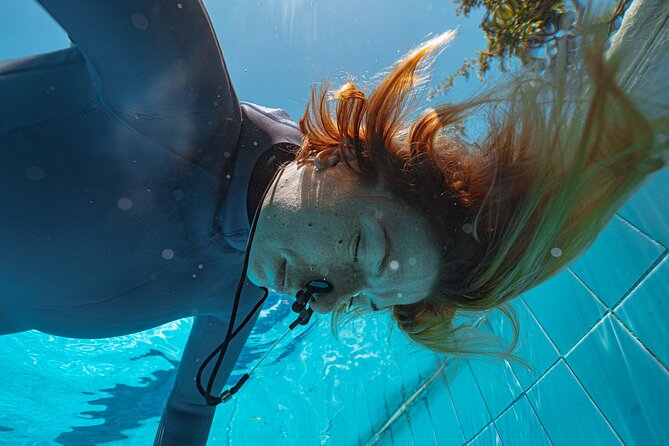
This course suits you if you can swim, enjoy learning physical skills, and want more than a one-hour introduction. You do not need prior freediving experience, and the teaching structure is built for beginners.
It is a good match for:
- First-time freedivers who want formal instruction
- Swimmers seeking a new water skill
- Couples or friends who prefer a small class
- People who want certification and digital study material
- Visitors staying on Nusa Penida for at least three days
- Students who value safety and patient coaching over speed
You might not enjoy it if your schedule is tight, you dislike repeated practice, or you want a relaxed sightseeing day. The hours are long, and the course demands concentration. It is also not suitable if you cannot swim.
Moderate fitness is requested. That does not mean you need to be an athlete, but you should be ready for three active days in the water and on land. If you have any health concern that could affect breath-hold activity, ask a qualified medical professional before booking. The supplied information does not list a medical screening process, so do not assume one will replace your own preparation.
Practical planning for Nusa Penida
Plan to stay close enough to the Ped meeting point to arrive by 8:30 a.m. The course does not include private transport, so a distant hotel can make each morning harder and less predictable.
Bring comfortable clothes for the land sessions, swimwear, sun protection, and anything you need for the lunch break. The school supplies the freediving equipment, but you still need to plan for your own personal items and meals.
Keep the three days open. The listed hours are consistent each day, and the course is not designed as a hop-on, hop-off activity that you can leave whenever you like. If you are combining it with other Nusa Penida plans, schedule those for before or after the course rather than between sessions.
The mobile ticket makes access convenient after booking, and confirmation is provided at booking time. Cancellation is free if you cancel at least 24 hours before the local start time. Changes or cancellations inside that window are not accepted for a refund.
Should you book the Level 1 course?
Book it if you want a careful, skill-based introduction with a recognized course structure, supplied equipment, and a small class. The combination of two confined-water sessions, three open-water sessions, certification, and underwater photos gives the $450 price real substance for someone serious about learning.
I would be more cautious if you have only one free day on Nusa Penida or mainly want to see fish from the surface. This course asks for three full days and moderate physical effort. It is best viewed as training in a tropical setting, not as a simple excursion.
For a beginner who can swim and wants to build confidence, Freedive Nusa offers a sensible starting point. Go in ready to learn at your own pace, and treat the 15 to 20-meter figure as a possible milestone rather than a promise. That mindset will help you get far more from the course.
FAQ
Is previous freediving experience required?
No. The course is designed as a Level 1 introduction, and no previous experience with freediving or other water activities is required. You must be able to swim.
How long does the course last?
The course lasts three days. Each day runs approximately from 8:30 a.m. to 4:30 p.m., including a lunch break.
How many people are in each group?
The activity has a maximum of four students per instructor.
What sessions are included?
The course includes theory and practical work on land, two confined-water sessions, and three open-water sessions.
How deep can I expect to go?
Most students can reach about 15 to 20 meters, or 50 to 65 feet, by the end of the course. This is not guaranteed and depends on your progress.
How long can I expect to hold my breath?
Most students can hold their breath for more than two minutes at the end of the course. Your result may differ.
Is equipment included?
Yes. The use of freediving equipment is included in the price, so you do not need to buy special equipment for the course.
Are lunch and transportation included?
No. Lunch, accommodation, and private transportation are not included. The activity starts and ends at Freedive Nusa in Ped, Nusa Penida.
What is the cancellation policy?
You can cancel at least 24 hours before the local start time for a full refund. Cancellations or changes made less than 24 hours before the start are not refunded or accepted.
Just added in Nusa Penida
- Try Scuba Diving for Beginners with manta rays (Non – Certified)★ 4.5 · 31 reviews
- Thrilling Off Road Adventure Explore Nature with ATV With Lunch★ 5.0 · 3 reviews
- Seaweed Farming Activity and Sightseeing at Diamond Beach★ 4.5 · 3 reviews
- Snorkeling 3 Spots with GoPro & West Coast Tour Nusa Penida★ 4.5 · 5 reviews
- Try Freediving on Nusa Penida★ 5.0 · 30 reviews
- Certified Scuba Dive with Manta Rays (Open Water Diver minimum)★ 5.0 · 55 reviews
- One Day Nusa Penida Island East★ 5.0 · 29 reviews
- Snorkeling 4 Spot With Manta Bay Or Optional Land Trip★ 5.0 · 14 reviews